

A Russian military officer who once commanded a Ukrainian submarine before defecting to Moscow was killed Thursday morning in an apparent assassination in Russian-occupied Crimea, according to Russian media reports.
Telegram channels linked to Russia’s security services identified the victim as Robert Shagaev, a former commander of Ukraine’s Zaporizhzhia submarine who switched sides after Moscow seized and annexed Crimea in 2014. Reports said an explosive device planted in a trash can detonated in a residential area of Sevastopol, killing him instantly. A woman suspected of activating the bomb was reportedly detained.
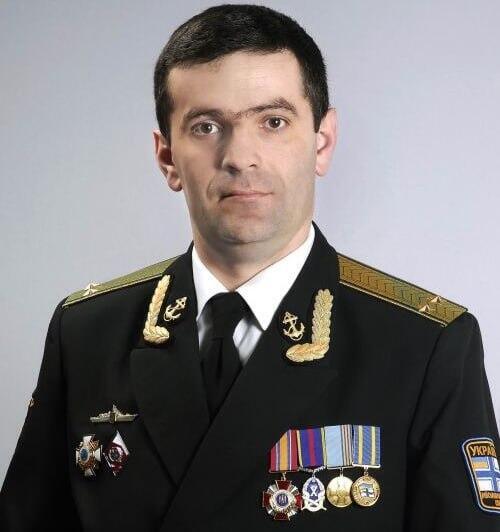
The killing appears to be the latest in a long series of assassinations attributed to Ukraine targeting Russian security officials and prominent supporters of President Vladimir Putin’s war.
Shagaev had faced criminal proceedings in Ukraine on suspicion of high treason after his defection following the annexation of Crimea. The peninsula had belonged to Ukraine until Russian forces seized it in 2014, after the overthrow of the pro-Russian government in Kyiv. Moscow’s annexation of Crimea and intervention in the Donetsk and Luhansk regions marked the beginning of the conflict that expanded dramatically with Russia’s full-scale invasion of Ukraine in February 2022.
Russian and Ukrainian anti-Kremlin media, citing Telegram channels close to Russian security agencies, said Thursday’s blast occurred on Stoletovsky Street in Sevastopol.
Shortly before Shagaev was killed, five people were reportedly killed in a separate incident in Sevastopol during an attempt to defuse Ukrainian explosives.
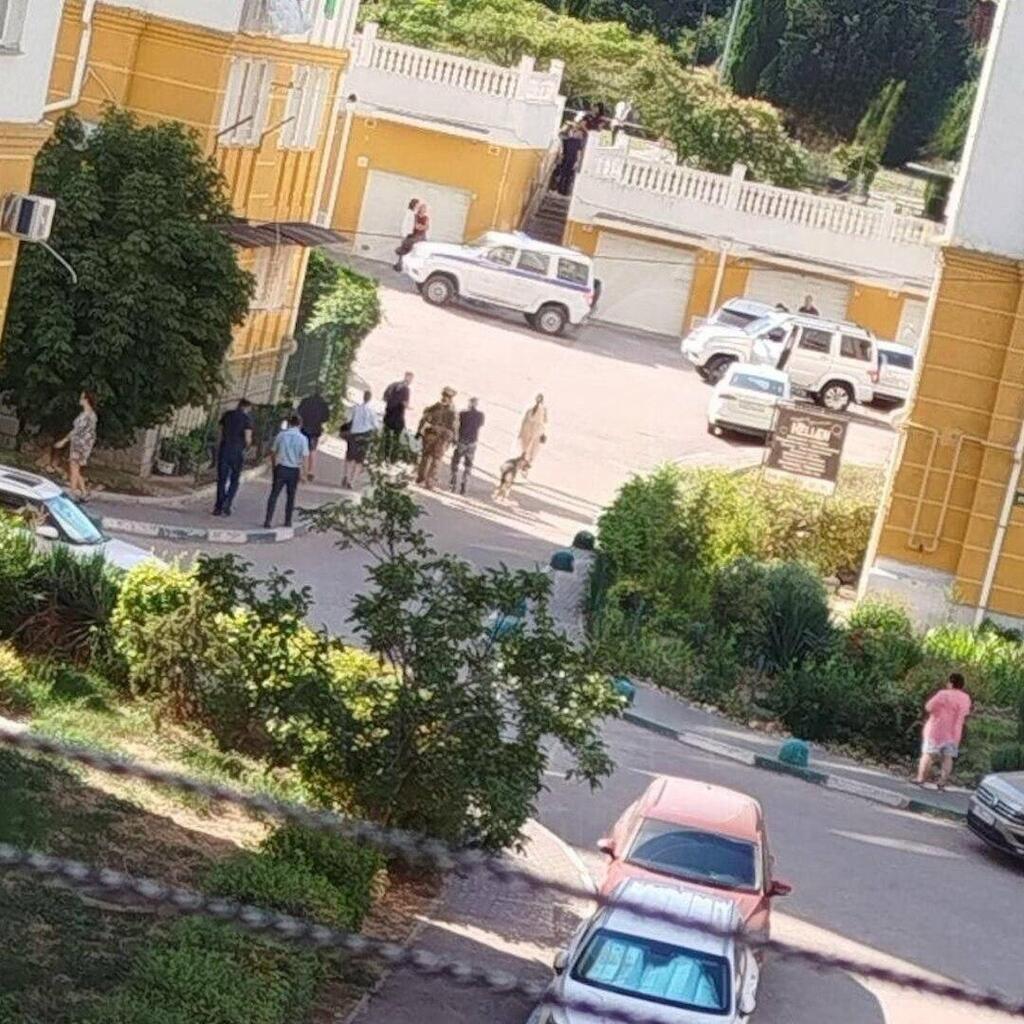
Scene of the explosion in Crimea
The reported assassination comes amid an intensifying Ukrainian campaign against military-linked targets deep inside Russian territory.
Earlier this month, two executives of Russian drone factories were reportedly targeted in separate assassination attempts, one involving a car bomb and another gunfire. In another incident roughly two weeks ago, five people were reportedly killed when an explosive detonated at an Italian restaurant in Moscow, including at least one senior security official.
Ukrainian drone strikes refinery 1,300 kilometers inside Russia
Hours before the Sevastopol bombing, Ukraine launched another strike on a refinery deep inside Russia, this time in the republic of Bashkortostan.
Kyiv said the facility, located roughly 1,300 kilometers from the Ukrainian border, had been involved in supplying fuel to Russian forces and was hit by a drone. A fire reportedly broke out and two people were wounded.
The strike provided further evidence of Ukraine’s growing ability to hit targets far from the front lines as part of what Kyiv describes as a campaign to bring the war home to ordinary Russians and impose a domestic cost for Moscow’s attacks on Ukraine.
Ukraine has sharply increased attacks on Russian oil infrastructure in recent months, targeting a sector crucial to the Russian economy. Several important facilities have been disabled, contributing to fuel shortages and lines at some gas stations.
Russia also acknowledged Thursday that an oil facility in the city of Orsk, hit by a Ukrainian drone two days earlier, had been forced offline and could take as long as six months to repair.
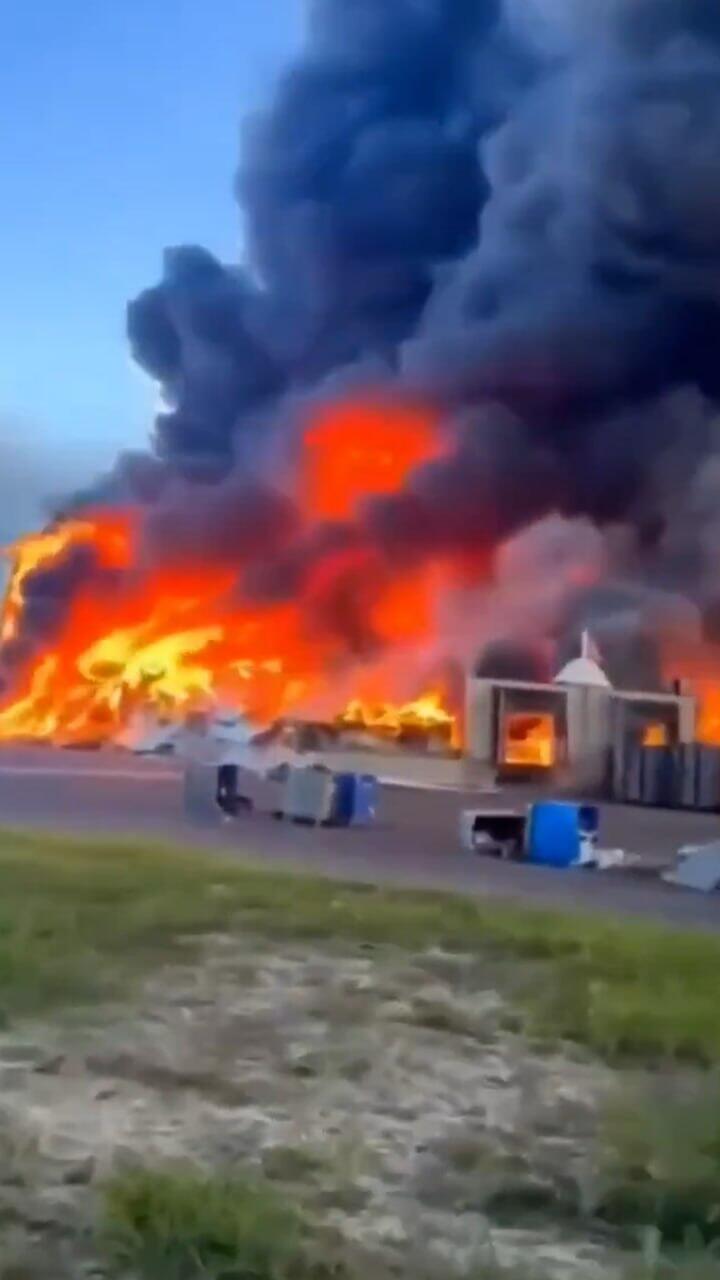
A Russian oil facility burns after a drone attack last month
The Orsk facility lies near the Kazakh border, around 1,470 kilometers from the Russia-Ukraine border, even farther than the refinery targeted Thursday. It can process up to 6 million tons of oil annually and produces gasoline, diesel, jet fuel, fuel oil, bitumen and other petroleum products.
Russian-Iranian drone hits Ukrainian passenger train
Russian strikes inside Ukraine have also continued.
Ukraine said Thursday that a train driver and his assistant were killed when a Russian-launched Iranian-made Shahed drone struck a passenger train in the southern Odesa region.
Footage posted online showed the train stopped on the tracks with its locomotive burning and a large hole visible in it.
According to reports, the train had entered a station so that its 340 passengers could take shelter. None of the passengers were hurt.
Ukrainian President Volodymyr Zelensky said whoever operated the drone “could not have failed to understand that the target was entirely civilian.”
Putin visits disputed Kuril Islands, drawing Japanese protest
Against the backdrop of the war in Ukraine, a separate diplomatic dispute erupted Thursday between Russia and Japan after Putin visited Iturup, one of the disputed Kuril Islands claimed by Tokyo.
Japan refers to the islands as its Northern Territories and regards them as Japanese sovereign territory.
Japanese Foreign Minister Toshimitsu Motegi protested Putin’s visit, saying the Northern Territories “are Japanese territory both historically and under international law.”
“Japan strongly protests this visit,” he said, adding that it would have “an extremely negative impact on Japan-Russia relations.”
The Soviet Union seized the Kuril Islands, north of Japan’s Hokkaido, in the final days of World War II in 1945. Moscow later expelled the islands’ roughly 17,000 Japanese residents and resettled them with Russians. About 20,000 Russian citizens now live there.
Russia subsequently established a military presence on the strategically located islands, which served as air and naval bases during the Cold War. The islands are also rich in mineral resources, particularly silver and gold, as well as fishing grounds.
Russia and Japan have never signed a formal peace treaty ending World War II, largely because of the territorial dispute over the islands.
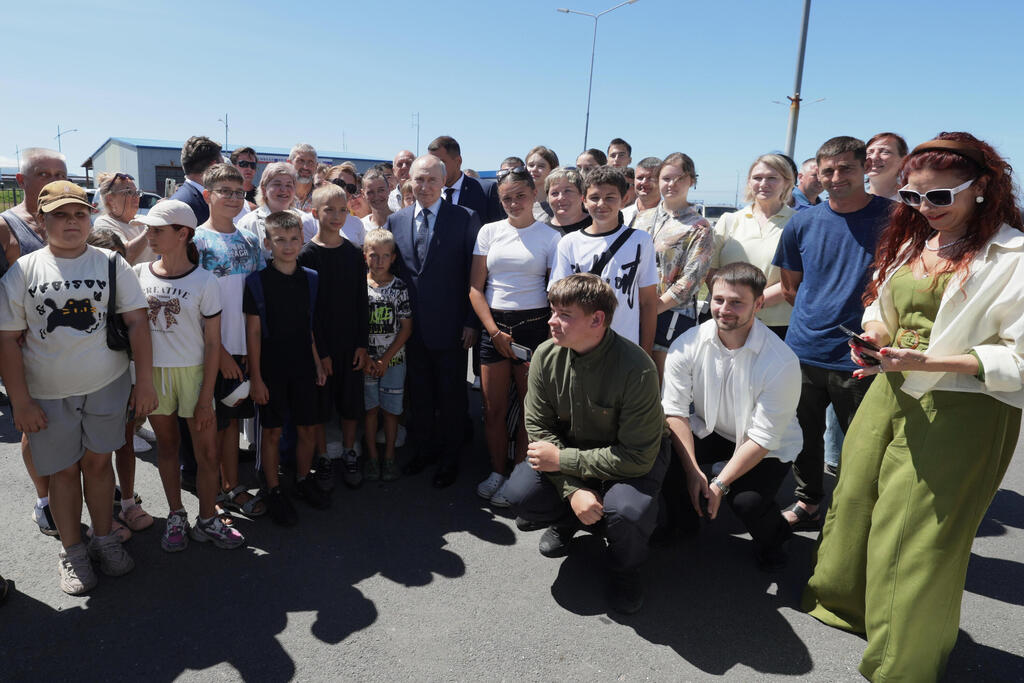
Russian President Vladimir Putin during a visit to Iturup in the disputed Kuril Islands
(Photo: Gavriil Grigorov, Sputnik, Kremlin Pool Photo via AP)
Putin’s visit was his first to the Kurils as president and the first by any Russian president since Dmitry Medvedev traveled there in 2010. Medvedev’s visit, the first ever by a Russian president, also provoked anger in Tokyo.
Putin toured a fish-processing plant on Iturup after inspecting Russian naval exercises in the country’s Far East a day earlier. Russian television showed him examining large fish and sampling local roe.
“What wonderful weather you have here, just like a resort area,” he told residents.
The visit came a day after North Korea, a Russian ally, fired a ballistic missile into waters east of the Korean Peninsula and days before a major joint U.S.-South Korean military exercise long condemned by Pyongyang.
Speaking during his tour of Russia’s Far East, Putin said Japan had designated Russia as one of its primary threats.
“I want to emphasize that we are not threatening Japan,” Putin said. “On the contrary, it is Japan that has territorial claims against our country.”
Yi Kwang-hyung, a professor at the University of Tokyo’s Graduate School of Public Policy, noted that Russia has reinforced the Kurils over the years with air-defense missile systems and Su-35 fighter jets, giving Moscow both military control over surrounding sea routes and leverage in its territorial dispute with Japan.
“Putin’s visit today may be a reminder of the cards he holds,” he said, “but also of his dissatisfaction with the sanctions Japan has maintained against Russia since the invasion of Ukraine.”