

The war in Ukraine continues to reveal how advanced Western components are finding their way into the weapons systems of hostile states. This time, the component comes from the heart of the artificial intelligence industry: Ukraine’s military intelligence agency, the HUR, says it found an Nvidia Jetson Orin chip inside Russia’s new S-71 Monochrome air-launched cruise missile.
According to Ukrainian intelligence, the presence of the processor could indicate that Russia is integrating AI-based capabilities into the missile. For now, however, that remains an assessment rather than a confirmed function. The HUR did not detail exactly what the processor does inside the missile or present evidence showing that it is being used to run an AI model.
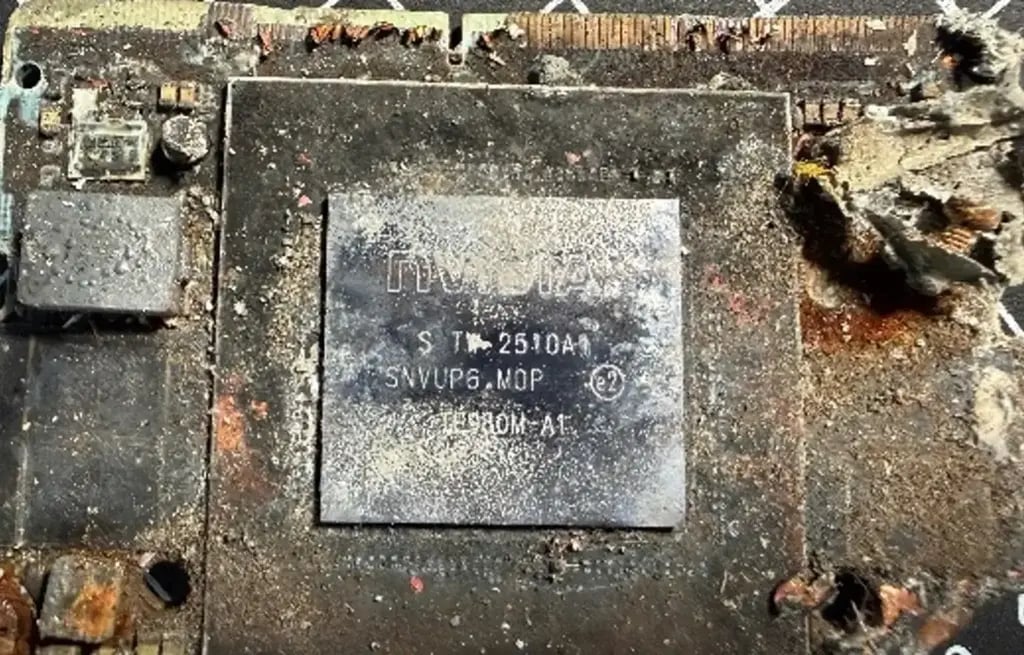
A small chip with major capabilities
Nvidia’s Jetson Orin family is designed to run artificial intelligence applications directly on devices and robotic systems without requiring a constant connection to a data center or the cloud. Such processors can be used for tasks including image processing, sensor-data analysis and computer vision.
In a cruise missile, that kind of real-time processing could theoretically be used to analyze sensor input, identify targets or assist with navigation. But Ukrainian intelligence has not disclosed the missile’s system architecture and has not said that these are necessarily the functions performed by the Jetson Orin found inside it.
The discovery was published through War&Sanctions, a database operated by Ukrainian intelligence that documents foreign-made components found in Russian weapons used during the war. In its latest round of inspections, Ukraine says it identified a total of 35 electronic components across several Russian weapons systems.
The finding is particularly notable because Jetson Orin is not a basic processor or generic electronic component, but a computing platform specifically designed for systems that perform AI tasks at the edge, meaning directly on the device itself.
For Ukrainian intelligence, its presence in the new missile is therefore a possible indication that the AI race is extending deeper into Russian weapons systems.
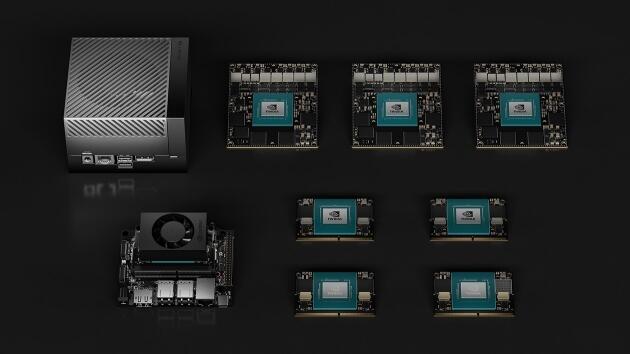
Nvidia’s Jetson Orin family
(Photo: Nvidia)
Sanctions have not shut off the supply
The Jetson is only one of several foreign components Ukrainian experts say they have found inside Russian weapons. Investigators also identified parts from a passive radar-homing system that Russia has begun installing in Geran-2 drones, while the jet-powered Geran-4 was found to contain a Chinese-made Honpho TS130C-01 camera. According to Ukrainian intelligence, the system is intended to allow the drones to detect and attack air-defense systems and radar stations.
The findings are part of a broader Ukrainian effort since the start of the war to dismantle, map and analyze captured or recovered Russian weapons. The goal is not only to understand how the systems work, but also to identify who manufactured the components inside them and how those parts reached Russia despite extensive sanctions.
That may be the more significant issue raised by the Nvidia finding. From Kyiv’s perspective, the appearance of an advanced Nvidia computing component inside a newly developed Russian weapon is further evidence that efforts to cut Moscow off from foreign technology remain far from airtight.
The presence of a Western-made component in a Russian weapons system does not, of course, mean the manufacturer sold it directly to Russia or knew where it would ultimately end up. Commercial electronic components can pass through complex supply chains, distributors and third countries before finding their way into military systems.
For Ukraine, dismantling Russian weapons has therefore also become a form of economic intelligence work. Every model number and corporate logo discovered on a circuit board can provide another clue about the supply route and potentially serve as a basis for tighter sanctions, export restrictions and enforcement.
At the same time, Ukrainian intelligence says Russia continues to face production constraints that prevent it from maintaining a consistently high rate of drone launches. According to Kyiv, Moscow is therefore forced to accumulate large stockpiles before launching especially intense waves of attacks.
For now, the key question remains unanswered: whether the Jetson Orin actually gives the S-71 Monochrome AI capabilities and, if so, what role the technology plays.