


Israel’s representation abroad has often been described as another front in the country’s conflicts, yet its public diplomacy operation has repeatedly struggled to keep pace in recent years. The battle for global public opinion has often appeared disorganized, a problem reflected not only in the fallout surrounding NAZA.
For long periods, no single figure was in charge of Israel’s public diplomacy effort, the system did not operate with a unified line, and responses to controversies sweeping through the international media often arrived only after a narrative had already taken hold.
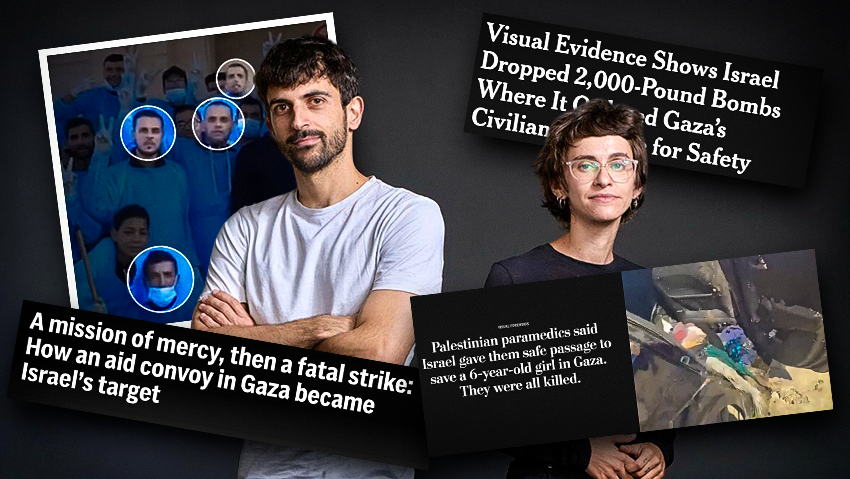
Since the outbreak of the war following the October 7 massacre, Israel has faced an intense battle over international perceptions. Yet for extended periods, there was no single figure leading the country’s public diplomacy operation, while serious allegations against Israel were sometimes left unanswered or addressed only after they had already spread widely.
The position of head of the National Public Diplomacy Directorate remained vacant for nearly two years. Only in April 2026 did the government approve the appointment of former Israeli ambassador to Britain Tzipi Hotovely. In July, Doron Spielman was appointed the directorate’s international spokesperson, a position that had not previously existed in that form.
The ministry was dismantled, public diplomacy left without a clear address
The story of Israel’s public diplomacy apparatus began before the war. At the start of 2023, a separate Public Diplomacy Ministry was established for Likud lawmaker Galit Distel Atbaryan, alongside the National Public Diplomacy Directorate already operating within the Prime Minister’s Office. The directorate itself had no permanent chief until August that year, when Prime Minister Benjamin Netanyahu chose Moshe “Moshik” Aviv for the post and the Cabinet approved the appointment days later.
The Public Diplomacy Ministry headed by Distel Atbaryan quickly ran into difficulties. She complained repeatedly that it lacked authority and even basic equipment, saying at one point that she was uploading videos from her spokesman’s phone because the ministry lacked the resources it needed and was forced to improvise. In the hours after the October 7 massacre, she said she wanted to engage in public diplomacy but did not know what she was permitted to say under military censorship rules.
With the outbreak of the war, then-IDF spokesman Rear Adm. Daniel Hagari became one of the most prominent Israeli figures communicating with audiences at home and abroad. Through frequent briefings and material released by the military, including battlefield footage and intelligence, Hagari provided updates on IDF operations and presented Israel’s account of the circumstances that led to the war and its military objectives.
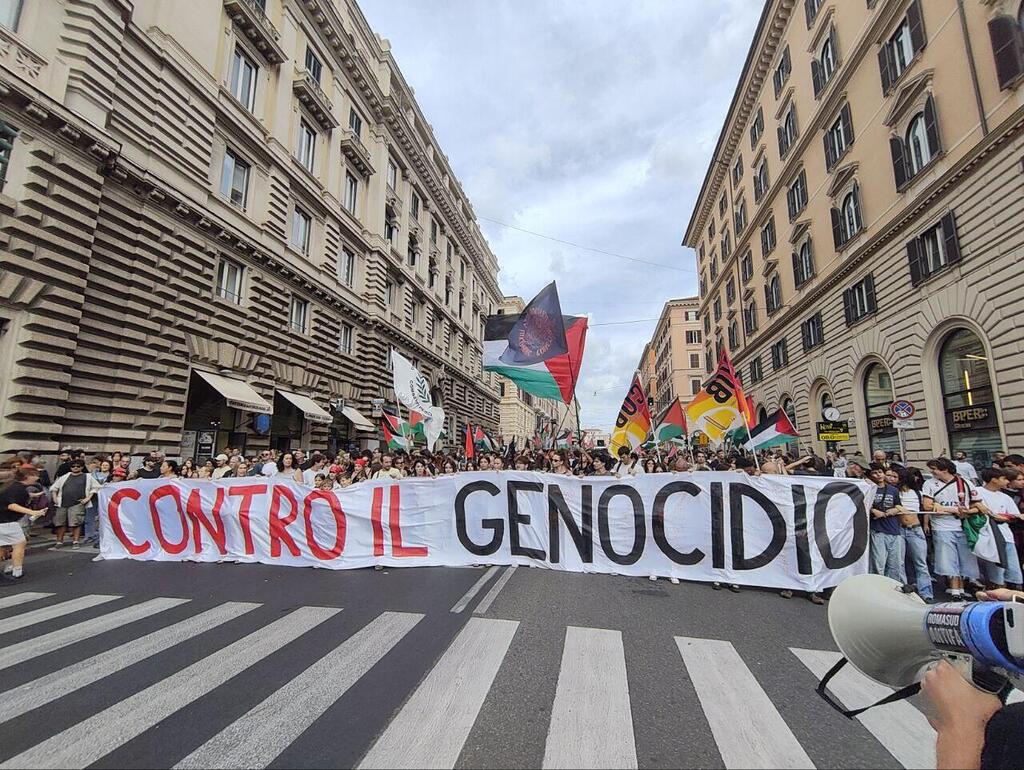
Pro-Palestinian protest in Rome
(Photo: Tom Hefer)
But changes to the structure of Israel’s public diplomacy operation began almost immediately. On October 13, 2023, Distel Atbaryan announced her resignation after responsibility for Israel’s international public diplomacy efforts was transferred to the Diaspora Affairs Ministry alongside the Foreign Ministry’s existing work, and her ministry was subsequently dismantled.
Explaining her decision at the time, Distel Atbaryan said: “There is already a highly capable minister responsible for national resilience, there is the Home Front Command, and there are civilian organizations doing sacred work. And if I am being honest, I can no longer find any justification for this duplication of authority. Running a government ministry is expensive, and the people of Israel need every shekel.”
She added: “When I see the Public Diplomacy Ministry stripped of the powers it was originally given, I have no choice but to honestly admit that every day it continues operating from this point on constitutes a waste of public funds. Under the current circumstances, this ministry cannot make a significant contribution to the country, and the good of the country is more important to me than anything else. For all these reasons, I have decided to resign as public diplomacy minister.”
About 10 days later, on October 22, the government approved the ministry’s closure and transferred its 23.8 million shekel budget to the Tekuma Authority, established to rehabilitate Gaza border communities devastated in the October 7 attack. Twenty-nine positions from the ministry were also transferred to the rehabilitation authority.
Foreign-language spokespeople instead of a structured system
As the government tried to reorganize the operation, the Prime Minister’s Office recruited three spokespeople for the foreign media on October 24: Mark Regev, a former Israeli ambassador to Britain who had previously served as Netanyahu’s foreign-media spokesman; journalist Tal Heinrich; and British-born Eylon Levy, an Oxford and Cambridge graduate who became one of Israel’s most recognizable English-language voices online.
But difficulties persisted inside the government system. On November 14, 2023, a Knesset hearing addressed the suspension of funding for the Foreign Ministry’s overseas public diplomacy efforts. Zeev Elkin, then chairman of the Knesset subcommittee dealing with foreign policy and public diplomacy, said it was “unthinkable that in the middle of a war, the Foreign Ministry’s ongoing public diplomacy operation is shut down because of a lack of funding.” A Finance Ministry representative said money had been allocated but had not yet received final approval.
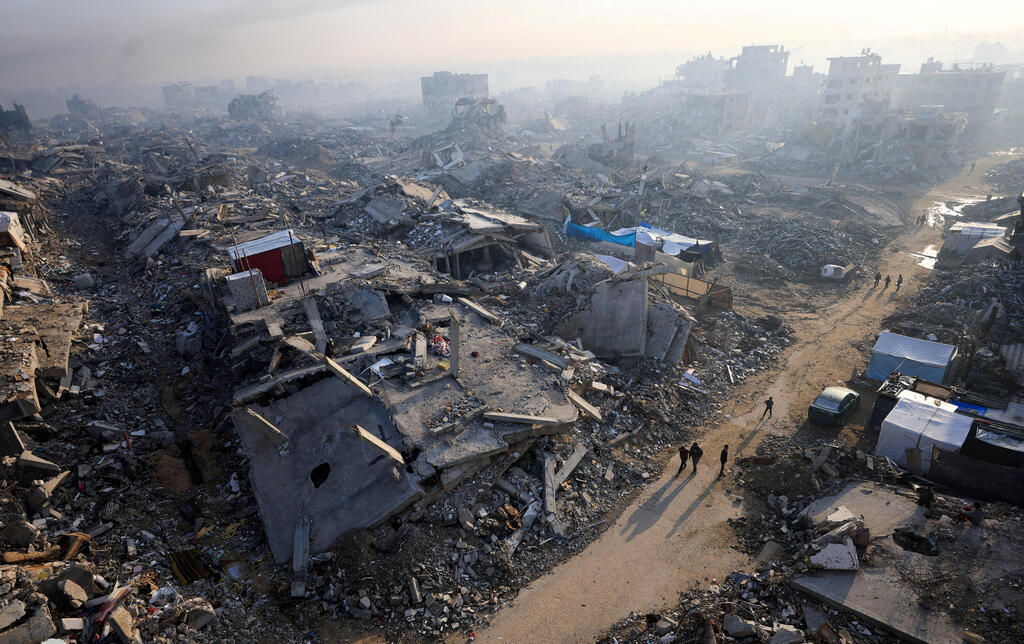
Destruction in Gaza
(Photo: REUTERS/Dawoud Abu Alkas)
In December, the Knesset Finance Committee discussed increased funding for the Settlement Ministry and the National Public Diplomacy Directorate in the Prime Minister’s Office. A Finance Ministry representative said the directorate would receive an additional 40 million shekels. The discussion also included a monthly cost of 200,000 shekels for operating a television studio under Yossi Shelley, as well as 15 million shekels for a hostage administration that had yet to be established at the time.
On March 31, 2024, Eylon Levy announced the end of his tenure as an English-language government spokesman. He had been suspended several weeks earlier after posting on X in response to then-British Foreign Secretary David Cameron. The post prompted a complaint from Britain and a request for clarification over whether Levy’s remarks represented the Israeli government’s position. It was not the only controversy during his tenure; Ynet also reported that he had auditioned for Israel’s Dancing with the Stars after the war began.
Two months later, in May 2024, Aviv resigned as head of the National Public Diplomacy Directorate after roughly 10 months in the role. He had entered the job shortly before the war after previously overseeing state ceremonies and public diplomacy programs, and had not previously headed Israel’s national communications operation. His departure left the directorate without a permanent chief for an extended period.
Only on April 26, 2026, after nearly two years without a permanent head, did the government unanimously approve Netanyahu’s decision to appoint Hotovely to lead the National Public Diplomacy Directorate in the Prime Minister’s Office. Hotovely had previously served as settlement affairs minister, diaspora affairs minister, deputy foreign minister and Israel’s ambassador to Britain. She entered the post on May 5.
On July 1, Doron Spielman, 53, was appointed international spokesperson for the National Public Diplomacy Directorate. Formally, the position sits within the Prime Minister’s Office communications structure. Spielman had previously served as an IDF reserve spokesman to the foreign media with the rank of major during the war.
No clear communications line
The question, however, is not only who leads the National Public Diplomacy Directorate, but who sets Israel’s communications line in real time. Within the security establishment, no single figure has consistently filled the role of a dominant public communicator in recent years. IDF Chief of Staff Lt. Gen. Eyal Zamir, who took office during the war, rarely appears in the media or addresses the public regularly in Hebrew or English. IDF spokesman Brig. Gen. Effie Defrin has also maintained a lower public profile than Hagari did during the early stages of the war.
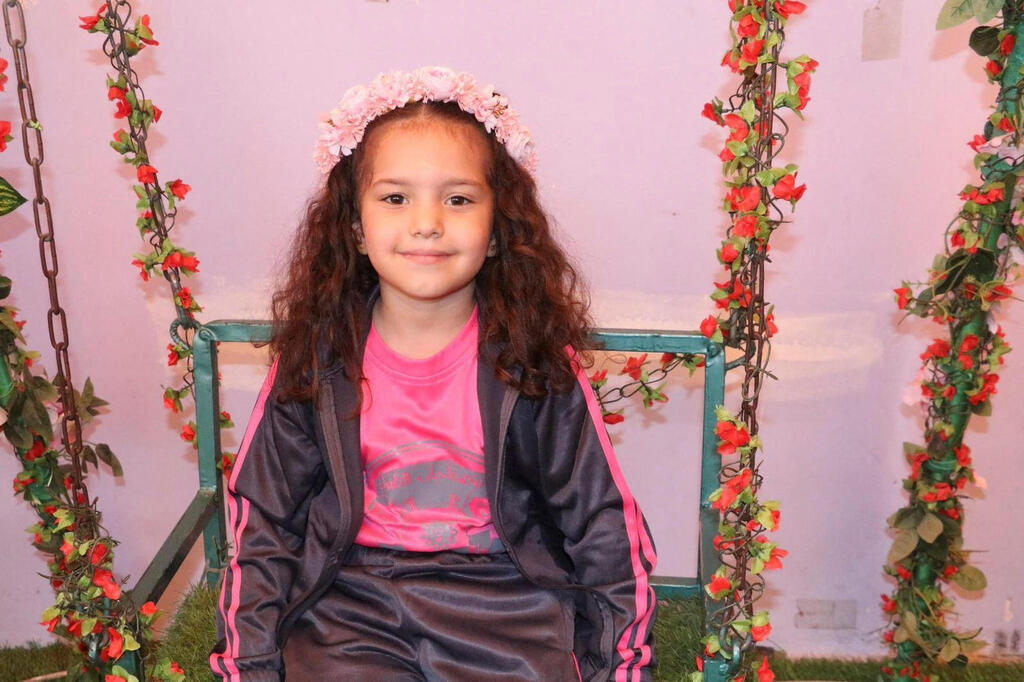
Became the face of Gaza worldwide. Hind Rajab
(Photo: Palestine Red Crescent Society/ Family Handout via REUTERS)
More significantly, the gap between the speed at which events unfold and the pace of the Israeli response has been evident in several major controversies during the war, including the death of Palestinian girl Hind Rajab, the killing of World Central Kitchen aid workers and investigations alleging disproportionate use of force by Israel.
In early 2024, six-year-old Hind Rajab became one of the most recognizable symbols of civilian suffering in Gaza. For days, her fate was unknown after she spoke by telephone with rescue workers and pleaded with them to reach the vehicle in which she was trapped. During the call, she said: “They’re shooting at us. There’s a tank in front of me.” Her body was later found in the car, along with members of her family. The bodies of two Palestinian Red Crescent paramedics dispatched to rescue her were found nearby.
The story received extensive coverage from international media outlets, including the BBC, The New York Times, international news agencies and Britain’s Guardian, which led its report on the discovery of her body with words from her call with rescuers: “I’m so scared.”
Israel’s initial response included the assertion that Israeli forces had not been present near the vehicle at the relevant time. The case was later subjected to further military review. In August 2026, the IDF acknowledged that Israeli troops had fired on the vehicle carrying Rajab and her family and ordered a criminal investigation over alleged failures surrounding the coordination of the Palestinian Red Crescent ambulance sent to rescue her.
From a public diplomacy perspective, however, the damage had already been done. The emotional impact of the recordings of the child, combined with the gap between the initial Israeli account and later findings, made it harder for Israel to present a consistent and credible message in real time.
Another major incident occurred on April 1, 2024, when seven World Central Kitchen aid workers were killed in central Gaza after an Israeli drone struck their convoy. The dead included citizens of Australia, Britain and Poland, a dual U.S.-Canadian citizen and a Palestinian employee.
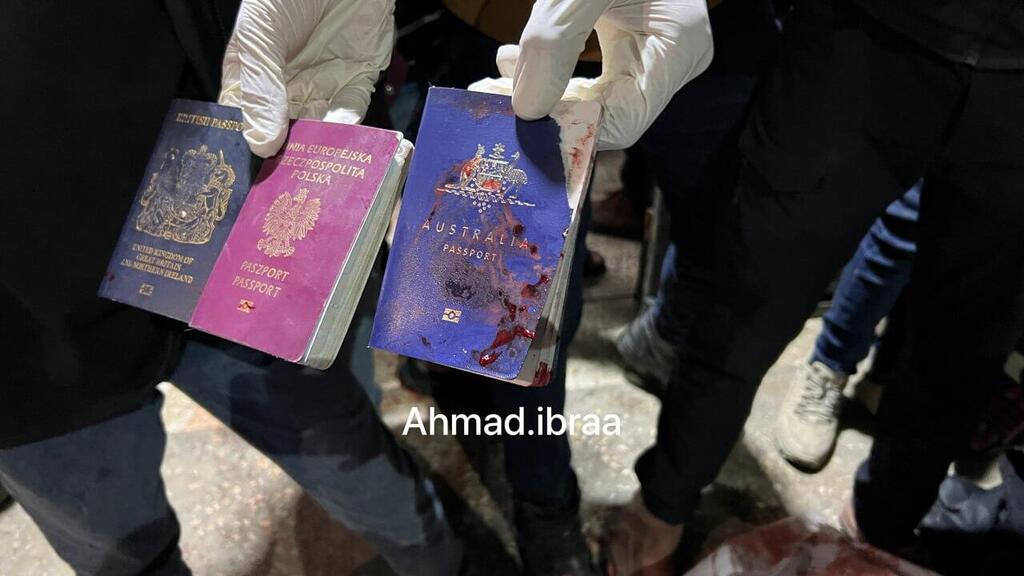
Three passports belonging to World Central Kitchen workers who were killed
The strike triggered an international uproar. Images of the damaged vehicles, together with the fact that the victims were humanitarian workers and citizens of countries friendly to Israel, prompted harsh condemnation from Western leaders and heavy diplomatic pressure. Then-U.S. President Joe Biden demanded that Israel take action following the incident.
A year later, another example emerged of the gap between the pace of reporting and the Israeli response. In June 2025, Qatari broadcaster Al Jazeera, citing Palestinian sources, reported dozens of dead and wounded near a U.S.-backed aid distribution center in Rafah amid allegations that Israeli troops had opened fire. Within hours, the claims had appeared across major international media outlets.
The IDF initially said it was “unaware of casualties caused by IDF fire inside the aid distribution compound” and that the matter was being examined. The Gaza Humanitarian Foundation said at the time that there had been no shooting at the center or in its immediate vicinity. But by then, the initial reports had already spread.
The BBC reported deaths from tank fire near the aid distribution center, Sky News also reported fatalities and Reuters reported the Palestinian allegations while noting at the time that Israel had not yet responded. Israeli statements and security-camera footage later released by GHF, which showed no unusual incident inside the distribution site itself during the period shown, came only after the allegations had already received extensive global exposure.
Footage of the shooting circulated around the world


With no dominant Israeli voice responding immediately, former prime minister Naftali Bennett attacked the government’s handling of the episode.
“Israel has no public diplomacy. The operation is not being managed,” Bennett wrote on X. “The global media is charging at Israel with a huge lie about a ‘massacre’ that did not happen. This is one of the government’s biggest failures in this war. The result is a diplomatic collapse and a dangerous embargo. The importance of public diplomacy cannot be overstated. The failure is simply chilling.”
In another case, in May 2025, images from Gaza showing nine children from the family of Dr. Alaa al-Najjar, a pediatrician at Nasser Hospital in Khan Younis, also became a major element of international coverage. Images of the dead children appeared repeatedly on television and news websites around the world. As the Palestinian account received broad exposure, no prominent official Israeli spokesman appeared in the immediate aftermath to provide a counterweight or explain Israel’s position.
The latest example is the controversy surrounding NAZA, the film by Israeli filmmakers Yuval Abraham and Rachel Szor, which won the Special Jury Prize at the Venice Film Festival and raises serious allegations about Israel’s conduct during the war in Gaza. Once again, critics argue, the Israeli response came late. According to Ynet’s reporting, the Israeli Embassy in Italy warned officials about the Venice screening a month in advance but was unable to prevent it. Israeli officials failed to obtain a copy beforehand and learned the full details of its content only after it was screened.

From NAZA
(Photo: Courtesy of Venice Film Festival)
The film is based on testimony from 24 anonymous Israeli soldiers and military intelligence personnel and makes serious allegations concerning Israeli targeting policy in Gaza. One of its most sensitive claims is testimony that, in one case, approval was allegedly given for a strike in which as many as 500 people could have been killed, an allegation that featured prominently in international coverage of NAZA.
The IDF has categorically rejected the claim, saying: “The IDF has never planned, approved or carried out a strike in which approximately 500 civilians, or any number approaching that figure, were expected to be killed.” Israeli officials have also stressed that no independently verifiable evidence has been presented for the claim and that the anonymous source’s identity, role and knowledge of the alleged incident cannot be independently assessed. The film won the Special Jury Prize in Venice on September 12 and has since become the focus of a fierce debate in Israel and abroad.
The domestic criticism of the film and its creators then became an international story in its own right. French newspaper Le Monde framed the controversy around the contrast between the film’s reception overseas and the reaction in Israel, highlighting accusations of “treason” directed at the filmmakers. The Guardian, which was involved in producing the documentary, issued a statement saying it was “deeply concerned” by what it described as an authoritarian response to NAZA in Israel.