


France, Germany and the United Kingdom have told the United Nations they are prepared to reinstate sanctions on Iran if it does not return to negotiations with the international community over its nuclear program by the end of the month, the Financial Times reported Wednesday.
According to the report, the foreign ministers of the so-called E3 sent a letter Tuesday to UN Secretary-General António Guterres and the Security Council stating that if Iran does not act, they will trigger the “snapback” mechanism — which allows the immediate reimposition of sanctions if Tehran violates the terms of the 2015 nuclear agreement with world powers. The ministers said they had offered Tehran an extension to avoid automatic sanctions later this month.
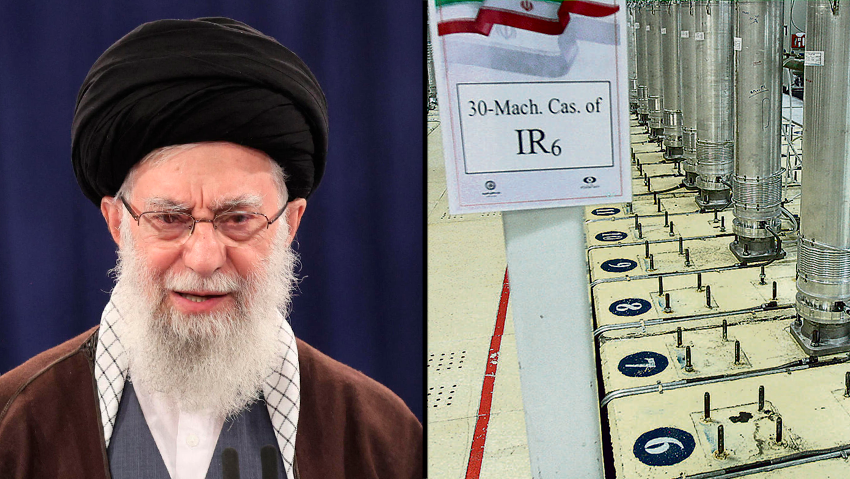
“We have made it clear that if Iran is not willing to reach a diplomatic solution before the end of August 2025, or does not seize the opportunity of an extension, E3 are prepared to trigger the snapback mechanism,” wrote French Foreign Minister Jean-Noël Barrot, German Foreign Minister Johann Wadephul and British Foreign Secretary David Lammy in the letter obtained by the Financial Times. Iran’s UN mission did not respond to the British paper’s request for comment.
Last month, the three nations announced that the European Union would reimpose sanctions on Iran starting August 29 unless it took steps to limit its nuclear program. Days later, Iran’s semi-official Tasnim News Agency reported that Tehran had agreed to hold talks with the E3 on its nuclear program.
At talks in Turkey last month, according to the report, the E3 told Iran they could extend the deadline if it agreed to resume discussions with Washington and cooperate with the International Atomic Energy Agency before September. A Western diplomat told the Times the talks had been “difficult.”
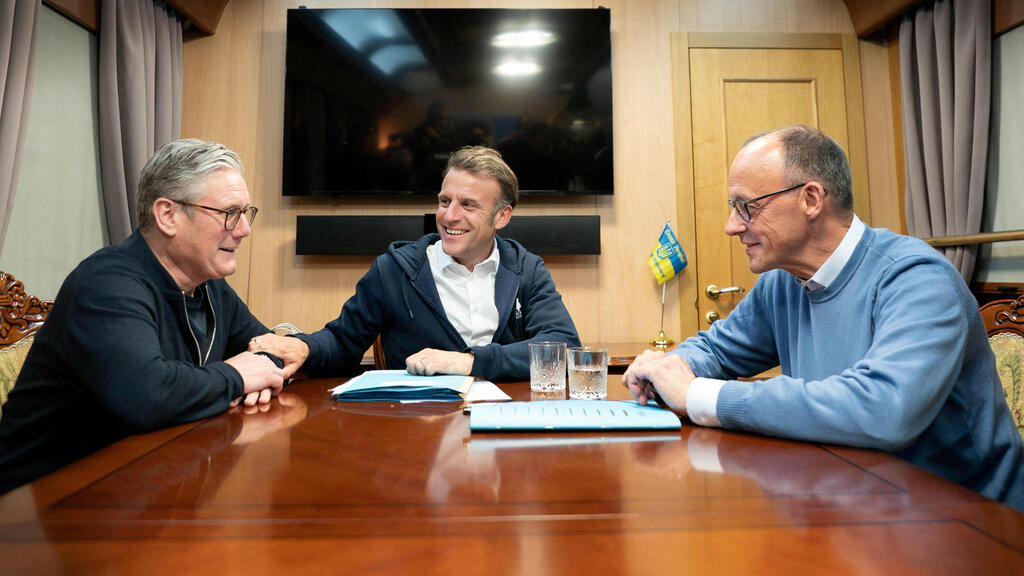
French President Emmanuel Macron, German Chancellor Friedrich Merz, British Prime Minister Keir Starmer
(Photo: Stefan Rousseau/Pool via REUTERS)
On Tuesday, the E3 said Iran had not responded to the extension offer. The ministers said a “limited extension” would have given more time for negotiations toward a new nuclear agreement while preserving the option to reimpose sanctions to prevent nuclear proliferation.
After the July talks in Istanbul, Iranian Foreign Minister Abbas Araghchi said the E3 had “no legal or moral grounds” to use the snapback mechanism and warned Tehran would exclude the European powers from future nuclear talks if they moved ahead. He accused the three countries of failing to uphold their own commitments under the agreement, dismissing snapback as “not that important anymore.”
With the European nations, Araghchi said, “there is no reason right now to negotiate because they cannot lift sanctions, they cannot do anything. If they do snapback, that means that this is the end of the road for them.”
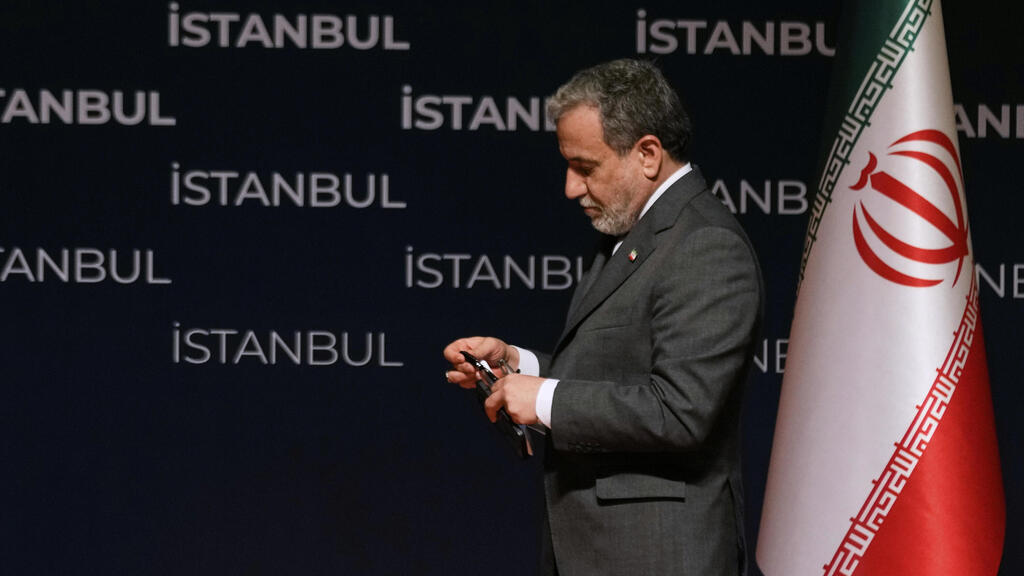
Iranian Foreign Minister Abbas Araghchi in Turkey
(Photo: Khalil Hamra/AP)
In their letter to the UN, the E3 ministers said they have a “clearly and unambiguously” legal justification for reimposing sanctions, noting that since 2019 Iran has “wilfully” departed from its obligations under the nuclear deal.
Iran and the United States have held five rounds of indirect negotiations mediated by Oman before the 12-day war between Israel and Iran. Washington demanded that Tehran completely halt uranium enrichment. Last month, Araghchi reiterated Iran’s position that it would not agree to any nuclear deal preventing it from enriching uranium and would refuse to discuss issues unrelated to its nuclear program, such as its ballistic missile program.
Former President Donald Trump said last month he was in no hurry to negotiate with Iran because its nuclear facilities had already been "totally obliterated." Still, Washington agreed with its European partners that the end of August would be the final deadline to reach a deal.
How snapback sanctions work
In 2018, during Trump’s first term, he withdrew from the nuclear deal signed by his predecessor Barack Obama with Tehran and world powers. The agreement, still technically in effect, placed significant restrictions on Iran’s nuclear program in exchange for sanctions relief. UN sanctions are set to expire on Oct. 18 unless one of the remaining signatories — the UK, Germany, France, Russia or China — triggers snapback.

US President Donald Trump withdrew from nuclear deal between Iran and the world powers in 2018
( Photo: Alex Brandon/AP)
The 2015 deal’s negotiating framework prevents Russia or China from vetoing European sanctions under snapback. The Europeans could still delay the sanctions beyond October to allow for further consultations. The United States also cannot veto European action, which would be enforced under Chapter VII of the UN Charter, restoring six previous Security Council resolutions that, among other measures, require Iran to suspend all uranium enrichment and reprocessing activities, including research and development.
Get the Ynetnews app on your smartphone: Google Play: https://bit.ly/4eJ37pE | Apple App Store: https://bit.ly/3ZL7iNv
Another UN resolution that would be revived obliges all member states to refrain from supplying equipment, materials or technology that Iran could use for its ballistic missile program.
In recent months, Iran signaled it remained open to talks with the Trump administration but hardened its stance after the war with Israel, which launched Operation Rising Lion about 48 hours before Iran was set to begin a sixth round of indirect negotiations with the United States.
Araghchi said Iran wanted U.S. guarantees that it would not be attacked during future talks, along with “confidence-building measures,” such as U.S. agreement to compensate Tehran for war damage. In June, Iran announced it was suspending cooperation with the IAEA, which had inspectors in the country, citing the 12-day war with Israel. An IAEA official met with Iranian counterparts in Tehran on Monday, but the agency has not disclosed details of that meeting.