

British, Norwegian and U.S. forces confronted Russian submarines in the Arctic this spring and disrupted a secret exercise involving technology designed to disable undersea cables without leaving clear evidence of sabotage, Reuters reported Thursday.
The unusual encounter took place near Svalbard, the remote Norwegian archipelago deep inside the Arctic Ocean that Western analysts have identified as a potentially important flashpoint in any Western analysts have identified as a potentially important flashpoint in any future escalation between Russia and NATO.
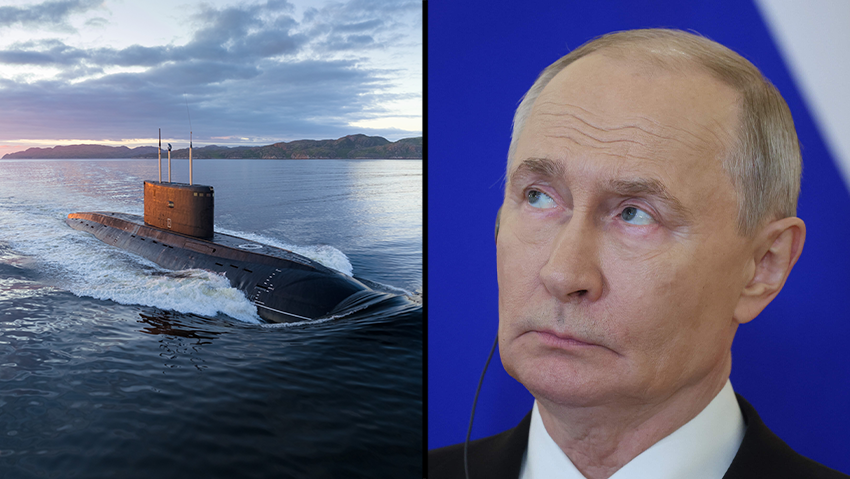
Two Western officials told Reuters that the covert Russian operation was run by GUGI, a specialized directorate within Russia’s Defense Ministry responsible for deep-sea activities. Russian submarines were reportedly conducting an exercise simulating the deployment of a secret technology capable of disabling undersea cables.
The officials did not disclose how the technology works or exactly how it could damage the cables.
British, Norwegian and American forces tracked the Russian submarines and eventually “confronted” them, according to Reuters, although the precise nature of that confrontation remains unclear. The Russian vessels were unable to complete their exercise and eventually left the area, the officials said.
Britain and Norway had disclosed in April that they had detected covert Russian activity in the Arctic, but the involvement of the United States, the location near Svalbard and the reported cable-disabling technology had not previously been made public.
The episode comes amid growing concern in Western intelligence circles that Moscow is expanding sabotage operations across Europe and preparing for the possibility of a direct confrontation with NATO.
Three U.S. officials told Reuters that American intelligence agencies are increasingly concerned Russia could attempt to test NATO’s Article 5 collective-defense commitment, under which an attack against one member is treated as an attack against all.
Russia has for years been accused of conducting hybrid warfare against European countries, including in retaliation for their support for Ukraine. Concerns have intensified in recent months amid suspected Russian drone incursions into European airspace and other incidents attributed to Moscow.
Western officials told Reuters that attacks on undersea cables could play a central role in any Russian attempt to challenge NATO.
The cables, some no thicker than a garden hose, run along or just beneath the seabed and carry enormous volumes of internet traffic and financial transactions. Their importance to communications and the global economy makes them a particularly sensitive target during a confrontation.
Why Svalbard matters
The Russian exercise took place near Svalbard, around 750 kilometers north of mainland Norway.
Two fiber-optic cables, each approximately 1,400 kilometers long, connect the archipelago to the Norwegian mainland, reaching depths of up to 2,700 meters.
Among the data carried by the cables are communications from SvalSat, the satellite ground station on Spitsbergen, Svalbard’s largest island. SvalSat is the world’s largest commercial satellite ground station and is part of NASA’s Near Space Network, which enables communications with satellites and spacecraft.
The Western officials said that while the submarine encounter was taking place, British and Norwegian representatives informed Moscow of what they had discovered, making clear that they were aware of the new technology in an apparent effort to deter Russia from using it.

Spitsbergen, in Norway’s Svalbard archipelago
(Photo: AFP)
No cables near Svalbard were damaged, Reuters stressed. The Russian operation was an exercise simulating use of the technology in a potential conflict with NATO.
“Through our joint operation, we sent Russia a clear message that it cannot operate covertly,” Norwegian Defense Minister Tore Sandvik said.
“We made it unequivocally clear to the Russian authorities that any attempt to damage our critical infrastructure will be detected and will have consequences,” he added. “An escalation of tensions in the High North is in no one’s interest.”
NATO declined to comment and referred Reuters to Norwegian and British authorities. Britain’s Defense Ministry pointed to its April statement confirming Russian covert activity in and around Norwegian and British waters. The White House did not respond to a request for comment, the CIA declined to comment and Russia’s Defense Ministry did not respond, Reuters reported.
The Kremlin has consistently denied accusations that Russia conducts sabotage operations in NATO countries or is preparing for a confrontation with the alliance.
A strategic gateway to the Atlantic
Svalbard’s location makes the episode particularly significant.
The archipelago sits near the route Russian naval forces would use to reach the Atlantic from their northern bases on the Kola Peninsula. Russian submarines and warships heading south must pass through the waters between Svalbard and mainland Norway, an area sometimes referred to as the Bear Gap after Bjørnøya, or Bear Island.
One Western official told Reuters that the frozen maritime region could quickly become strategically important in any escalation between Russia and NATO.
Russian vessels must also pass farther south near Norway’s remote volcanic island of Jan Mayen. Britain said this week that British forces had deployed there alongside Norwegian and American personnel last month for an exercise intended to demonstrate NATO’s ability to operate jointly in the High North.
Norway, meanwhile, plans by 2028 to deploy a new fiber-optic cable linking Svalbard and Jan Mayen with the mainland.
Europe’s vulnerable seabed
NATO concern over undersea infrastructure increased dramatically after the 2022 explosions that damaged the Nord Stream gas pipelines connecting Russia and Germany. Subsequent investigations pointed toward figures linked to Ukraine, which has officially denied involvement.
Since then, however, Russian-linked vessels have repeatedly been accused of involvement in incidents that damaged undersea cables used by European countries.
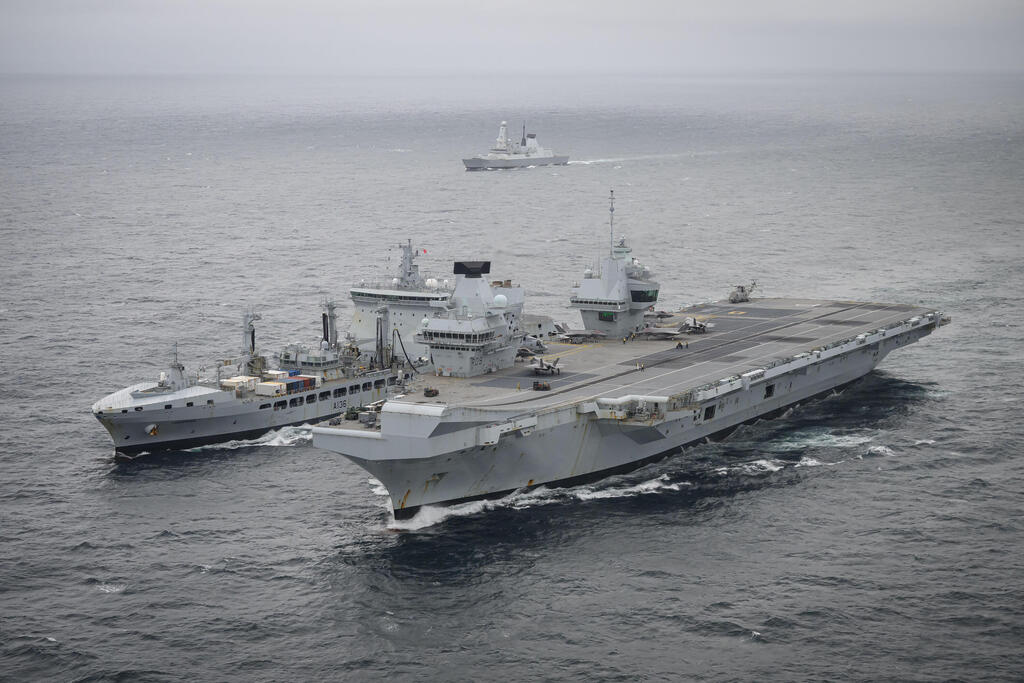
HMS Prince of Wales
(Photo: Leon Neal/Getty Images)
According to maritime risk intelligence company Windward, at least 11 undersea cables were damaged or severed in the Baltic Sea between October 2023 and the end of last year.
“The prevailing assessment today is that Russia and China probably represent the most significant undersea threats,” Windward CEO Ami Daniel said.
The global network of submarine electricity and communications cables continues to expand as demand for data and power rises, accelerated in part by growing artificial intelligence use. Analysts have warned that Europe has become increasingly dependent on seabed infrastructure without developing adequate capabilities to protect it.
“In the last 25 years, Europe has done two things simultaneously,” said Bruce Jones, a senior fellow at the Brookings Institution. “It has dramatically expanded its dependence on infrastructure on the seabed, while dramatically reducing its capacity to protect that infrastructure.”
Europe, he said, is now rebuilding that capability belatedly as the perceived Russian threat grows.