

A family court in Jerusalem has ordered a street beggar to pay his ex-wife about 666,000 shekels after ruling that funds in his private bank account were subject to division under marital property law.
The court rejected the man’s claim that the 1.2 million shekels accumulated in his account before the couple’s separation originated from a gift and inheritance from his late father and were therefore exempt from equal division.
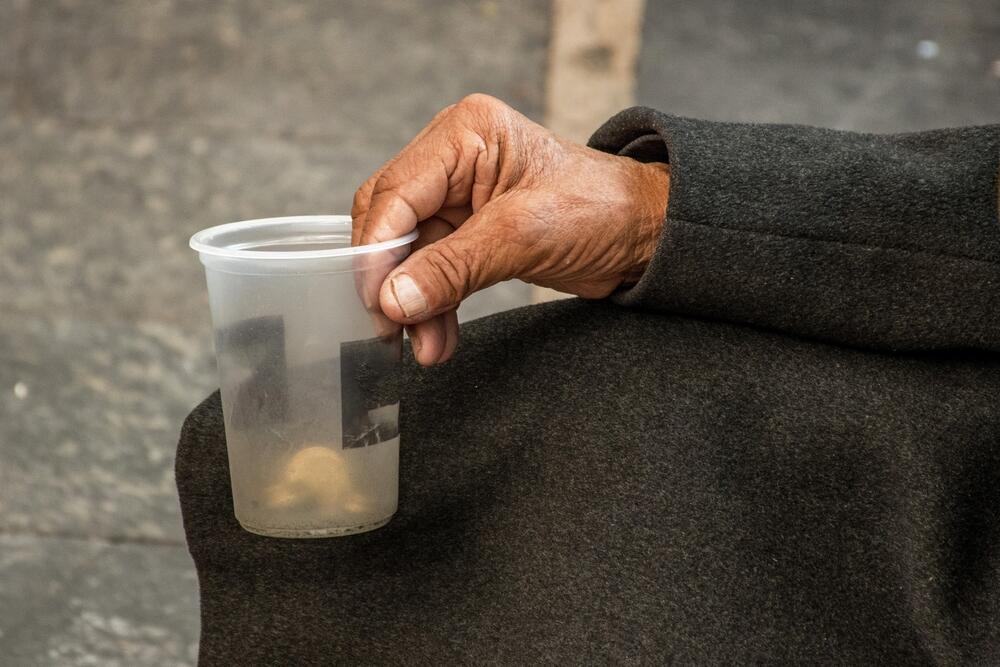
(Photo: Shutterstock)
The couple married in 2008 and did not sign a prenuptial agreement. According to the ruling, the woman, described as having a cognitive impairment, cared for the children during the marriage while the husband provided religious services and begged in public places.
They separated in 2020 and finalized their divorce about a year later.
In her lawsuit, the woman sought half of the funds that had accumulated in her former husband’s private account before the separation. She described him as a well-known beggar in the Jewish Quarter and alleged that he had been violent during the marriage and concealed money from her.
The husband argued that the funds were not jointly owned because they came from a 500,000-shekel inheritance left to him under a July 2011 will by his father, who, according to court documents, had 18 children from three different women and also begged for alms.
The court found that the man failed to prove the will was authentic. He acknowledged that the document had never been submitted for probate and that no inheritance or probate order had been issued regarding his father’s estate.
The ruling also cited inconsistencies in his testimony. Although he initially claimed that only inheritance funds had been deposited into his private account, he later admitted depositing money from other sources as well. He further confirmed that inheritance funds had been deposited into both his private account and the couple’s joint account.
The court concluded that he had mixed funds from his own work — which are subject to division — with money he claimed came from external sources. As a result, the funds accumulated in his private account before the separation were deemed jointly owned.
He was ordered to pay his ex-wife 646,122 shekels, along with 20,000 shekels in legal expenses, bringing the total to roughly 666,000 shekels.