

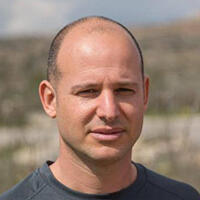
Hezbollah spent years preparing for a confrontation with the IDF, said Lt. Col. “S,” commander of the Nahal Brigade’s reconnaissance unit. Now, he and his soldiers are working under fire to dismantle that infrastructure across southern Lebanon.
“Hezbollah built a great deal here, knowing that one day it would face the IDF,” the commander said. “We are operating in one of the organization’s most heavily built-up compounds — caves constructed within reinforced concrete with organized infrastructure. About 10 days ago we set out to destroy this complex, and we are very close to completing the mission.”
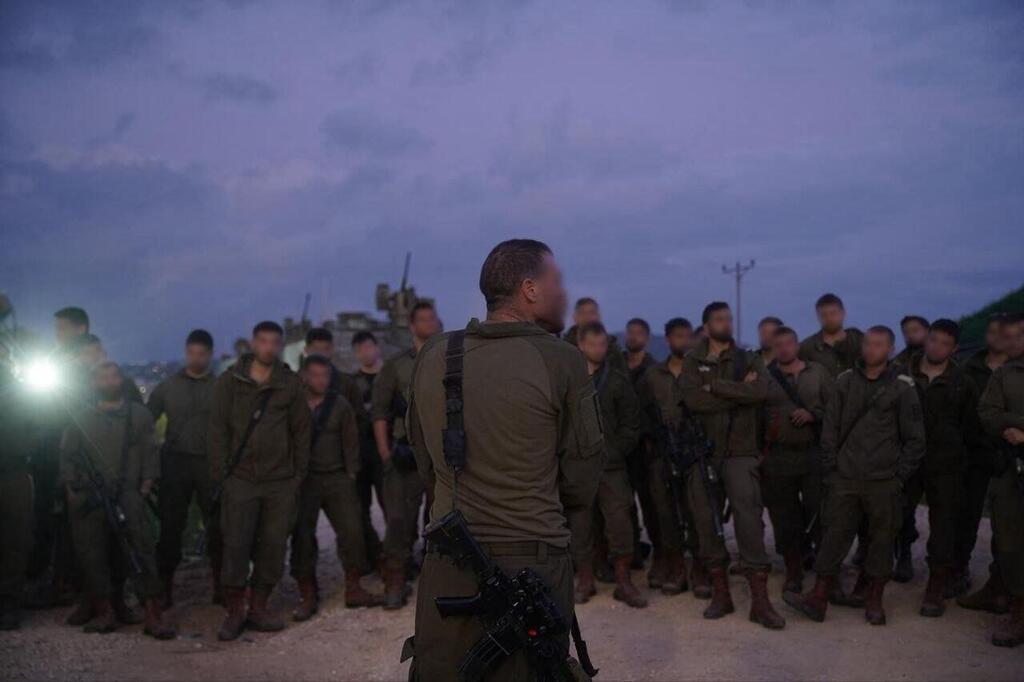
Last week, during those operations, his unit was involved in one of the more difficult encounters faced by Israeli forces in southern Lebanon in recent fighting. Four soldiers from the unit were killed — an incident previously reported.
“One of the teams moved to outflank a structure,” he said. “Inside a small alcove, in an area that made detection difficult, two or three terrorists were hiding. During the movement, four of our best soldiers were critically wounded and, sadly, killed.”
He said he was positioned nearby at the time. “The encounter was brief — just a matter of minutes — face-to-face combat at a distance of only a few meters. This is a very challenging combat zone.”
The loss is deeply felt within the unit.
“Noam, Ben, Maxsim and Gilad were extraordinary people,” he said. “Not only in their bravery — moving forward under fire — but in their constant drive to engage. When people like that are gone, it shakes the system.”
Despite the loss, he emphasized the unit’s resilience.
“The Nahal reconnaissance unit is strong,” he said. “We are all grieving and thinking about the families. But this event has also given us strength to continue eliminating Hezbollah.”
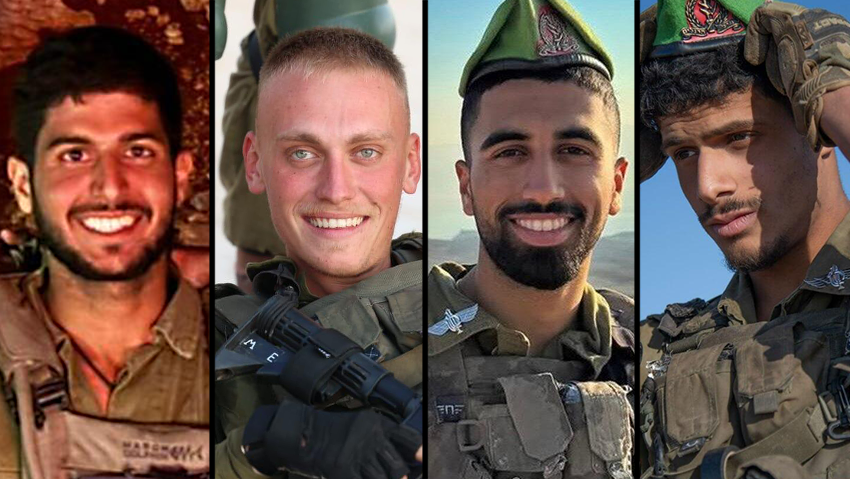
Cpt. Noam Madmoni, Staff Sgt. Ben Cohen, Staff Sgt. Maxsim Entis and Staff Sgt. Gilad Harel
(Photo: IDF)
Describing the fighting against Hezbollah’s Radwan forces near the village of Beit Lif, he said the fighters were heavily armed.
“There are between 20 and 30 terrorists in the area. We have eliminated most of them,” he said. “They are equipped with everything — Kalashnikovs, short- and long-range anti-tank missiles, explosive drones, grenades. Aside from tanks and aircraft, they have almost everything. The quantities are hard to comprehend, in some cases more advanced than what we encountered in Gaza.”
On the day of the encounter, which took place around 6:30 p.m., the unit had been operating in the area since early morning.
“We had been fighting for many hours in an area we knew was full of terrorists,” he said. “We will not return until every one of them is eliminated. It is only a matter of time. We are cutting out this threat and will not stop for a moment.”
He said the sounds of sirens in northern Israel remain a constant reminder of the mission.
“As we fight, we hear the alerts in communities in the north behind us and see the launches in front of us,” he said. “We think about parents with a baby running to shelter, about elderly couples trying to reach a safe room, and we understand that we have a mission — to remove this threat and bring quiet back to the residents of the north.”