

Some 3,500 U.S. sailors and Marines aboard the USS Tripoli arrived in the U.S. Central Command area of responsibility on March 27, CENTCOM said, as Washington continues to build up forces in the region amid concerns over a possible ground operation targeting Iran.
The USS Tripoli, an America-class amphibious assault ship, is serving as the flagship of the Tripoli Amphibious Ready Group and the 31st Marine Expeditionary Unit, a combined force that includes ground, air and naval elements.
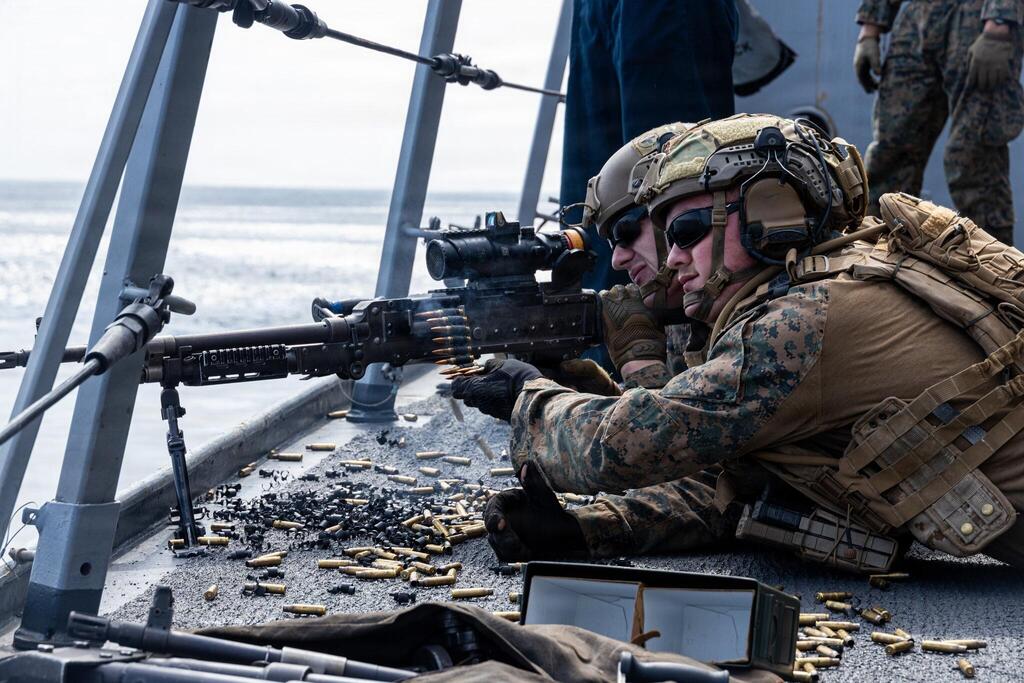
US Marines
The deployment includes transport and strike fighter aircraft, as well as amphibious assault capabilities and other tactical assets designed for rapid-response operations.
The arrival is part of a broader U.S. military buildup tied to the ongoing war with Iran, with amphibious forces capable of conducting both sea-based strikes and ground operations. Such units are typically used for rapid deployments, including securing strategic locations, evacuations or potential assaults on coastal targets.
The Wall Street Journal reported that the Pentagon is considering deploying up to 10,000 additional U.S. ground troops to expand President Donald Trump’s military options as he weighs potential peace talks with Iran.
According to the report, the proposed deployment would likely include infantry units and armored vehicles, adding to roughly 5,000 Marines and thousands of paratroopers from the 82nd Airborne Division already ordered to the region.
It remains unclear where the additional troops would be stationed, though they would likely be positioned within striking distance of Iran, including near key sites such as Kharg Island, a major oil export terminal off Iran’s coast.
The moves come as Trump has repeatedly said he intends to reopen the Strait of Hormuz, with or without support from U.S. allies, raising the prospect of further escalation in one of the world’s most critical energy corridors.