


The Knesset’s term is set to end on July 17, next week, when it completes its full tenure. Because of the tight schedule and coalition concerns that it will not have enough time to pass the entire bill, lawmakers have launched a legislative marathon as part of the deal between Prime Minister Benjamin Netanyahu and the ultra-Orthodox parties, first reported by ynet.
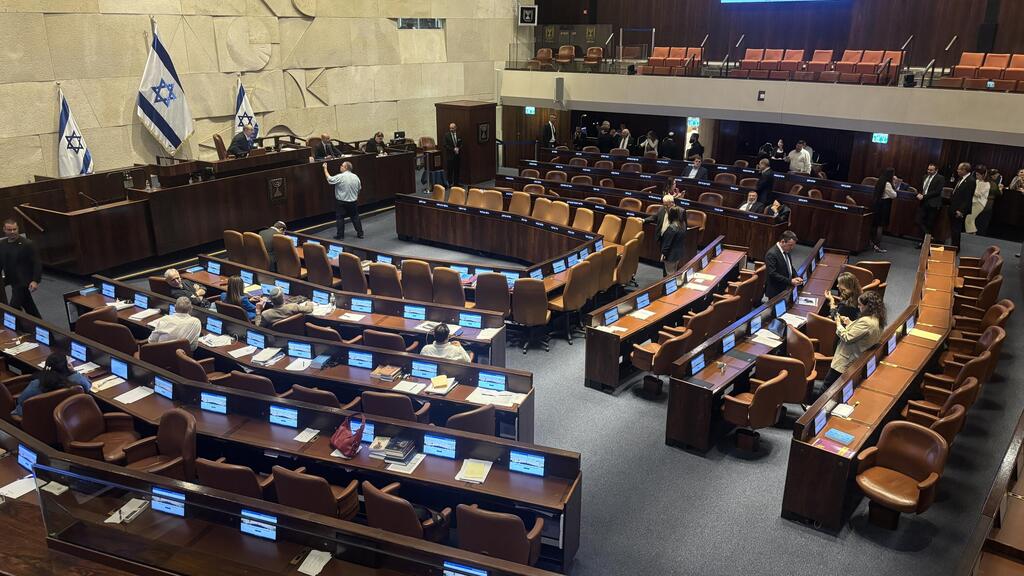
The Knesset
(Photo: Gil Yohanan)
The move would allow the coalition, among other things, to apply continuity to the bill, enabling the 26th Knesset to resume deliberations on the legislation without starting the process from the beginning.
The bill was approved for its first reading by the Constitution, Law and Justice Committee last month. Opposition lawmakers were absent from the vote.
The updated text approved by the committee states that the state comptroller will not appoint missing members to the inquiry committee, and that the committee may operate with a partial quorum of at least three members out of six, effectively allowing it to function without opposition representatives.
The proposal, initiated by Likud Knesset Member Ariel Kallner, would establish a committee to investigate the events of the October 7 massacre, the war and the circumstances that led to them. The committee’s report would be submitted to the Knesset speaker and the government.
The purpose clause states that the bill is intended to “bring about a full, thorough and independent investigation” of the Simchat Torah massacre, the October 7 attack, the war and the circumstances that led to them. It says the inquiry would be conducted by a committee formed “in recognition of the public dispute over the identity of the body appointing its members,” and in a manner that would allow the committee’s members to be appointed by broad agreement and in a balanced and fair way among the people’s representatives.
The committee would have six members, all Israeli citizens.
Under the proposed eligibility rules, a person could not be appointed to the committee if, in the 18 years before October 7, he or she served in any of the following roles: Supreme Court justice, prime minister, minister, officer with the rank of major general or above, head of the Shin Bet or deputy head of the Shin Bet, attorney general, military advocate general or legal adviser to the Shin Bet.
The bill also proposes that at least one committee member must be qualified for appointment as a Supreme Court justice, meaning a lawyer with at least 10 years of experience.
Committee members would be appointed by the Knesset. Under the proposal, the Knesset speaker would place before the Knesset, within 14 days of the law’s publication, a list including the names of the committee chair and members, after consulting as much as possible with representatives of coalition and opposition factions.
The composition would be brought for Knesset approval within seven days of being placed on the Knesset table and would require a majority of 80 lawmakers.
If no agreement is reached, committee members would be appointed by the chair of the House Committee and the head of the opposition. Each would appoint three committee members, one of whom must be qualified for appointment as a Supreme Court justice, provided that the coalition appointments are approved in writing by at least 61 coalition lawmakers and the opposition appointments are approved in writing by a majority of opposition lawmakers.