



Israel's record-breaking voter turnout could do far more than signal heightened public interest in Tuesday's election. It could fundamentally change the political landscape, raise the number of votes smaller parties need to enter the Knesset, reshape the balance between rival blocs and leave the identity of the next government uncertain until the final ballots are counted.
By 4 p.m., turnout had reached 55.7%, compared with 47.5% at the same hour in the previous election, marking the highest participation recorded at that point in the day since 1973. The surge caught even senior political figures by surprise. While many had anticipated stronger voter participation, the numbers have far exceeded expectations.
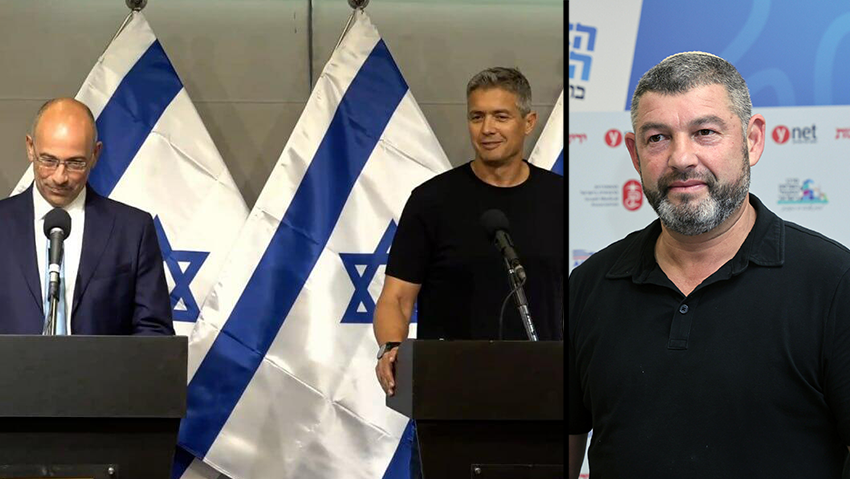
Yoaz Hendel and Yaron Zelekha, Ofer Winter
(Photo: Ryan Preuss)
But the significance of the surge extends well beyond the headline figures. Higher turnout changes the electoral mathematics, potentially determining which parties survive, which disappear from parliament and whether Prime Minister Benjamin Netanyahu or his opponents can assemble a governing majority.
More voters, a higher bar for smaller parties
The most immediate consequence concerns parties hovering around Israel's electoral threshold, the minimum share of votes required to enter the 120-seat Knesset.
Under Israeli election law, a party must win at least 3.25% of all valid votes to secure parliamentary representation. While that percentage remains fixed, the actual number of votes required rises as more people participate.
In the November 2022 election, parties needed more than 154,000 votes to cross the threshold. If Tuesday's unusually high turnout continues through the evening, the number could rise by tens of thousands, creating a significantly tougher challenge for smaller parties.
Among those facing particular uncertainty are Amcha Yisrael, led by former IDF general Ofer Winter, and the Reservists-Economic Party, headed by former minister Yoaz Hendel and economist Yaron Zelekha. Both have been fighting to secure enough support to enter parliament, and the growing number of ballots could make that task considerably harder.
The effects could extend to established parties whose support is concentrated within particular communities. Even if their own voters turn out in substantial numbers, a larger overall electorate could reduce their relative share of the vote, potentially costing them parliamentary seats.
However, the national turnout figure alone cannot reveal which parties or blocs stand to benefit. The geographic distribution of voters, and which communities are participating in greater numbers, will ultimately determine how the surge translates into seats.
Netanyahu's dilemma: A small party could help or hurt his bloc
The electoral threshold could have particularly significant consequences for Netanyahu's efforts to secure a parliamentary majority.
Despite Netanyahu's aggressive campaign against Winter, the former general's party could ultimately strengthen the Netanyahu bloc if it crosses the threshold and wins seats in the Knesset.
But if Amcha Yisrael fails to reach 3.25%, its votes will be excluded from the allocation of parliamentary seats. That could leave a substantial number of right-wing votes without representation, potentially pushing Netanyahu further away from the 61 seats needed to form a majority government.
The situation surrounding Hendel and Zelekha is more complicated. Their party appeals to voters from both major political blocs, particularly those concerned about equal responsibility for military service and greater economic fairness.
It remains unclear which side would lose more votes to the alliance, or how its entry into parliament might affect the balance of power.
In an election where even a handful of seats could determine who forms the next government, the fate of parties hovering around the threshold could prove decisive.
Why the final results could take until Thursday
The record turnout also adds another layer of uncertainty to an election whose outcome may not become clear on Tuesday night.
More than 650,000 special double-envelope ballots are expected to be cast by soldiers, diplomats, displaced residents and voters with disabilities, among others. These ballots are counted separately from ordinary polling station votes and could significantly alter the final distribution of seats.
With several parties potentially finishing close to the electoral threshold, those votes could determine whether a party enters the Knesset or falls short, potentially changing the balance between the competing blocs.
That means the exit polls released when polling stations close at 10 p.m. may provide only a preliminary picture of the election outcome. Even by Wednesday evening, the political balance could remain unclear, with a more definitive result potentially not emerging until Thursday.
For Israel's political leaders, the unusually high turnout presents both an opportunity and a risk. More voters may strengthen some parties, weaken others and dramatically alter the prospects of forming a government.
The central question is no longer simply how many Israelis are voting, but who they are voting for, which parties cross the threshold and how hundreds of thousands of ballots still to be counted could transform the final result.