

Qatar’s prime minister accused Israel of ignoring the hostages in the Gaza Strip when it attacked Hamas leaders in Doha, but he vowed Thursday not to abandon efforts to end the nearly two-year war.
Sheikh Mohammed bin Abdulrahman Al Thani told an emergency meeting of the U.N. Security Council that Israel went “beyond any borders, any limitations” with the strike in Qatar’s capital this week, violating his country’s sovereignty and threatening regional peace.
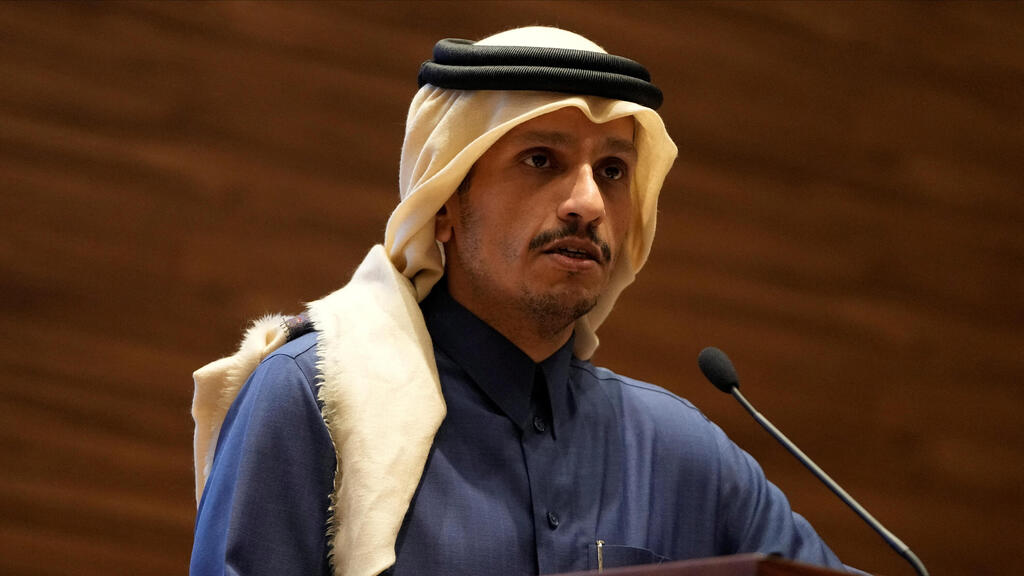
“Israel is trying to rearrange the region by force,” he said. But “we will continue our humanitarian and diplomatic role without any hesitation in order to stop the bloodshed.”
Israel’s airstrike killed at least six people as Hamas leaders gathered to consider a U.S. proposal for a ceasefire in Gaza. It risked upending negotiations that have been mediated by Qatar, Egypt and the United States and intensified Israel’s global isolation, including a condemnation of the strike from the U.N. Security Council.
“Extremists that rule Israel today do not care about the hostages — otherwise, how do we justify the timing of this attack?” Sheikh Mohammed said. He told CNN late Wednesday that Israeli Prime Minister Benjamin Netanyahu was directly to blame for killing “any hope for those hostages.”
In response, Israeli Ambassador to the U.N. Danny Danon said that “history will not be kind to accomplices.”
“Either Qatar condemns Hamas, expels Hamas, and brings Hamas to justice. Or Israel will,” Danon said.
Qatar’s diplomatic push
Before Sheikh Mohammed spoke to the 15-member council, every country — except for the U.S. — laid the blame for the attack and larger regional conflicts on Israel, and echoed doubts about the country’s seriousness in securing the return of its hostages.
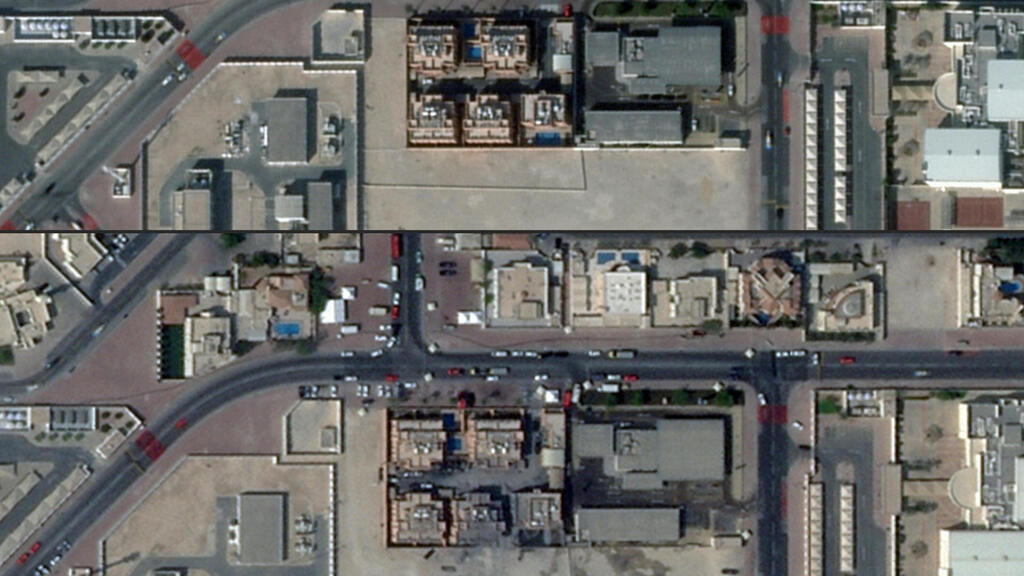
Before and after the attack
(Photo: PLANET LABS PBC / AFP)
“It is evident that Israel, the occupying power, is bent on doing everything to undermine and blow up every possibility of peace,” Pakistani Ambassador Asim Iftikhar Ahmad said. “It also raises serious questions whether the return of hostages was indeed a priority.”
Acting U.S. Ambassador Dorothy Shea said, “It is inappropriate for any member to use this to question Israel’s commitment to bringing their hostages home.”
At the start of the session, Rosemary DiCarlo, the U.N.’s political chief, said Israel’s attack “shocked the world” and “potentially opens a new and perilous chapter” in the war in Gaza.
“It was an alarming escalation, especially since it targeted individuals who were reportedly gathered to discuss the latest U.S. proposal for a ceasefire and hostage release deal in Gaza,” she said.
Sheikh Mohammed said his country fully supports “mediation and the peaceful settlement of disputes, and Qatar’s role is being appreciated worldwide.” He gave no indication of any next steps.
Danon said Israel’s “fight is with Hamas, not with the people of Gaza, nor with the state of Qatar.” He asserted Israel had the right to track down those responsible for the Oct. 7, 2023, attacks anywhere.
In addition to the U.N. visit, Sheikh Mohammed planned to meet with U.S. Secretary of State Marco Rubio at the White House on Friday, according to the State Department. Qatar also said it was organising an Arab-Islamic summit next week in Doha to discuss the attack.
US joins condemnation of Doha attack, but no mention of Israel
The Security Council earlier issued a joint statement expressing “deep concern” without mentioning Israel by name and emphasising “de-escalation.” Approved by the 15-member council, including the U.S., the statement also conveyed its solidarity with Qatar and the “vital role” it’s played in mediating peace efforts in recent years.
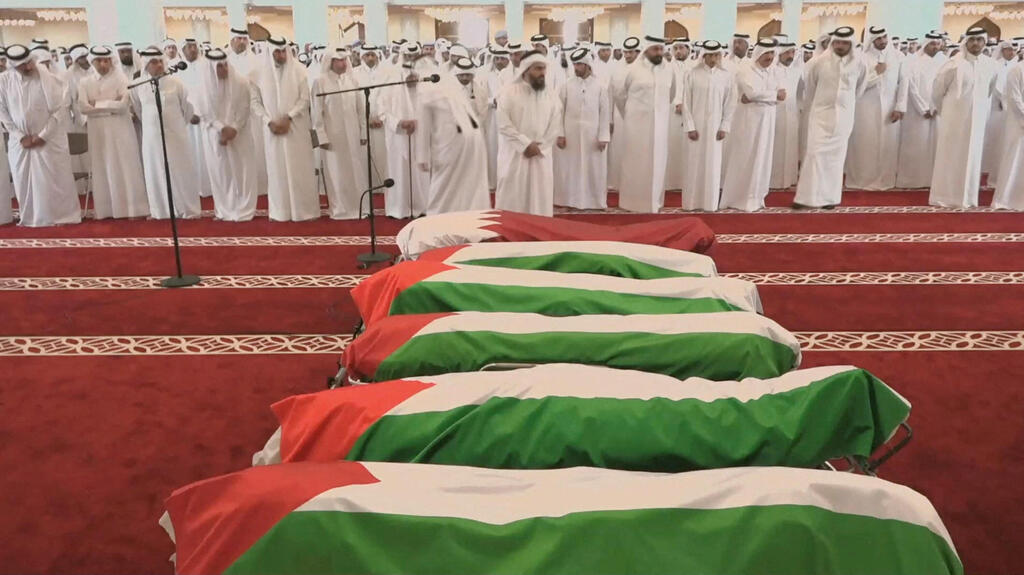
The funeral of the six people that were killed in the strike
(Photo: Qatar TV/ Reuters)
U.S. President Donald Trump has walked a delicate line between two major allies following the Israeli attack, saying the unilateral action “did not advance Israel or America’s goals.” He has said he’s “not thrilled about it” but also suggested that “this unfortunate incident could serve as an opportunity for peace.”
Qatar has hosted Hamas’ political leadership for years in Doha, in part over a request by the U.S. to encourage negotiations to end the war that started with Hamas’ attack on Israel.
During the Security Council session, Shea repeated Trump’s sentiments and defended Israel’s decision to target Hamas leaders.
“Eliminating Hamas, which has profited from the misery of those living in Gaza, is a worthy goal,” she said.
Meanwhile, Hamas spokesperson Fawzi Barhoum said Israel’s attack constituted a “derailment of negotiations efforts” and showed that Netanyahu and his backers “refuse to reach a deal.”
Hamas says its senior leaders survived the Doha strike but that five lower-level members were killed. The terror group, which has sometimes only confirmed the assassination of its leaders months later, offered no immediate proof that senior figures had survived.
Funerals for the five Hamas members and a Qatari security officer who were killed in the attack were held on Thursday. Qatar’s ruling emir, Sheikh Tamim bin Hamad Al Thani, attended the service.
A warning from the UAE
The United Arab Emirates said Thursday that more “provocative and hostile rhetoric” from Israel undermines stability and “pushes the region towards extremely dangerous trajectories.”
The UAE’s Foreign Ministry said an aggression against any of the six member states of the Gulf Cooperation Council — which includes Qatar — “constitutes an attack on the collective Gulf security framework.”
The country, which also blocked Israeli firms from participating in the Dubai Air Show in November, was part of the 2020 Abraham Accords, in which it and three other Arab nations forged ties with Israel.