

Iran is taking increasingly dangerous risks against the U.S. Navy as it tries to break a costly stalemate in the Strait of Hormuz, where an American blockade and new sanctions are placing growing pressure on Tehran’s already battered economy.
In at least three incidents over the past week, Iranian forces fired missiles at U.S. warships, including an aircraft carrier, attacks not seen since the war began in February. Senior officials cited by The Wall Street Journal said Iran used maneuverable warheads in the strikes, marking a significant escalation. U.S. Central Command said the vessels successfully evaded the attacks.
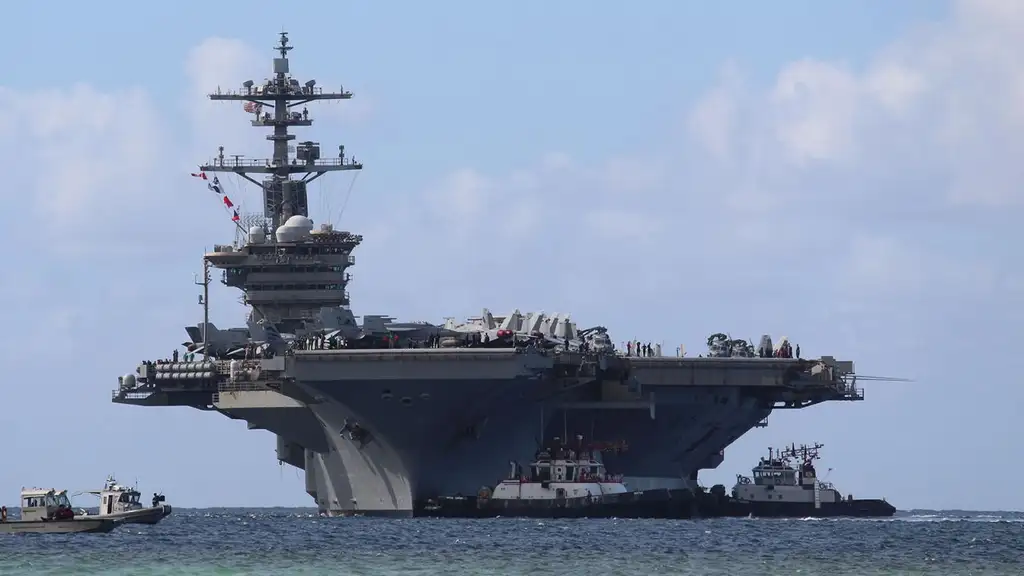
The incidents have nevertheless raised concerns among U.S. officials that Iran may be improving its ability, potentially with Chinese or Russian assistance, to threaten American naval forces around Hormuz. A successful strike on a U.S. warship could almost certainly trigger a major American response and push the conflict into a far broader and more destructive phase.
Yet Tehran appears increasingly willing to accept that risk. Nineteen U.S. Navy ships are enforcing a blockade that has effectively halted Iranian oil exports, while fresh American sanctions have disrupted Iran’s financial system and accelerated the rial’s decline.
“Iran is escalating because it sees no other options,” said Mark Sievers, a former U.S. ambassador to Oman, across the Strait of Hormuz from Iran. “It is under immense pressure because of the blockade and the new sanctions.”
The calculation, analysts say, is not to match American military power but to make maintaining the status quo increasingly expensive for Washington. Iranian missile attacks and threats to commercial shipping force the United States to devote ships, air defenses and increasingly scarce missile interceptors to protecting its forces and keeping maritime traffic moving.
“Iran may see value in the risks that would accompany a successful strike on a U.S. warship,” said Alice Gower, a partner at a London-based political risk consultancy. Such an attack could shake global markets and Gulf states while forcing President Donald Trump to choose between an expensive military response and appearing weak ahead of the midterm elections. “Either way, Iran sees an advantage,” she said.
Oil pressure drives the escalation
The latest fighting began in late August, when U.S. forces struck targets in Iran after Tehran attempted to lay mines in the Strait of Hormuz. Iran responded by attacking U.S. forces and oil tankers, ending roughly a month of relative calm and driving oil prices sharply higher.
The attacks on U.S. naval forces have continued even after Washington struck Iranian tankers in retaliation. They also represent a sharper approach than Tehran had taken in recent weeks against U.S. military assets in Kuwait, Bahrain and Jordan, where reports said nine fighter jets were hit at Muwaffaq Salti Air Base.
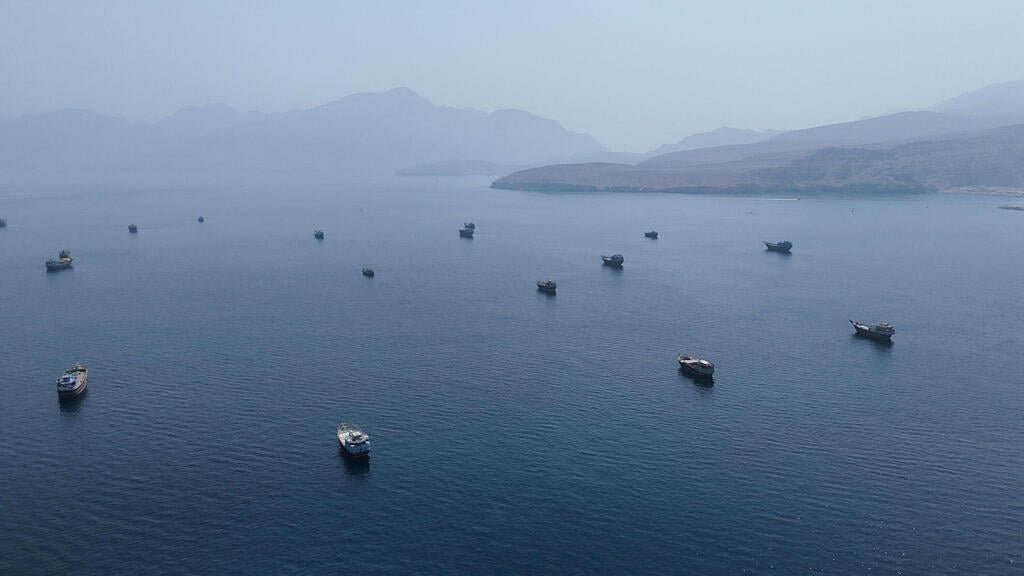
Strait of Hormuz
(Photo: REUTERS/Stringer/File Photo)
But former officials and analysts say attacks on American ships are unlikely to break the blockade itself. Retired Vice Adm. John Miller, a former commander of U.S. naval forces in the Middle East, said American vessels can move farther from Iranian territory while continuing to enforce it.
“Defending the ships is certainly a major consideration,” Miller said. “We can move our ships farther away if we think they are in any danger and still continue to enforce the blockade.”
The economic consequences for Iran are already severe. Ship-tracking firm Kpler says no Iranian crude has crossed the blockade since the U.S. Navy reinstated it in mid-July, while stockpiles intended for China are rapidly being depleted.
The loss of oil revenue is depriving Tehran of its main source of foreign currency. The rial has plunged, annual inflation has risen above 80%, and the International Monetary Fund forecasts a 5.4% contraction in Iran’s economy this year, its steepest decline since the 1980s.
Other Gulf producers, meanwhile, have largely managed to keep their oil moving. The United States is escorting convoys through Hormuz, while Saudi Arabia and the United Arab Emirates are sending more crude through pipelines that bypass the strait.
Tehran’s ‘crown jewel’
That leaves Hormuz as one of Iran’s most important remaining sources of leverage. If Tehran loses its ability to threaten shipping through the strategic waterway, it also loses one of the few tools it has left to impose economic and military costs on the United States and its regional partners.
Maintaining that threat, even at the risk of a direct hit on an American warship, therefore remains central both to Iran’s military strategy and to its bargaining position in any future negotiations.
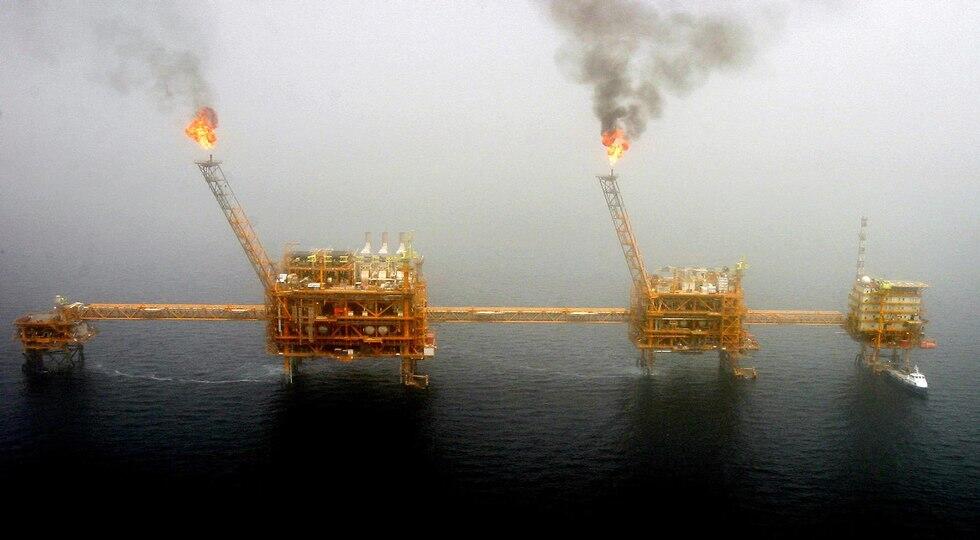
Oil production platform in the Persian Gulf
(Photo: Reuters)
“Hormuz is the immediate concern and the main battlefield, but it is also Tehran’s greatest source of leverage,” Gower said. “It will not give it up easily. It is the crown jewel.”
The gamble carries dangers far beyond Iran and the United States. As Washington intensifies pressure on Iranian energy exports, Tehran has a growing incentive to make Gulf states and global markets share the cost of the confrontation.
“The more Washington attacks Iranian energy exports, the greater Iran’s incentive to make sure the price of the conflict is felt beyond its borders,” Gower said.