


A race against time is underway to locate the missing American on enemy soil: US special forces, backed by helicopters and fighter jets, are searching for the navigator of an F-15E that crashed Friday in Iran, while the Islamic Republic is simultaneously conducting its own search and offering a cash reward for his capture alive.
Iran’s search efforts are focused, at least in part, on Kohgiluyeh and Boyer-Ahmad province in southwestern Iran, deep in the Zagros Mountains. The rugged region borders Fars, Isfahan, Khuzestan and Bushehr provinces — all of which have seen strikes during the war — and is known for its dense greenery and wild terrain, complicating efforts to locate the navigator. It is also home to some of Iran’s richest oil reserves, producing about 35% of the country’s oil and gas.
US search efforts for the navigator


The Zagros range stretches roughly 1,600 kilometers, with peaks rising above 4,200 meters, valleys that could funnel US forces into “kill zones,” and narrow passes where a small number of defenders can halt larger units. Iranian media have offered a reward of about $66,000 for anyone who captures the navigator alive, and according to The Telegraph, local tribal populations with deep-rooted traditions have responded. Familiar with every ridge, valley and ambush point, they present a challenge no foreign force can easily match. Armed civilians have reportedly been seen searching in at least two provinces.
US President Donald Trump has said the downing of the aircraft will not affect negotiations with Iran, but the situation could change dramatically if Tehran locates the navigator first. In that scenario, Iranian media would likely broadcast images of him, increasing domestic pressure on the administration, which is already facing public criticism over the war and has reported 13 American fatalities. Iran could also capture the navigator without publicizing it and use him as leverage in negotiations to end the war, seeking to force Trump to accept demands previously described as “extreme” and “excessive.” If the navigator is killed, Trump could face pressure to escalate military action, potentially triggering a ground invasion.
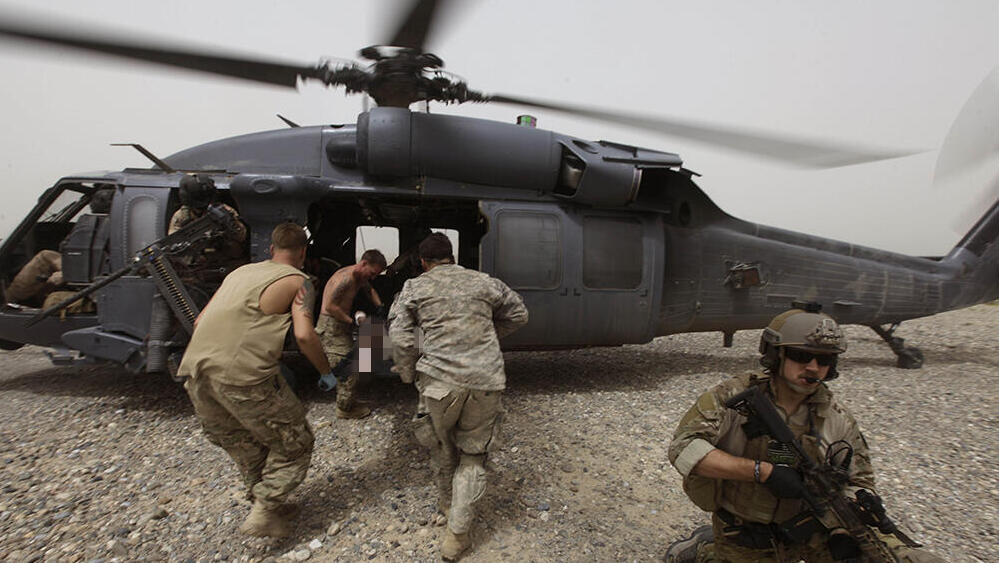
The incident is particularly embarrassing for the US administration, coming just days after Defense Secretary Pete Hegseth said the United States had achieved such air superiority over Iran that even slow B-52 bombers could operate freely in its airspace.
Footage filmed in Iran and verified by international media shows military helicopters escorting a refueling aircraft over Khuzestan province, raising questions about how Iran managed to down an F-15E while failing to hit slower, less advanced aircraft. Other videos show Iranian police firing small arms at US helicopters during the search operations.
The pilot of the downed fighter jet has already been rescued under fire by helicopters, two of which were hit by Iranian fire but landed safely. An A-10 aircraft also crashed, and its pilot was rescued safely from the Gulf. Reports overnight said US commando units are also operating on the ground in Iran as part of the search.
The situation has raised concerns about a scenario similar to the 1993 Battle of Mogadishu, later depicted in the film “Black Hawk Down,” in which a mission to capture militia leaders spiraled after two US helicopters were shot down. What was intended to be a one-hour operation turned into an 18-hour firefight, leaving 18 American soldiers and hundreds of Somalis dead.
'An extremely dangerous mission'
Combat search and rescue (CSAR) missions are considered among the most complex and sensitive military operations. The US Air Force maintains elite units specifically trained for such missions, often pre-deploying them near conflict zones where aircraft may be lost.
Because the current search is taking place deep inside enemy territory, a former rescue squadron commander told CBS that such an operation could involve at least 24 personnel scanning the area using Black Hawk helicopters. He added that teams may parachute in if necessary, with their top priority upon reaching the ground being to establish contact with the missing crew member.
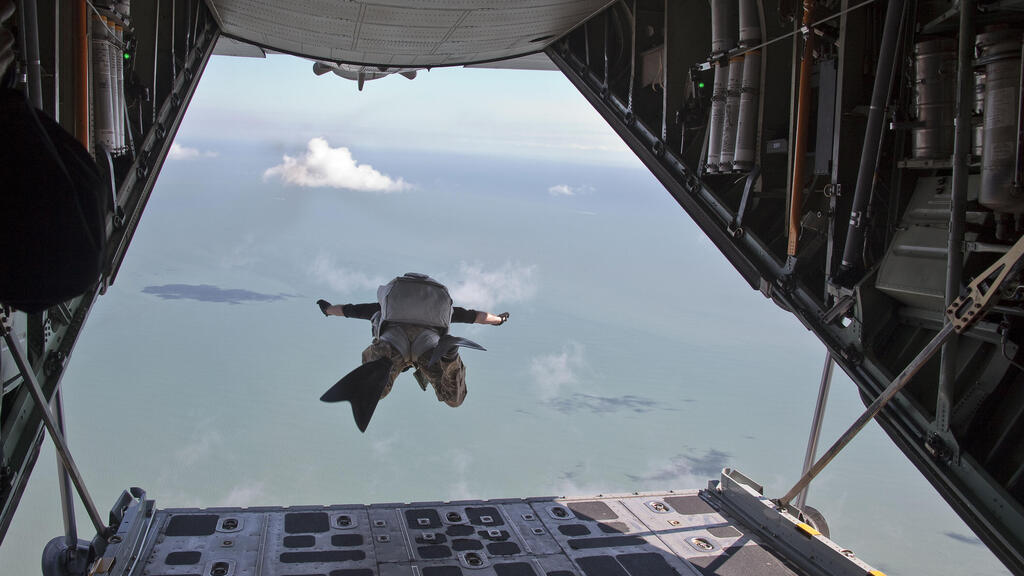
Grueling two-year military and medical training: rescue unit in action
(Photo: AP Photo/Mike Brown)
Once located, rescuers would provide medical care if needed, evade enemy forces and move to an extraction point. “Describing the mission as harrowing and extremely dangerous would be an understatement,” the former commander said. “This is what they train to do worldwide. They are known as the Air Force’s ‘Swiss Army knife.’”
Jonathan Hackett, a former US Marine Corps special operations expert, told the BBC that the top priority is identifying signs of life, with teams working backward from the last known location and spreading out based on how far the individual could have traveled in the terrain. He added that nonstandard assistance may also be used, including early coordination with local groups to prepare contingency rescue plans.
Combat search and rescue missions have a long history, evolving from improvised pilot recoveries in World War I into a sophisticated military capability. Key milestones include the establishment of US Air Force rescue units in 1943, the first operational helicopter rescue in 1944 in Burma (now Myanmar), and the formalization of dedicated units after World War II. The modern CSAR era was largely shaped by the Vietnam War, where high-risk missions — such as Bat 21 — led to the development of tactics and procedures still in use today.
Within the US military, the Air Force bears primary responsibility for personnel recovery in hostile territory. The rescue units’ official motto, “That Others May Live,” reflects their commitment to saving lives. Personnel undergo extensive training as both combatants and medical responders, completing one of the most demanding selection and training pipelines in the US military. The process lasts about two years and includes parachuting, diving, basic underwater demolition, survival, evasion, resistance and escape training, as well as full civilian paramedic certification and advanced instruction in combat medicine, rescue operations and weapons use.