


Justice Minister Yariv Levin on Sunday presented a bill that would create a special legal framework to prosecute terrorists involved in the Oct. 7 massacre and allow courts to impose the death penalty.
The bill is expected to come to a vote in the Knesset on Monday.

“This is not only about justice, but historic justice,” Levin said at a news conference. He said the trials would meet international legal standards while allowing proceedings to move efficiently.
Levin said the law would grant full authority to impose death sentences, and that if such sentences are handed down, “they will be carried out.”
“We are talking about hundreds of defendants,” he said, adding that the military would be responsible for leading the legal process.
Constitution Committee Chairman Simcha Rothman said the legislation was “not a party matter or a political event,” but a national response.
“The State of Israel will not forget and will not forgive,” Rothman said. “It will impose the harshest punishments in the law book, including the death penalty.”
The bill would apply to crimes committed from Oct. 7 to Oct. 10, 2023, including murder, rape, kidnapping and looting, defining them as crimes against the Jewish people, crimes against humanity and war crimes. It would also apply to later crimes committed against people abducted from Israel to Gaza, including hostages killed in captivity.
Indictments would be filed in a special military court in Jerusalem. The court would be authorized to hear additional Oct. 7-related offenses under laws including the Genocide Prevention Law, offenses against state sovereignty and counterterrorism legislation. That would allow death sentences to be imposed not only for murder, but also for crimes such as rape.
Trials would be organized by attack sites, such as Be’eri, the Nova music festival and Nir Oz.
Each panel would include three judges, at least one of them a military court president, or alternatively a district court president, vice president or judge called up for reserve duty.
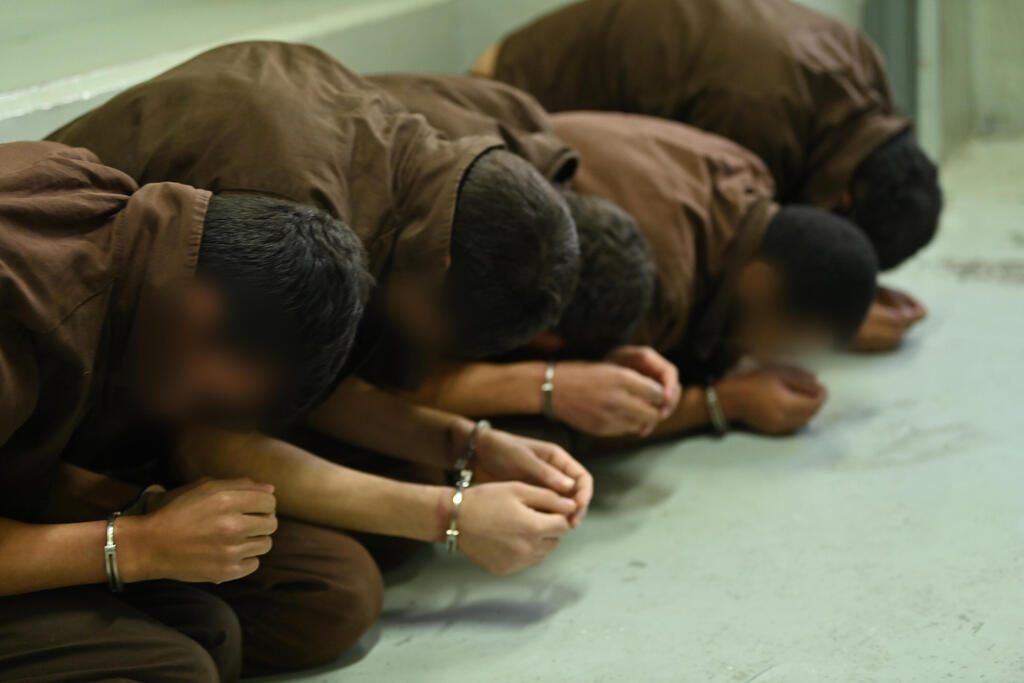
(Photo: Israel Prison Service)
Appeals would be heard by a three-judge panel headed by a retired Supreme Court justice, along with a current or retired district court president and two additional district court presidents or vice presidents. If a defendant is sentenced to death, an appeal would be automatic.
Defendants would be entitled to legal representation by a lawyer licensed in Israel or the West Bank. If a defendant is not represented, the court would appoint a lawyer, but not through the Public Defender’s Office. The state would seek to recover the cost from the Palestinian Authority by deducting it from funds Israel transfers to it.
Most defendants would take part in hearings by video from prison. They would be physically present in court for five types of hearings: responding to the indictment, testifying, hearing the verdict, testifying at sentencing and hearing the sentence.
The bill also emphasizes victims’ rights. Families of those killed or abducted, released hostages, and victims of rape and abuse would be allowed to attend hearings or watch from a separate room. A dedicated unit under the chief military prosecutor would oversee victims’ rights.
Hearings would be public and recorded in video and audio, with the recordings preserved in the State Archives. Major sessions, including the opening of trials, opening statements, verdicts and sentencing, would be broadcast on a dedicated website.