

Israel carried out a powerful aerial strike in the Tehran area as the country marked Nowruz, the Persian New Year, The Associated Press reported, citing activists in Iran.
The United Arab Emirates and Kuwait each announced separately that they were "responding to a missile attack." In Dubai, air defense systems were activated and intercepted a threat over the city’s skies as residents marked Eid al-Fitr, the end of the Muslim holy month of Ramadan, while the first prayers of the day echoed from mosques. In Bahrain, the interior minister said sirens were activated across the country, while Saudi Arabia’s defense minister reported that the Saudi military intercepted a drone in the eastern part of the kingdom.
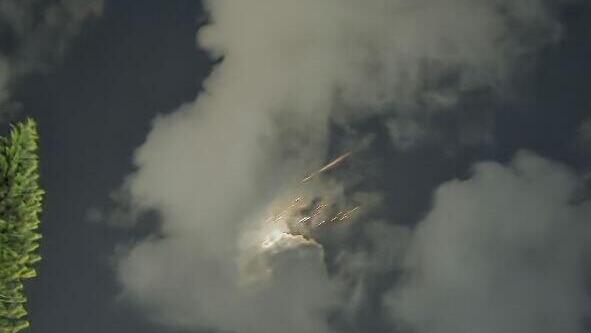
Interception of a missile launched from Iran over Israeli skies
Against the backdrop of a strike on Iran’s South Pars gas field and Tehran’s retaliation targeting energy facilities in the Gulf, The Wall Street Journal reported that oil industry officials in Saudi Arabia are working urgently to assess how the continued fighting will affect global oil prices. According to the report, the officials "are not pleased with what they see" and expect prices could surge to around $180 per barrel by the end of April if the war and disruptions to global supply continue.
Minutes after missile fire toward northern Israel, and following an unusual barrage across large parts of the country, the IDF spokesperson said the military had begun a wave of strikes against Iranian regime infrastructure in Tehran. Earlier, sirens sounded in numerous northern communities where no prior warning had been issued ahead of the launches. Magen David Adom said no injuries were reported following the latest barrage toward the north.