

The legal adviser to the Knesset has concluded that lawmakers must comply with a High Court of Justice ruling invalidating the election of the state comptroller and hold a new vote "as soon as possible," even if parliament is dissolved for elections, according to a legal opinion obtained by ynet.
In the opinion, Knesset legal adviser Sagit Afik said a new election for the state comptroller should be held within about two weeks and that Israeli law gives the Knesset full authority to elect a comptroller during the transition period before a new parliament is seated.

The opinion was submitted to Knesset Speaker Amir Ohana following last week's High Court ruling that voided the parliamentary vote in which attorney Michael Rabello was elected state comptroller. The court ordered the Knesset to conduct a new election.
Afik wrote that under Israeli law, the Knesset speaker must convene a parliamentary session for the election even if parliament is in recess. She also said that although outgoing legislatures traditionally exercise restraint after dissolving themselves for elections, the Knesset retains full authority to elect a state comptroller because of the office's constitutional importance and the principle of parliamentary continuity enshrined in Israel's Basic Law: The Knesset.
Earlier Wednesday, Justice Minister Yariv Levin urged lawmakers to ignore the High Court's ruling and allow Rabello to assume office without another vote. "Attorney Rabello should simply take up the position," Levin said.
Coalition Whip Ofir Katz echoed that position, saying the governing coalition considers Rabello the duly elected state comptroller. "As far as we're concerned, Rabello is the elected state comptroller," Katz said in an interview. "The High Court cannot demand a new election, but the decision whether to take office belongs solely to Rabello."
Katz added that Israel would remain without a permanent state comptroller during the dispute, blaming the situation on the court's ruling.
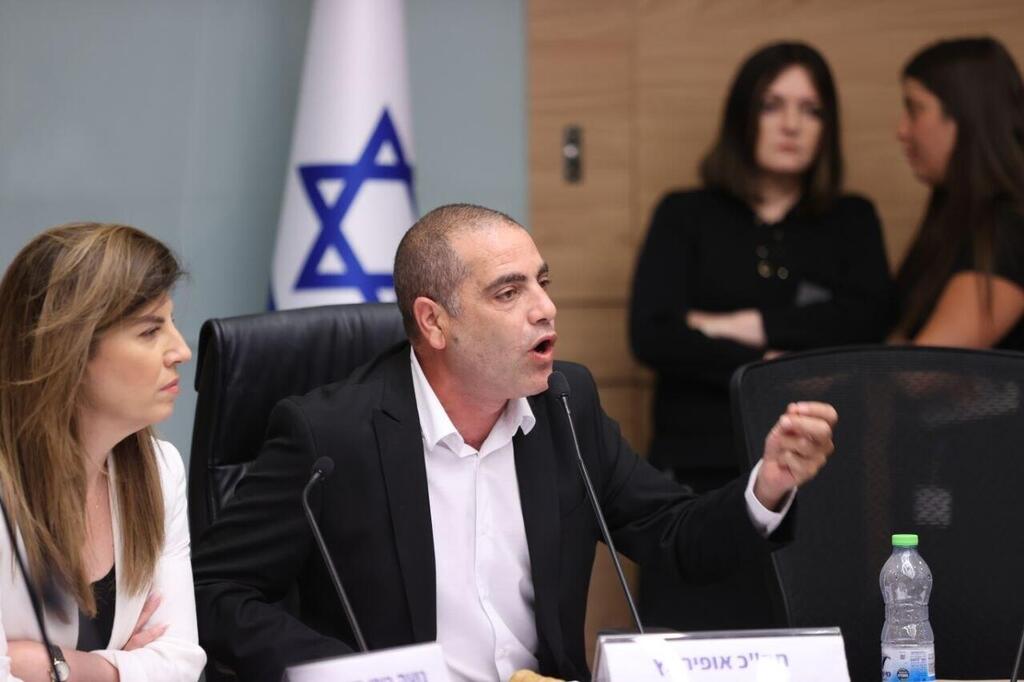
Coalition Whip Ofir Katz
(Photo: Alex Kolomoisky)
Prime Minister Benjamin Netanyahu and Ohana have reportedly held consultations on how to proceed. Sources familiar with the discussions said Netanyahu prefers complying with the court's decision by holding a new vote and seeking Rabello's reelection rather than refusing to implement the ruling. According to the reports, Netanyahu hopes to hold the vote before the Likud party's internal primaries, when coalition lawmakers are expected to be more likely to support his preferred candidate.
The coalition is expected to argue that the repeat vote is being held at Rabello's own request because he has said he will not assume office in defiance of the High Court's ruling.
The dispute has also raised concerns about the functioning of the Office of the State Comptroller, which serves as Israel's public ombudsman.
The comptroller's office confirmed this week that without a serving comptroller, there is no legal authority to issue or enforce protective orders for whistleblowers who report corruption in the public sector, because those powers are vested exclusively in the state comptroller in the role of ombudsman.
Following that disclosure, Alon Schuster, chairman of the Knesset State Control Committee, called on Ohana to schedule a new election as early as next week.
In a letter to the speaker, Schuster warned that continued delays would leave whistleblowers without legal protection, postpone the publication of important audit reports and disrupt the work of one of Israel's principal oversight institutions.
"The Knesset must not be the body that delays implementation of the High Court's ruling," Schuster wrote. "At a time when public trust in state institutions is being tested, it is essential to ensure both a permanent state comptroller and continued protection for whistleblowers."