

After more than a decade of intensive work by hundreds of engineers, technicians, physicists, professors and doctors under the Defense Ministry’s Directorate of Defense Research and Development (DDR&D), a historic moment finally arrived in late 2023—at the height of Israel’s shock and mourning following the October 7 massacre and the outbreak of the Iron Swords War.
It was only cleared for publication Wednesday night: Dozens of Hezbollah drones fired at the Galilee were intercepted by a laser system operated by the Air Force’s newly established tactical air defense battalion, which had been rapidly deployed to the north.
Watch: The Iron Beam laser-based air defense system in action during war
(Video: Ronen Ben Tzur/IDF)


Following the massacre in Gaza border communities, DDR&D immediately deployed the most advanced technological arsenal, even if still in development stages: from drones that intercept other drones, to new versions for downing UAVs with various methods, including classic anti-aircraft guns, alongside existing systems like Iron Dome, David’s Sling, Arrow 2 and Arrow 3. The American THAAD system was also deployed in the south.
“We are prepared, within foreseeable timeframes, to deploy laser systems that can intercept ballistic missiles and rockets," DDR&D chief Dr. Daniel Gold told Ynet. "We’re working around the clock to advance future generations of the laser system and the main high-powered laser interception system, Iron Beam, which is set to become operational in the IDF.”
Get the Ynetnews app on your smartphone: Google Play: https://bit.ly/4eJ37pE | Apple App Store: https://bit.ly/3ZL7iNv
The laser system, which has already recorded about 40 successful interceptions—mainly of Hezbollah UAVs—has effectively complemented Iron Dome. DDR&D is working to strengthen the integration between the systems, noting that the low-cost laser interceptions have already saved hundreds of thousands of dollars compared to Iron Dome’s expensive interceptor missiles. So far, the laser system has performed successful interceptions at short ranges. Intercepting long-range threats will require systems from all defense layers to achieve an over 90% success rate.
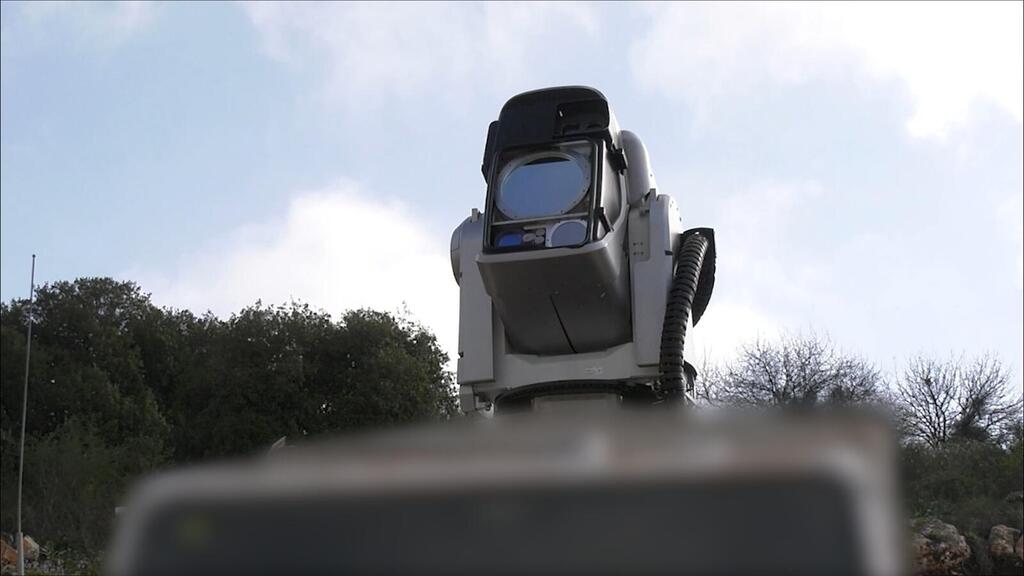
The Iron Beam laser-based air defense system
(Photo: IDF)
While the Iron Beam project receives partial U.S. funding, the laser system currently in use is entirely Israeli-made, developed by local startups under the leadership of defense contractor Rafael. The mobile, tactical system can shift locations based on threats. Though lower-powered than the full Iron Beam, it remains highly effective, integrating advanced detection, classification, tracking and interception capabilities.
“For the first time in the world, we successfully intercepted a mass of threats in an operational arena," according to Gold. "The system is automated but still requires a human operator. Since the war began, we’ve been firing, testing and developing systems all day long, analyzing everything through the night. When facing wartime conditions, we can fast-track development, even as tens of thousands of threats are launched at us.”