

The IDF had been considering reducing the number of defense forces stationed in the West Bank and transferring much of the security responsibility to local emergency squads, but Chief of Staff Lt. Gen. Eyal Zamir decided Thursday night to freeze the plan.
The decision came during a meeting of the security cabinet, after Religious Zionism Minister Orit Strock objected to the move and the Shin Bet presented alarming data showing that more than 1,200 terrorist attacks had been foiled in the West Bank so far this year.
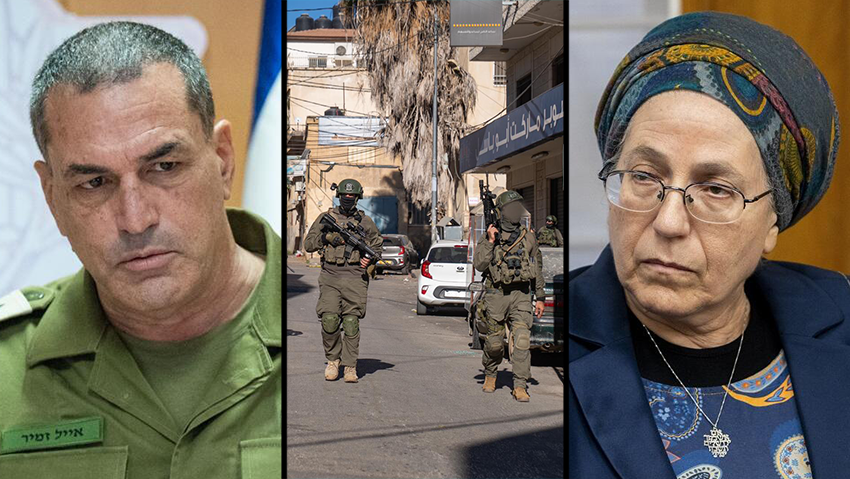
Eyal Zamir, Orit Strock
(Photo: IDF, Shalev Shalom)
Strock argued during the discussion that the planned troop reduction contradicted a cabinet decision made in January as part of the previous hostage deal, which saw the release of hundreds of terrorists to the West Bank. She warned that scaling back forces would endanger residents, given the security situation on the ground.
During the meeting, a Shin Bet representative said the number of attempted attacks in the area remains high and that security forces had successfully prevented over a thousand incidents in 2025 alone. Following the briefing, Zamir announced that the planned reduction in the number of soldiers assigned to regional defense brigades in the West Bank would be frozen.
IDF weighing security needs amid ongoing war
After October 7, the IDF reinforced security around West Bank communities, deploying thousands of reservists to prevent similar infiltration scenarios. Since then, troop levels have fluctuated according to threat assessments.
Last month, the army was considering a significant drawdown, shifting much of the responsibility for local defense to the communities themselves. Military sources said no final decision had been made and that discussions were ongoing with local leaders to plan a gradual transition.
Central Command has been conducting frequent security assessments with local councils and security officers to coordinate the process. Officials noted that during the war, the command carried out major “shaping operations” to strengthen community defenses, including clearing perimeters, installing new security technology, and distributing hundreds of firearms to trained residents.
Still, military officials acknowledged the IDF cannot maintain the current high troop levels indefinitely. The long-term plan calls for local residents to man security positions, while the Defense Ministry would help fund and equip them.
Knesset member Tzvi Sukkot welcomed Zamir’s decision to maintain current force levels, saying: “I commend the chief of staff for keeping the regional defense positions in the West Bank. Faced with the ongoing threat, the settlements must remain protected at the highest level. Thanks to my colleague Minister Orit Strock for her persistent work on this issue.”