

Young people in Budapest did not wait for the official results. On Sunday evening they gathered along the Danube, holding balloons, bottles of alcohol and Hungarian flags. Some climbed onto lampposts and traffic lights. Others tore down campaign posters of Viktor Orban and his Fidesz party.
Then the early results came in, and Orban conceded defeat. After 16 years in power, the man dubbed “Viktator” was defeated at the ballot box. The young people continued their spontaneous celebrations. Strangers kissed. It felt as if an Olympic swimming pool could be filled with tears of joy. They shouted “Ria-Ria, Hungaria” and “Hungary-Europe,” like citizens who had gotten their country back. It was also a signal to Peter Magyar of the Tisza party, the big winner, about the direction they want him to take Hungary.
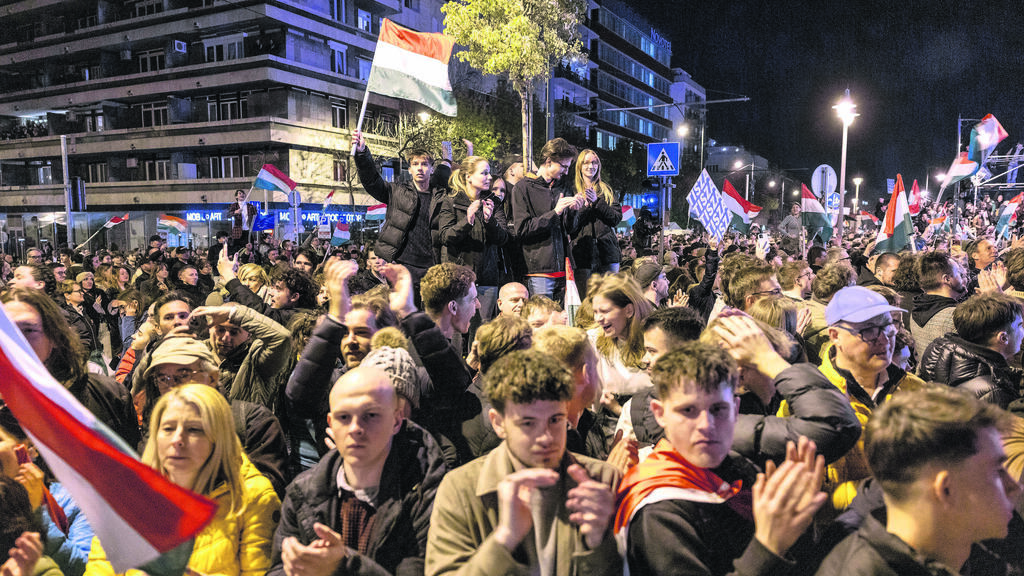
“If Orban had won again, I would have packed a suitcase and gotten on a train,” said Nora Meszaros, a 21-year-old student. “But it turns out we’re not that stupid. On the contrary. Until now it was embarrassing to be Hungarian. When people asked where I’m from, I would say Budapest. But now I’m proud. Not only did we bring about a turnaround, we showed everyone that you can defeat fascists, even if Trump and Putin are behind them.”
She was 5 when Orban was elected. “I remember as a child my parents taking me to rallies supporting the candidate running against Orban. But this is who I’ve known my whole life. And here, in the first election of my life, I got the best gift I could ask for: democracy. One day I’ll tell my children where I was on April 12, when democracy in Hungary was reborn.”
Older people, scarred by Orban’s rule, took the celebrations more calmly. Parents lifted their children onto their shoulders. People hugged, rested their heads on one another’s shoulders. And cried. There was a great deal of restraint among the adults, a pessimistic optimism, as Florian Gulyas, an electrician who supplements his income as a taxi driver, put it. The joy reminded me more of plane crash survivors. Much of the older crowd was already looking to the day after.
“Look, we’re not fooling ourselves,” Gulyas said. “It’s clear to us that our choice was between Orban and Orban’s protégé. So the initial goal was to bring down Orban, and we succeeded, but now we have to rebuild the entire state and its institutions. And rebuild trust. We’re very skeptical about Magyar. We know where he came from, and we know how Orban started, and we know how money and power corrupted him.”
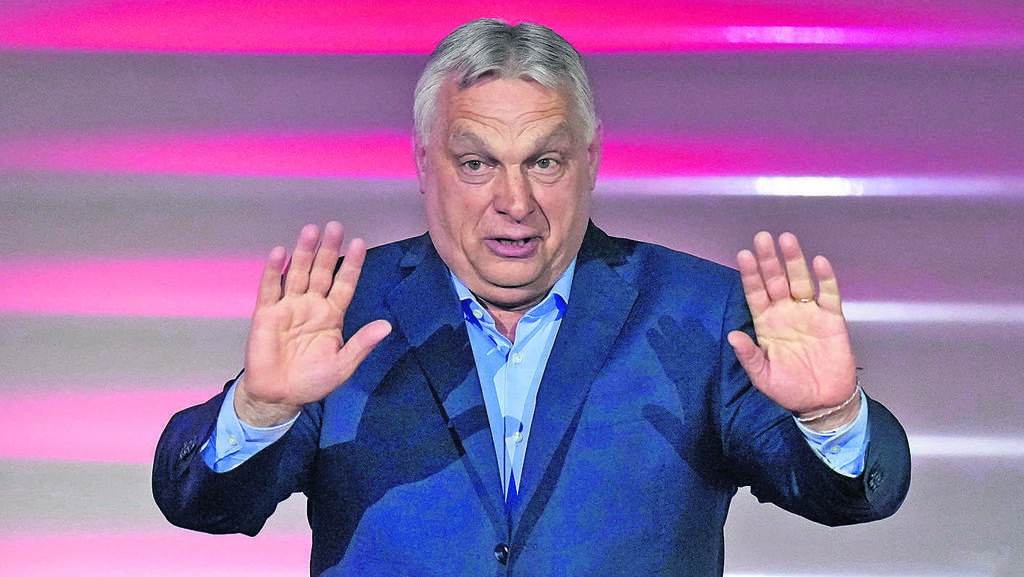
Viktor Orban
(Photo: Petr David Josek/AP)
A Catch-22
Peter Magyar, 45, a lawyer by training, grew up under Orban’s wing and was married to former Justice Minister Judit Varga. About two years ago he left Fidesz and founded Tisza. That came after Varga, already his ex-wife, granted a pardon to the deputy director of an orphanage who had tried to cover up a case of physical and sexual abuse of children at the institution.
For Magyar it was too much: he and Orban had built their ticket on patriotism, nationalism, conservatism, anti-immigration policy and, above all, family values. Orban forced her to resign and thought that would silence Magyar. Magyar, for his part, said that “Orban is hiding behind women’s skirts.” A few weeks later he released a recording he had secretly made of Varga in which she implicated senior figures in Orban’s inner circle in corruption cases.
In June 2024, Tisza won 30% of the vote in the European Parliament elections. Magyar crisscrossed Hungary, especially rural areas and the periphery, Orban’s strongholds (the big cities have always opposed him). Orban put Hungary at the center of the global agenda: international media coverage of the elections was disproportionate for a country with an economy the size of Munich’s and a population comparable to Switzerland’s.
He warned of external threats, cast himself as Budapest’s gatekeeper against the European Union, and was photographed with Putin and Trump (“Part of Orban’s affinity for Netanyahu was that Bibi opened many global doors for him, especially in Washington,” an Israeli businessman told me).
Magyar, by contrast, spoke to voters about the 20 billion euros earmarked for Hungary that are frozen by the European Parliament because of Orban’s policies. He reminded them of the cost of living, wage erosion, collapsing public systems, corruption, the desire to reconnect with Europe and to detach from Russia. He replaced fear of Orban with anger and managed to brand Orban as an obstacle preventing Hungarians from prospering.
With political acumen, Magyar managed to harness all the opposition parties without wasting votes (anyone seeking a comparison with Israel can start here: all opposition leaders set aside their egos to bring down Orban). He avoided divisive issues such as women’s rights or LGBTQ+ rights and did not mention his immigration policy. He did, however, say a few months before the election that he suspected Filipinos living in Hungary were responsible for the disappearance of ducks from a local zoo.
“In the previous elections, many people avoided going against Orban because of fear and because they thought he would win anyway. This time Magyar ran a brilliant campaign, he works hard and he is charismatic and fearless, and that’s how he succeeded,” said Gabor Florian, a 42-year-old physiotherapist. “But now we’re in a Catch-22.”
Explain.
“Some of Magyar’s voters came from Orban’s camp and some from the liberal-democratic camp. The latter don’t want a new Orban but real reforms on values Magyar didn’t talk about. But if he changes immigration or LGBTQ+ policy, the voters who defected to him from Orban will be very unhappy. To them he promised no changes, just what exists — only cleaner and better.”
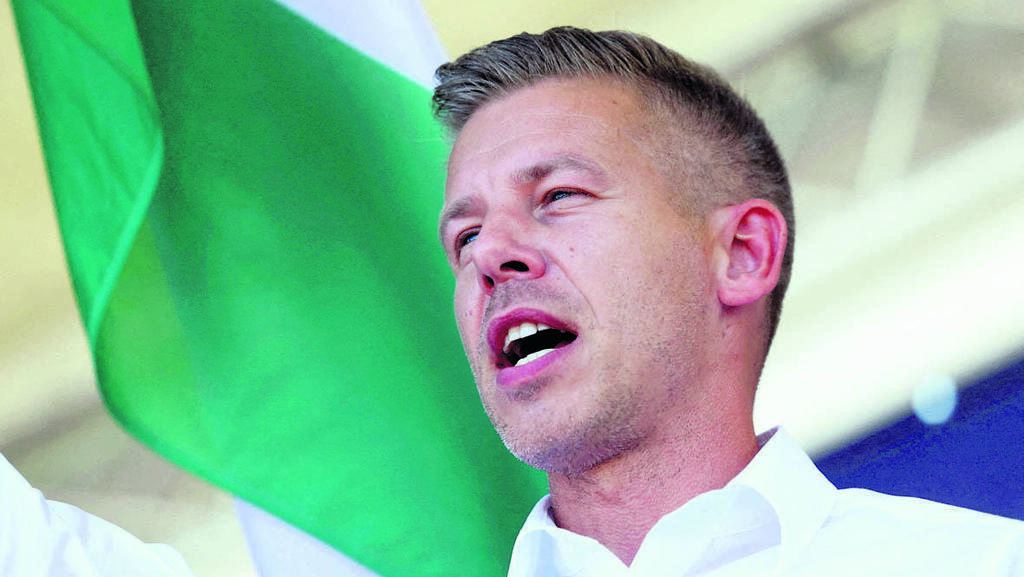
Peter Magyar
(Photo: Bernadett Szabo/Reuters)
“I hear the cheers from the European Union and the left, and it really worries me,” said Krisztina Kovacs, a digital content manager at an advertising company. “The first conclusion is that there is no longer a left in Hungary. Ninety-seven percent voted for the right or the right-plus. Now our time to pay will come. If we want our grants from the EU, we will have to meet it halfway with aid to Ukraine and support sanctions against Russia.
"It’s one thing to support Ukraine and oppose Russia when you’re in Paris, Rome or London, and quite another when you are geographically in a place where Putin is always looking over your shoulder and when you are almost entirely dependent on Russian energy supplies. So now we are stuck between the demands of the European Parliament and the demands of Putin. I would like a few years of quiet. No visits from J.D. Vance, no Kremlin bots and no EU breathing down our necks. We now need time to recover. Internally.”
A call from Netanyahu
In speeches after his election, Magyar promised economic, media and judicial reforms (the fact that he won an overwhelming majority of more than two-thirds of parliamentary seats will help him do so), and spoke about joining the eurozone, imposing term limits, purging the civil service of Orban loyalists, and full transparency in government budgets. But he has continued to keep silent on the controversial issues.
“It’s an interesting experiment,” Kovacs said, “because there is corruption and total destruction of the economy and public services, but on the other hand there are almost no immigrants here, there is a very high level of safety for women, the crime rate is low, and you hardly encounter antisemitism and it is forbidden to hold pro-Palestinian demonstrations here. With our past, it’s good to see that Jews live among us without fear compared to what is happening in other European capitals. But what if that changes? What happens if the EU decides we need to take in migrants, and crime and antisemitism rise?”
It may be the safest country in Europe for Israelis and Jews. There is no graffiti or Palestinian flags, and one can move freely with Jewish symbols and speak Hebrew on the street or in a café. Israel and Hungary are tied by deep economic links, they have joint defense projects (“It’s no coincidence that, according to reports, the pager operation had a connection to Hungary,” the Israeli businessman said), there is a very strong community of Israeli businesspeople in Budapest, and Orban helped rehabilitate Jewish life in the city.
On the other hand, he and his party have at times run campaigns with antisemitic motifs, and in Orban’s orbit there are quite a few figures on the far-right end of the antisemitic spectrum.
Here, too, Magyar remains ambivalent. He promised that relations with Israel would remain warm, but said he would no longer automatically veto every EU decision against Israel, as Orban did, and that he would try to return Hungary to the International Criminal Court in The Hague. “There could be some deterioration in relations with Israel, but we won’t see a day-to-day impact on the lives of Jews and Israelis in the city,” the businessman said. In the meantime, Magyar and Prime Minister Benjamin Netanyahu have spoken by phone and invited each other for visits. Magyar also invited Netanyahu to a ceremony marking 70 years since the Hungarian uprising.
Budapest’s 13th District was once a Jewish area. The names of those deported to the death camps are now engraved on the sidewalks in front of the homes where they lived. Many Jews still live here. One of them is Ivan Peto, nearly 80. Third floor, an apartment packed with carpets, old furniture and a piano, with dozens of cushions on the sofas. Peto was president of the Socialist Party in the late 1980s. His ideological partner was the anti-communist opposition figure Viktor Orban, who had just founded Fidesz.
Orban was the great hope of Hungary’s liberal democrats. “We were comrades on the same path, and we would even go out to dinners with our wives,” Peto recalled. “But after a few years I began to notice that his morality and values were very flexible. He is very ambitious, smart, manipulative, cynical. His goal was always power and money. And once he realized that power and opportunity were on the nationalist right, he went there. I was with him in parliament and saw what was happening to him. And since 2010, when he came to power and my party didn’t enter parliament, I haven’t seen him.”
Peto does not hold back in his criticism. “Orban is a disgrace to the Hungarian people and to Hungarian history. To side with Russia and blame the victim, Ukraine, for aggression? How can we as Hungarians do such a thing, especially in light of our past with the Soviets? He concocted in a lab a violent cynicism and forceful fascism disguised as a patriotic Christian ideology, and exported his morality to the entire world, including America. Russia became a blessing and the European Union a curse. He destroyed trust, smashed checks and balances and planted poverty and ignorance. I’m stunned by the result because I don’t understand how young people who grew up in such a reality can still distinguish between truth and lies. But now their self-respect will return.”
Peto uses the term “mafia state” and calls his country “Orbanistan.” He notes that voter turnout was the highest in the country’s history — 77.8% of eligible voters — and that it is “a victory you can see from the moon, and even from the Kremlin.”
You describe it in terms of possession — the devil taking over Orban.
“You’re wrong,” Peto said. He did not need his son to translate the question to understand it, nor to answer it: “Orban is the devil.”
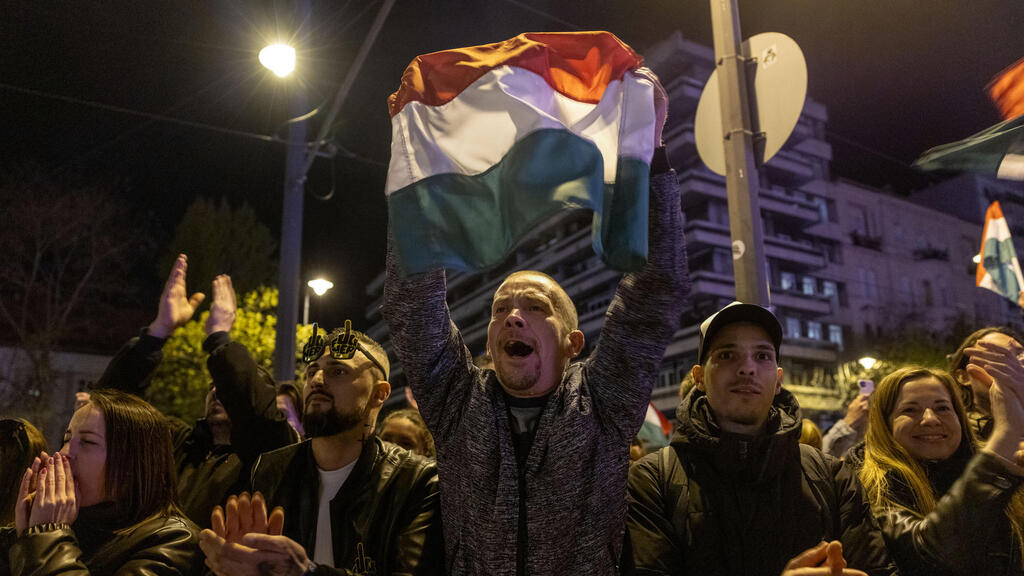
(Photo: Janos Kummer/Getty Images)
“We are like the lost children from Freud’s sofa,” said student Hanga Fulop, describing her country precisely: euphoric and afraid, desperate and full of hope, yearning for the European Union and fearing it will impose its values. Just before they fled the country, they were given another chance to rebuild it. The global left celebrated an election in which 97% voted for right-wing candidates. And so the strongest feeling that remains from Hungary’s election is that you understood nothing.
Before I left, Peto told me about that Orban from the late 1980s, who stood in the squares shouting, “Russians out, Russians out.” On Sunday this week, thousands of young people and students stood and shouted at the top of their lungs: “Russians out, Russians out.”