


Sderot continues to vote Likud despite the October 7 massacre and three years of war. Voter turnout in the city stands at approximately 72%, compared with 76.8% nationwide. A total of 20,507 residents cast ballots out of 28,473 eligible voters, an increase of about 5,000 eligible voters compared with the previous election, when the city had 23,403 registered voters, according to data from the Central Elections Committee.
According to preliminary results, with 80.4% of the city's polling stations counted, Likud has won approximately 39.1% of the vote. That represents a decline of about 2.4 percentage points compared with the previous election, but still leaves the party with a substantial lead over its rivals. Itamar Ben-Gvir's Otzma Yehudit is in second place with about 16.8%, while the Religious Zionist Party and Zehut alliance led by Bezalel Smotrich and Moshe Feiglin is third with approximately 12.7%. Together, the three lists have secured about 69% of the votes counted so far. Parties associated with the change bloc have received a combined 17.4%, a figure similar to the previous election and about half a percentage point lower.
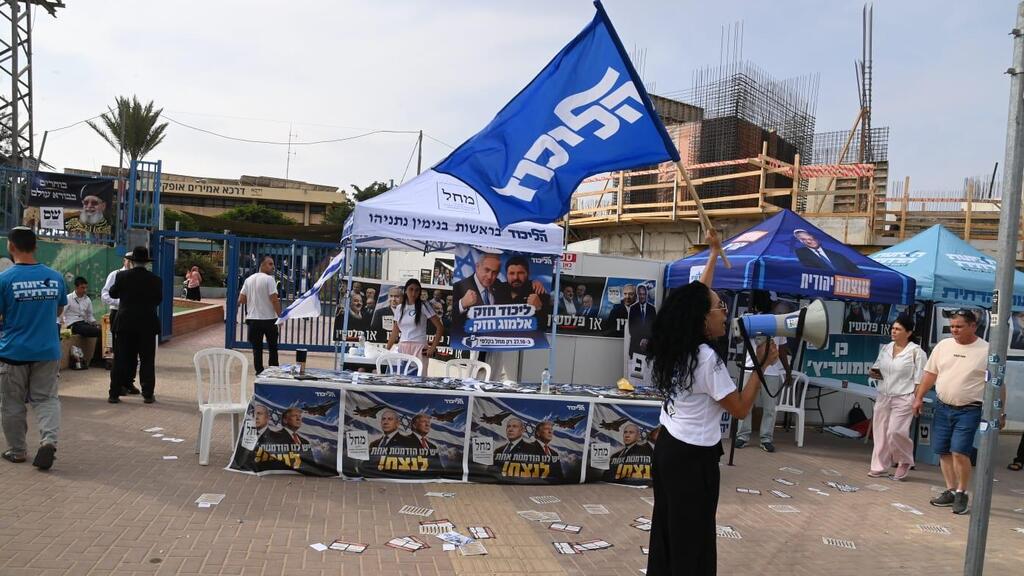
Since the October 7 attack, Sderot's population has grown significantly and now stands at about 40,000. New families have moved to the city, new neighborhoods have been built and the streets have filled up again after long months during which many residents were forced to evacuate their homes and stay in hotels. Yet neither the population growth nor the severe trauma the city experienced appears to have translated into a significant shift in voting patterns, at least according to the preliminary results.
Sderot, where Likud won approximately 41.5% of the vote in the previous election, continues to give the party a commanding lead. This is despite the fact that the deadly attack took place under a Likud-led government, and the city's police station was completely destroyed after terrorists barricaded themselves inside and a fierce battle erupted. Residents experienced firsthand the failure of the systems that were supposed to protect them. Nevertheless, for now, the ballot box shows no significant shift away from the party that was in power at the time of the massacre.
Further down the results, Shas has received approximately 7.2% of the vote, followed by Yashar! with about 6.4%. Yisrael Beiteinu has won roughly 5.1% and Beyachad about 4.5%. The Democrats have received just 1.4%, while United Torah Judaism, the Joint List and Ra'am have so far secured only negligible shares. These results are still partial, with some polling stations yet to be counted, meaning the figures could change.
Even compared with earlier elections, the current result is not unprecedented. During one of the election rounds that began in 2019, Likud won approximately 51.1% of the vote in Sderot. In other words, although the party has lost some support compared with the most recent election, it is still far from experiencing a collapse in the city. At the same time, the relatively high turnout suggests stronger participation among coalition supporters.
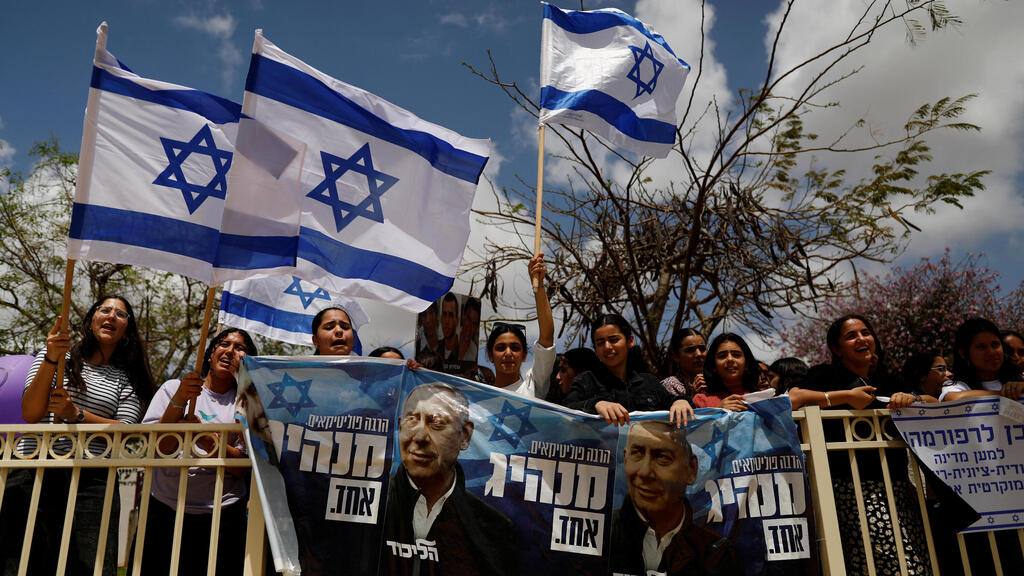
Government supporters in Sderot, April 2023
(Photo: Reuters)
If there had been any doubt about the political leanings of the thousands of new residents who have moved to Sderot in recent years, whether motivated by Zionism, affordable housing, proximity to Sapir College or tax benefits, the current results appear to have settled the question. Their arrival has not brought about a political upheaval, and the city continues to maintain its traditional voting patterns in favor of the incumbent government.
That loyalty was also evident before the election. "Likud is in my blood," Danny Suissa, the owner of a well-known, long-established nut and snack shop in the city, told ynet about two and a half months ago. "I've been a Likud supporter since birth. There's nothing I can do about it. You can't change that. You don't trade a galloping horse for a dead one," he explained.
Suissa, who has lived in Sderot for decades, does not hesitate to criticize the country's leadership over the disaster and the many years residents spent living under security threats. "I've lived here for 71 years. For 22 years, our lives weren't normal. I blame everyone: the Shin Bet, IDF officers and the prime minister, too. Whoever made mistakes should be held accountable."
Asked how he could demand accountability from the country's leadership while voting once again for the same party, Suissa made no attempt to reconcile the contradiction. "I'm voting for them again because I'm a staunch Likud supporter. There's nothing I can do about it. It's in my blood," he concluded.
His words may not explain the choices of every Likud voter in Sderot, but they illustrate the gap between anger over what happened and enduring political loyalty. At least according to the interim results, even after October 7, Sderot continues to vote Likud.
Also in Kiryat Shmona and Shlomi: 'Residents lack nothing'
After years of prolonged evacuation and war that inflicted extensive damage and created an almost unimaginable reality for communities along the northern border, residents of the traditional Likud strongholds of Kiryat Shmona and Shlomi have remained loyal to Netanyahu. In Shlomi, support for Likud has even increased compared with the previous election.
At this stage, all regular ballots cast in the two communities have been counted. However, the count of double-envelope ballots, including those cast by thousands of evacuees who have yet to return to the north and apparently voted outside their hometowns, has not been completed.
Despite the difficult reality in Kiryat Shmona, where only about 14,000 of the city's 26,000 residents remain, voter turnout held steady and even rose slightly, from 61.1% in the election for the 25th Knesset to 62.1% in the election for the 26th Knesset. Contrary to expectations of a dramatic political shift following months of war, prolonged evacuation and the destruction of infrastructure, Likud suffered only a marginal decline and remained the city's largest party, winning 48% of the vote compared with 49.5% in 2022. These figures do not yet include the double-envelope ballots, which could alter or even increase the party's share of the vote.
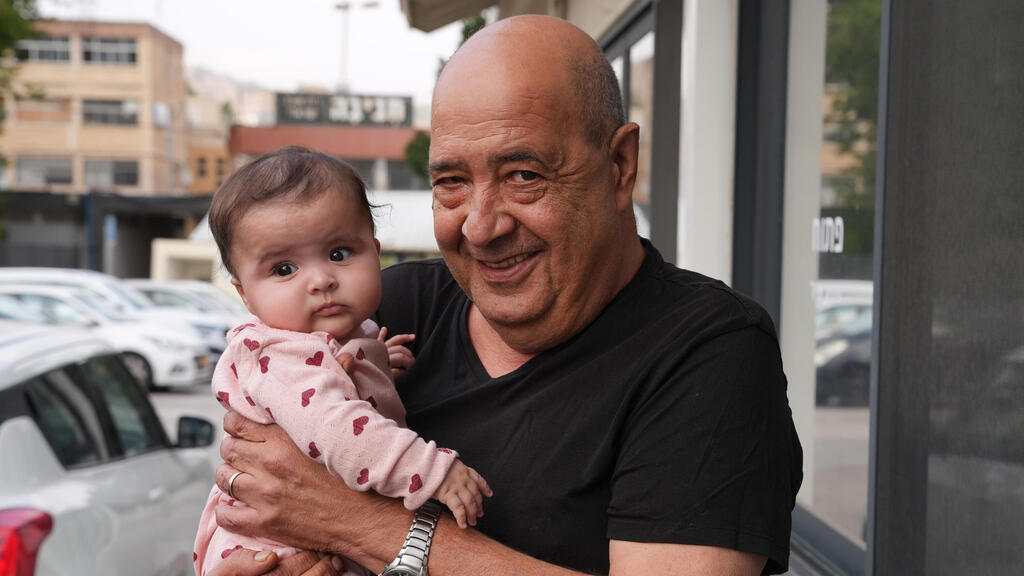
(Photo: Efi Sharir)
A similar trend is reflected in the strength of the broader right-wing bloc, which continues to dominate local voting with 71.2% support, a moderate decline from the 75.8% won by the coalition in the previous election.
Shimon Amar, owner of the city's legendary Falafel Amar restaurant, woke up Wednesday morning stunned by the unexpected results. Over the past several decades, virtually every prominent politician, from the left to the right, has stopped at his restaurant for a meal and a photograph. Amar had been convinced that the traditionally pro-Likud city would vote differently this time.
"It surprised me," he admitted. Faced with damaged roads and a devastated city now struggling to rebuild and grow, he had been certain there would be a dramatic political shift. But that did not happen.
"I thought fewer people would support that party. I was sure there would be a change, but it simply didn't happen," he said. Speaking from the personal pain of a father of four, only one of whose children still lives in Kiryat Shmona, Amar called for the formation of a unity government, arguing that the country cannot afford another political battle. "There's no other choice. We can't have another election. We need to learn to live together. We're one country."
While Likud has so far recorded a slight decline in Kiryat Shmona, the trend in Shlomi is the opposite. In the northern town, which was also evacuated of all its residents in October 2023, voter turnout climbed to 70.9%, while support for the ruling party rose from 43.5% in the election for the 25th Knesset to 46% in the current election. The broader right-wing bloc maintained relatively stable support of around 69% to 70%.
Shlomi Council head Gabi Naaman does not share the shock expressed by Amar, political commentators or supporters of the change bloc. He says he predicted the result when he declared in advance that "what was will be." He criticizes the Israeli media, which he describes as "mostly hostile to Likud," and argues that the reality on the ground is simply "stronger than that hostility." In his view, residents felt the government had stood by them, leaving no reason to be surprised by their overwhelming support.
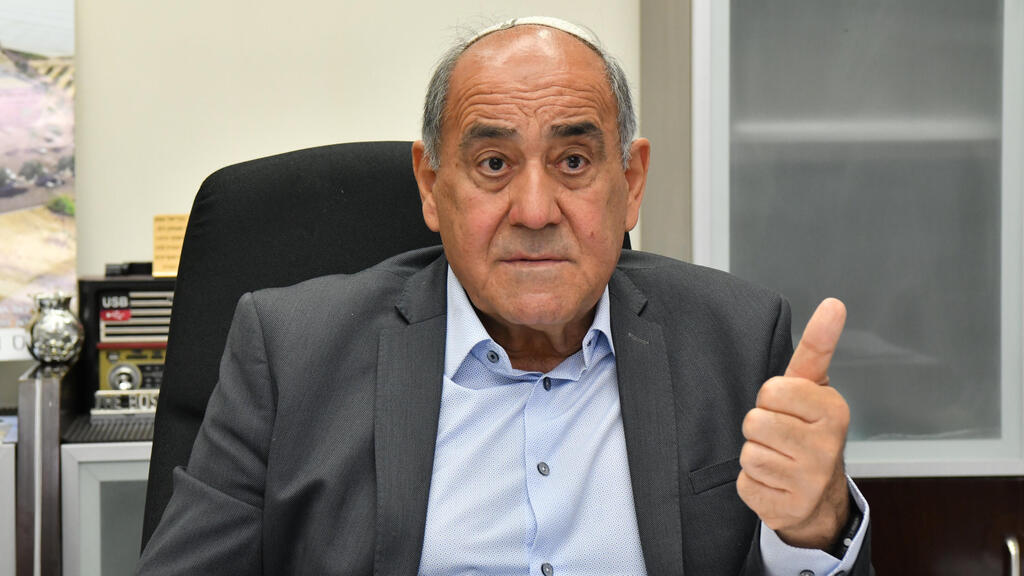
Gabi Naaman
(Photo: Nahum Segal)
Naaman argues that despite the war and evacuation, the economic situation in local authorities is now considerably stronger than it was before October 7. He stresses that "residents lack nothing, and they are surrounded by funding for education and culture, as well as generous grants for businesses."
When confronted with the failures that led to the war, Naaman refuses to assign blame to Netanyahu or the outgoing government, arguing that Hezbollah and other external enemies bear sole responsibility.
"They are to blame for everything that happened here on October 7. The government and the prime minister were called upon to repair the situation when we were at rock bottom, when we were in the abyss. What the prime minister has done over these three years, well, nothing is perfect, but he pulled us out of the abyss and lifted us up. Today, security in our communities is the best in the State of Israel."
Naaman's backing for Netanyahu is unequivocal. "I have no intention of settling accounts with the government. We need to settle accounts with our enemies. We must give the prime minister strong backing so he can continue destroying them until he reaches good diplomatic agreements. In the meantime, over these three years, he has been doing the best possible job."
The contrast between the physical destruction and damage to communities in the north, the belated efforts to rebuild and finally provide the region with the tools it needs to grow, and continued political support for Netanyahu's bloc has a deeper sociological explanation. Professor Nissim Leon, head of the Department of Sociology and Anthropology at Bar-Ilan University, candidly admits that he expected Likud to suffer a "slap in the face" at the ballot box.
He attributes the unexpected results to a deeply rooted collective trauma that shapes the daily lives of northern residents, creating a post-traumatic reality fundamentally different from that experienced by people living in central Israel.
Leon argues that the emotions driving residents of a region that faced the threat of destruction from Hezbollah, compared with the emotions and motivations of the change bloc, produced a sharply polarized political dynamic.
"In the change bloc, the fuel was hatred, and in the right-wing bloc, the fuel was fear. Fear of Arabs took over the decision-making process," he said.
Leon describes a kind of "hierarchy of needs" among right-wing voters, in which security takes precedence over all other considerations.
"Citizens who experience fear tend to vote for whoever they believe will get the job done and protect their security. First comes security. Second comes faith in the party that most clearly and firmly represents their national community."
According to Leon, this emotional mechanism is so powerful and resistant to changing circumstances that it effectively eliminates the need for a traditional election campaign.
"Netanyahu could have slept through the entire election campaign, presented a last-minute warning about Arabs flocking to the polls, as we saw in reports on the morning after polling stations opened, and known that the deep-seated fear would do the work and bring the masses out to vote," he said.