

More than a month after the IDF completed its hold on the “anti-tank line” in southern Lebanon, and a day after the military announced operations beyond the Litani River, forces on the ground, as well as communities in northern Israel, continue to face the threat of explosive drones.
At the same time, the IDF said Wednesday morning that strikes against Hezbollah terrorist infrastructure were continuing in several areas of southern Lebanon. In recent days, Hezbollah has launched dozens of such drones, mainly at forces operating in southern Lebanon, alongside rockets and other UAVs. Although the IDF is operating about 10 kilometers (6 miles) inside Lebanon, explosive drones are capable of striking targets dozens of kilometers away and are difficult to detect and intercept.
Drone strike on vehicle in the village of Jiyeh, south of Beirut


Since the ceasefire between Israel and Lebanon began, a ceasefire that Hezbollah has not fully implemented in practice, explosive drones have exacted a heavy toll on IDF forces in the field, causing numerous deaths and injuries. Meanwhile, amid ongoing Iran-U.S. talks that have yet to yield results, the IDF continues targeted operations in Lebanon, focusing mainly on clearing areas already under Israeli control, locating Hezbollah facilities and destroying them.
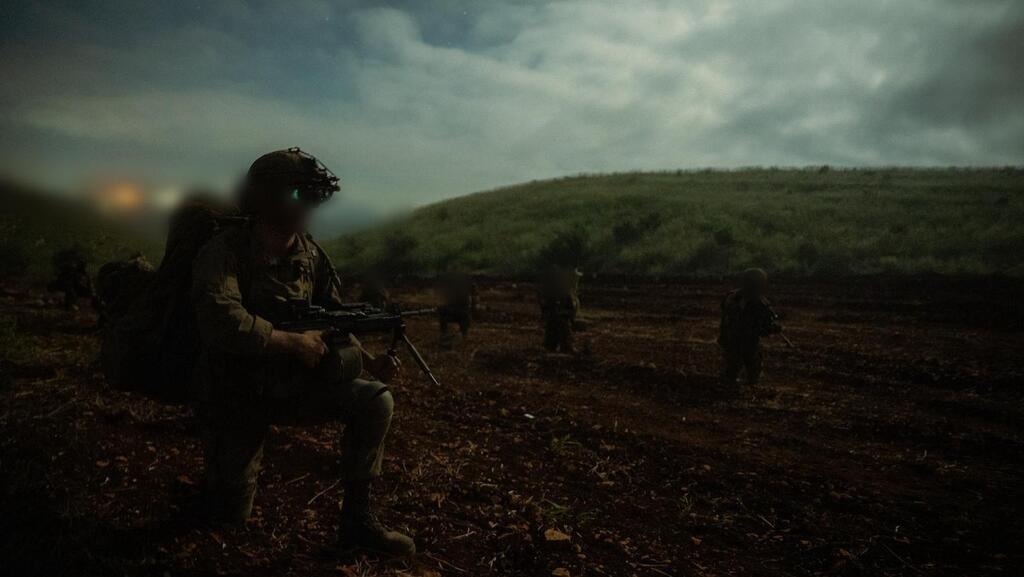
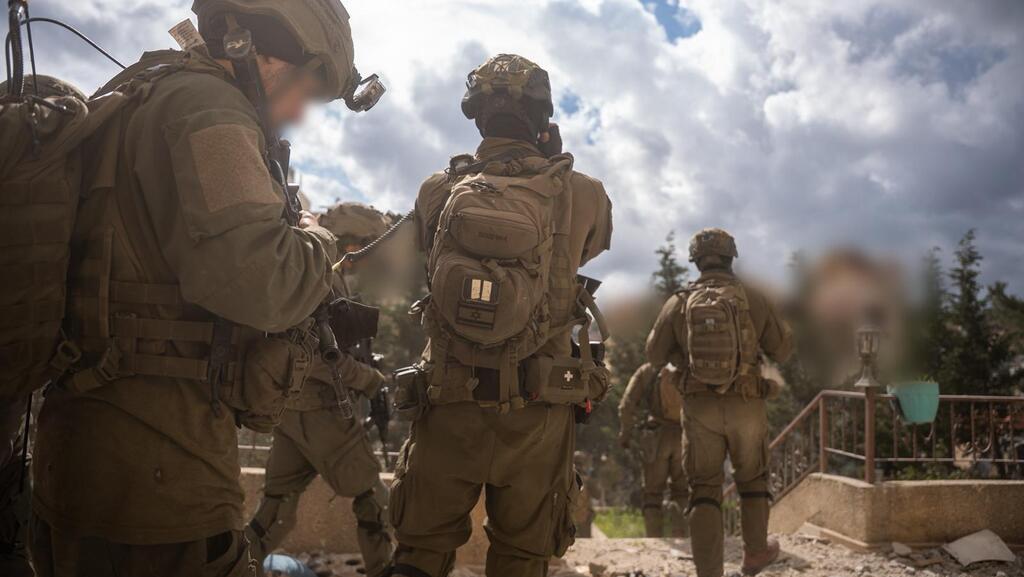
(Photo: IDF)
Identification of a terrorist in the Litani River area during the IDF operation in Lebanon
(Video: IDF)
During these operations, troops rarely encounter Hezbollah operatives because the areas they are operating in are supposed to be evacuated. However, from time to time — particularly when entering new areas such as the Litani region, close-quarters combat does occur. During the raid in the Litani area, where Hezbollah had prepared defensive and offensive positions, more than 15 operatives were killed in such clashes.
The IDF said Wednesday that during operations by the 401st Brigade Combat Team under the 146th Division, troops identified a terrorist “operating surveillance equipment against our forces” and killed him in a rapid tank strike.
Rocket sirens sounded Wednesday morning in the area of Zarit in the Upper Galilee after Hezbollah launched rockets toward forces in southern Lebanon. The rockets landed near the troops, and no casualties were reported.
At the same time, Lebanese media reported a strike on a vehicle in the village of Jiyeh, south of Beirut, followed shortly afterward by two additional strikes on vehicles in the same area. According to Lebanon’s Health Ministry, eight people were killed in the strikes.

Lebanese footage of one of the vehicles targeted in the strike
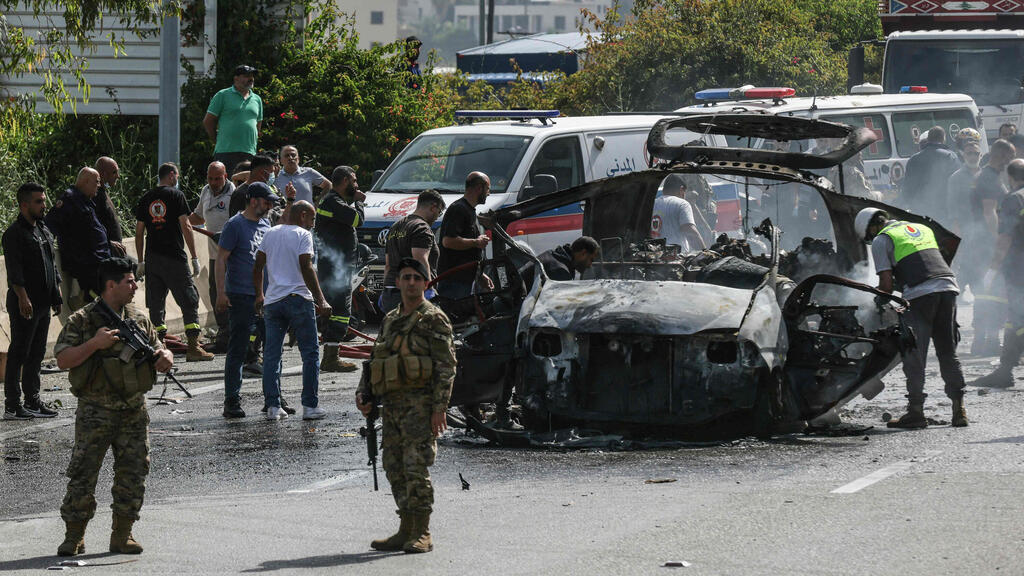
(Photo: MAHMOUD ZAYYAT / AFP)
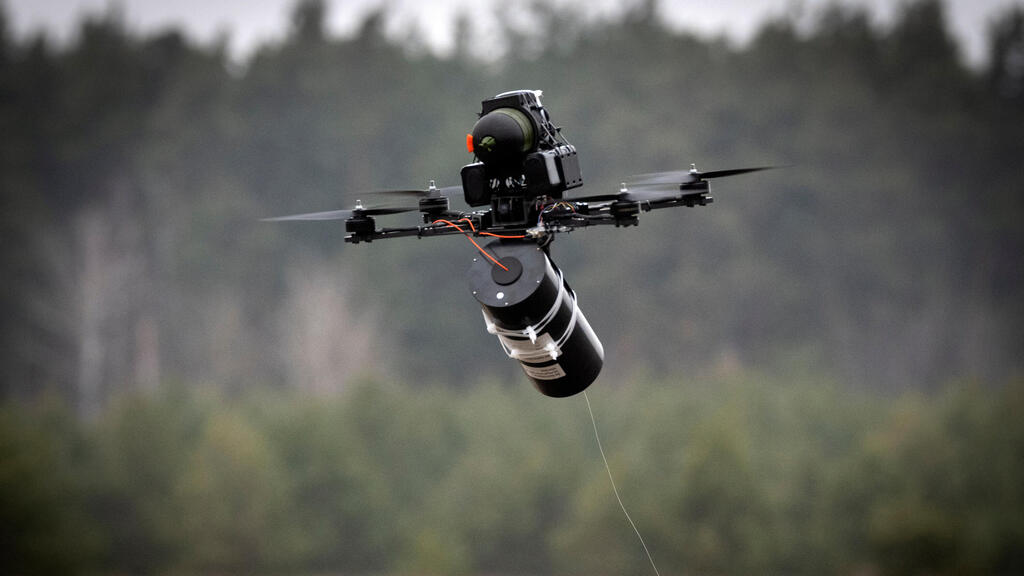
FPV drone
(Photo: Efrem Lukatsky/AP)
The IDF later said that more than 40 Hezbollah targets in southern Lebanon had been struck over the past 24 hours, including weapons depots and military structures used by Hezbollah operatives. The military added that “terrorists posing a threat to our forces were eliminated, and launchers prepared to fire toward Israeli territory were struck.”
Brig. Gen. Yuval Gaz, commander of the 91st Division, addressed the fighting in Lebanon during a Northern Command change-of-command ceremony Tuesday. “Our fighters are currently operating about 10 kilometers forward from here,” he said. “They are attacking, thwarting threats and continuing to strike terrorist infrastructure. The best defense is proactive defense, deep inside enemy territory. We do not wait for the threat, we act against it in advance in order to keep it away from you, the residents.”
Against the backdrop of the growing threat posed by explosive drones to northern communities and forces in the field, Israel’s defense establishment has already examined more than 100 proposals for countermeasures. The Defense Ministry and its Directorate of Defense Research and Development are working around the clock to deploy solutions to the front lines within days or weeks to reduce the threat level.
The proposals were evaluated using a “traffic light” system: those marked red were rejected, yellow proposals advanced for further testing, and green proposals are already making their way to the field.
One of the most significant challenges is detecting the drones. Soldiers on the ground have repeatedly reported spotting drones only seconds before impact. ynet learned earlier this week that new “detection kits” will accordingly be distributed to combat teams in southern Lebanon.
Defense officials acknowledged that the system does not offer 100% success, perhaps not even 90%, but said it could provide troops with the critical extra seconds needed to take cover.
The defense establishment has also examined a Ukrainian-style protective system using a rotating electrified wire fence. Powered by a motor, the system creates a “screen” of wire designed to physically sever the drone’s optical fiber cable and bring it down before it reaches its target.
Additional “hard kill” solutions are also under review. Alongside the “Pigion” targeting system already distributed, the military has tested shotgun-style weapons that fire netting designed to trap drones in midair. Fragmenting ammunition has also been tested, bullets that split after firing to increase the likelihood of hitting small aerial targets. Some of these systems could reach the battlefield in the coming weeks.