

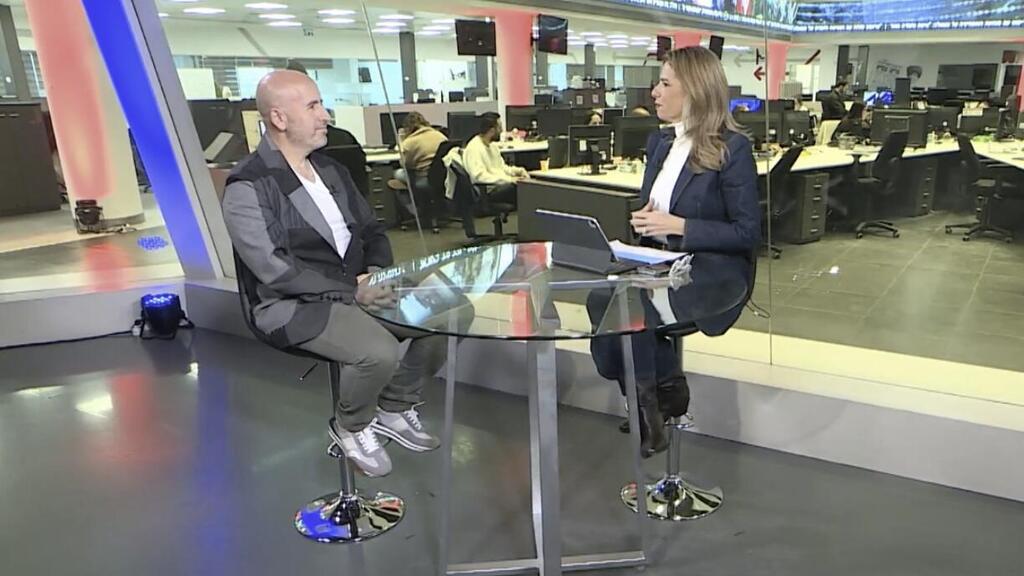
Sitting across from me in the ynet Global studio, Avner Stepak speaks with the calm of someone who has learned to live with uncertainty. The days are tense. All eyes are on Iran. Markets are watching every headline. So are Israelis.
Stepak does not dismiss the risk. He breaks it down. There are, he says, three possible scenarios. The first and most optimistic is one in which Israel is not physically affected and the confrontation remains between Iran and the United States and its allies. The second involves limited impact on Israel, painful but contained, with only short-term turbulence in the markets. The third, unlikely but transformative, would-be regime change in Tehran, a development he believes could ultimately prove positive for the Israeli economy.
Avner Stepak Chairman of Meitav Dash interview ynet Global
(Video: Yaron Brenner)


Even in the darker scenarios, Stepak does not foresee lasting damage to the Tel Aviv Stock Exchange. At most, he expects a brief decline followed by recovery. His confidence is not bravado. It reflects years of watching Israeli markets absorb shocks and move forward.
That perspective was shaped inside a family business that survived what many do not: generational transition. Meitav Dash was founded by his father, Zvi Stepak, and grew with Avner at its side from an early age. Unlike many heirs, he was never pushed into the role. He wanted it.
From the beginning, there was a clear division of labor. His father became the outward facing figure, the brand, the chief investment voice. Avner built from within, focusing on operations, entrepreneurship and acquisitions. They did not compete for control. They trusted each other.
Later, when the company became a large institution, Stepak made a decision that many founders struggle with. He stepped back. He admits openly that the skills required to run a small fast-growing firm are not the same ones needed to manage hundreds of employees. Today, as chairman, he does not interfere in day-to-day management. The current chief executive runs the group independently. Stepak believes knowing when to step aside is a form of leadership.
That same belief guides his conduct outside the boardroom. In recent years, Stepak has become a visible and vocal participant in Israel’s public debate. He protests. He speaks out. He serves in the IDF reserves. He does so fully aware of the risk.
A large financial institution serves a politically divided public. Speaking openly can cost business. There were calls for boycotts. Some urged clients to move their pension funds. Stepak did not retreat.
He tells me he had no choice. Silence, in his view, would have been a form of withdrawal. Business leaders are not above society. They are part of it. He draws a clear line, however. Political conviction does not justify discrimination. He would never act against clients or employees because of their views.
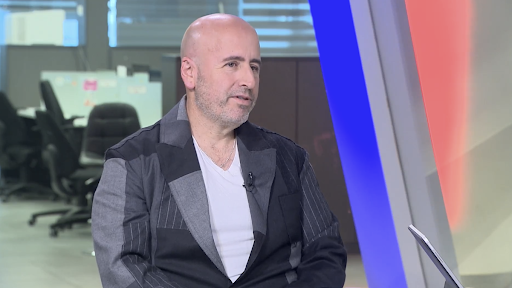
(Photo: Yaron Brenner)
So far, the feared consequences have not materialized. Meitav continues to grow. The episode reinforced his belief that integrity carries its own weight.
But it is when the conversation turns to philanthropy that Stepak’s voice changes.
This is not image management. It is identity. He does not believe in symbolic donations or naming rights. Most of his giving, both personal and corporate, is directed to the operational budgets of nonprofits. Overheads, he says, matter more than plaques. Strong institutions outlast projects.
Over the years, this approach led him to help establish several nonprofit initiatives. One focuses on transparency and evaluation in the nonprofit sector. Another, which he describes as his proudest achievement, promotes employment for people with disabilities. It grew from his own experience teaching deaf individuals and later integrating them into Meitav’s customer service operations.
More recently, his philanthropic focus shifted toward trauma. After spending months in Ukraine at the beginning of the war there, Stepak became acutely aware of the psychological cost of prolonged exposure to violence. When war erupted in Israel, he moved quickly. Together with partners, he helped establish a national post trauma fund, now totaling seventy million shekels, supporting both civilians and soldiers. He serves on its board alongside the government, the Health Ministry and JDC.
Yet the most personal chapter of his social involvement predates all of this. For years, Stepak volunteered in emergency foster care for infants. Week after week, he cared for babies who would eventually leave. After dozens of goodbyes, he and his wife made a decision.
They adopted. He pauses when he talks about it. It was, he says, the best thing he has ever done in his life.
Stepak rejects the notion that philanthropy competes with business. He believes it strengthens it. Volunteering, he says, builds emotional intelligence, a skill he sees as increasingly essential in leadership. In an era shaped by artificial intelligence, EQ matters more than ever.
That awareness, he believes, also makes people better decision makers. In negotiations. In mergers. In life.
When I ask him about legacy, he is direct. He has no intention of leaving vast wealth simply to accumulate across generations. Most of it, he says, will go to charity. His long-term dream is to establish and run an emergency foster home himself. Not as a volunteer. As a full-time commitment.
For now, he balances markets, reserves duty, public engagement and philanthropy. The thread connecting them is responsibility.
As the interview ends, he returns to a sentence that captures his worldview more clearly than any forecast: if you do good, he says, it comes back with interest. And he believes it.