


U.S. President Donald Trump and his advisers have decided to suspend the strike they had planned against Iran and, for now, return to the diplomatic track, after Washington concluded that the expected cost of such a move at this time would far exceed any benefit that could be derived from it.
Trump had sought to carry out a powerful strike quickly, preferably a one‑off action or one of very short duration, with the primary goal of achieving a clear outcome — namely, the collapse of the Iranian regime. However, his advisers and Pentagon generals were unable to guarantee that such a move could be swift. A rapid and forceful operation would require extensive preparations, as was the case, for example, in Venezuela, preparations that would have taken weeks. In any event, the generals and National Security Council officials told Trump that even a strike on Iran would not necessarily bring about the regime’s collapse.
The pressure on Trump to avoid a strike
What was certain was that such a strike would trigger retaliation. American bases throughout the Middle East would be attacked, Israel would be forced to confront and absorb missile and drone barrages, and the energy industries of other U.S. allies in the Gulf could also be hit. That, in turn, would drive up global oil prices and the cost of petroleum products, including in the United States.
Gallery
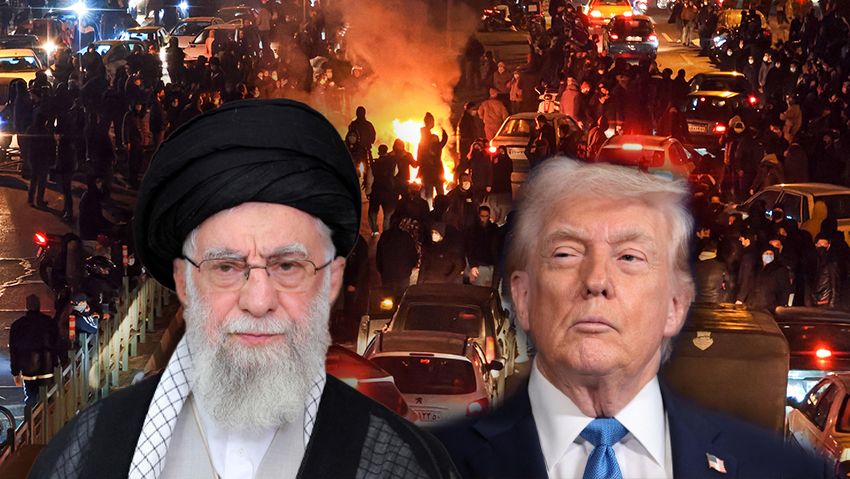
Khamenei and Trump
(Photo: Jonathan Ernst/Reuters, Office of Iranian Supreme Leader/WANA (West Asia News Agency)/Handout via Reuters, Anonymous/Getty Images)
This was one of the main reasons that all of Washington’s regional partners — including Qatar, Saudi Arabia and Turkey — pressed Trump not to attack Iran. They feared Iranian retaliation against them, since a U.S. strike would almost certainly lead to a painful Israeli counterstrike against Iran, potentially dragging the entire region into a full‑scale war that none of the regional players — including the United States — wants.
The brutal suppression of the protests did not wait for Trump
Beyond that, the ayatollahs’ regime did not wait for Trump. Protests in Iran faded over the past day. Even before the American president issued his threats and promised protesters that “help is on the way,” the regime had already crushed the demonstrations with overwhelming force, determination and brutality, at the cost of hundreds of lives.
Security forces used live fire, including shotguns intended to blind protesters or at least disfigure their faces. These brutal measures appear to have worked. Although some protesters — mainly in the Kurdish northwest, the Arab Ahvaz region in the south and in Baluchistan — were armed, returned fire and killed regime security personnel, the shock and fear imposed by the crackdown achieved what the regime wanted: people were simply too afraid to go out into the streets.
In Trump’s first tweet addressing the protests and the killings in Iran, he explicitly said he would act if the brutal repression continued. But by Wednesday night into Thursday — and even before that — Iran’s streets were already emptying, as protesters traumatized by the violence stayed home. As a result, the Basij militia, police and Revolutionary Guards no longer needed to fire.
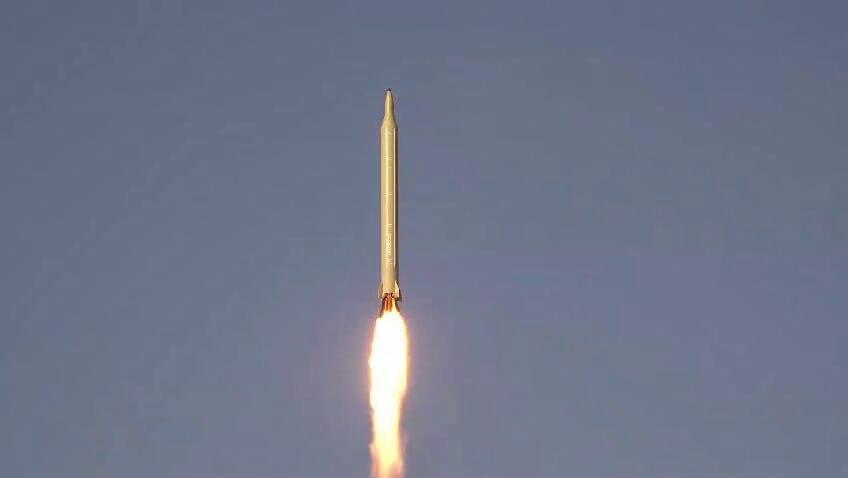
Missile fired by Iran on Israel during hte 12-day-war
In addition, the death toll cited by U.S. and other intelligence agencies is significantly lower than the figures circulated by Western human rights organizations and some media outlets. Current estimates range between 2,500 and 4,000 killed, including roughly 500 regime security personnel killed by protesters.
The fact that the protests subsided and that intelligence‑based casualty estimates are lower likely had an effect on Trump. The American president can now plausibly announce that Iran has promised him, via a third party, that it will stop mass killings and will not execute detained protesters by hanging. That allows Trump to say: “My threat alone did the job” — in other words, victory without fighting.
The regime in Tehran can likewise inform Washington, through intermediaries, that it has stopped shooting protesters and will not carry out executions by hanging. As Trump told reporters, and as Iran’s foreign minister himself stated, this gave the U.S. president the ladder he needed to climb down and return to diplomacy.
The protest movement’s leadership problem — and security‑force loyalty
Another factor that Washington appears to have weighed heavily was the fact that the thousands of enraged Iranians who took to the streets, at great personal risk, lacked a clear objective, leadership, recognized leader or practical plan of action around which they could unite. Had such a framework existed, protesters might have been able to channel their anger into concrete political demands capable of collapsing the regime.
The streets of Tehran appear back to normal on Thursday
(Photo: Reuters)


Iran’s exiled crown prince, Reza Pahlavi, who attempted to encourage protesters from outside the Islamic Republic, was not seen in Iran — nor in Washington — as a leader around whom all could rally. At best, according to polls most favorable to him, about 30% of Iranians support that option. The CIA, according to knowledgeable sources, also told Trump that while Pahlavi is a sympathetic and motivated figure, he is not the one who would unite the protesters and bring down the regime.
Another factor that significantly cooled Trump’s appetite for a strike was the lack of sufficient refusals and defections within Iran’s security services. Unlike previous protest waves, this time there were defections, according to journalists and credible Middle Eastern sources — but not on a scale large enough to tip the balance.
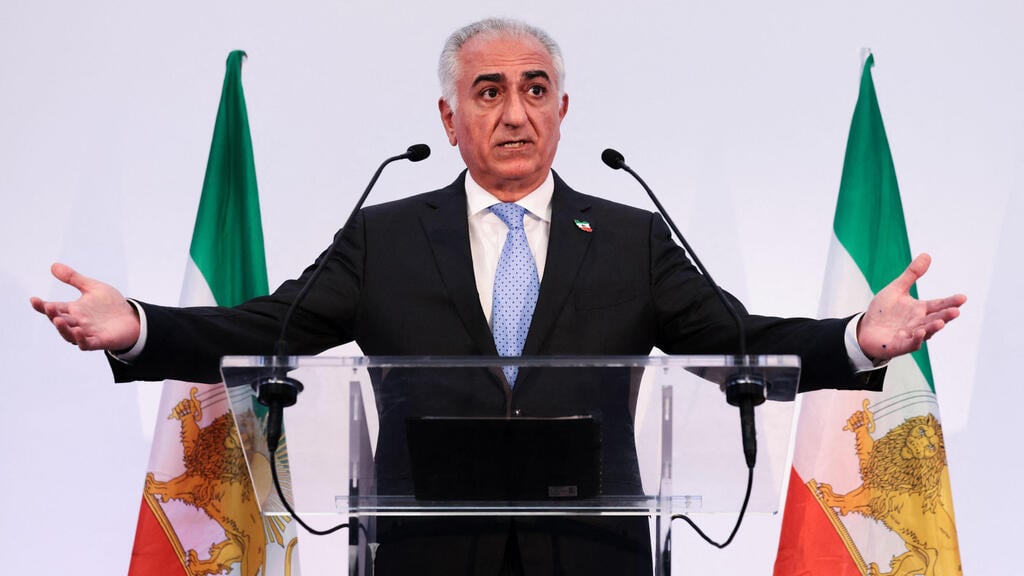
Iran’s exiled crown prince, Reza Pahlavi
(Photo: Joel Saget / AFP)
The defections that did occur were primarily within Iran’s regular army, the Islamic Republic of Iran Army, or Artesh, which appears to be less loyal to the regime and enjoys fewer benefits than the Revolutionary Guards, which control roughly half of Iran’s economy.
Israel wanted a strike — but not now
From Jerusalem’s perspective as well, the timing was not right for regime change. Israeli officials feared, as did other Middle Eastern capitals, that such a move would fail to topple the regime while exacting a heavy price from Israel in terms of damage to the home front and the astronomical cost of another major campaign against Iran — one for which Israel is not as prepared as it would like to be.
In any case, even if Jerusalem did not truly want the strike, coordination with the Americans on defensive measures did take place. Defensive military coordination between the IDF and U.S. Central Command (CENTCOM) was conducted intensively.
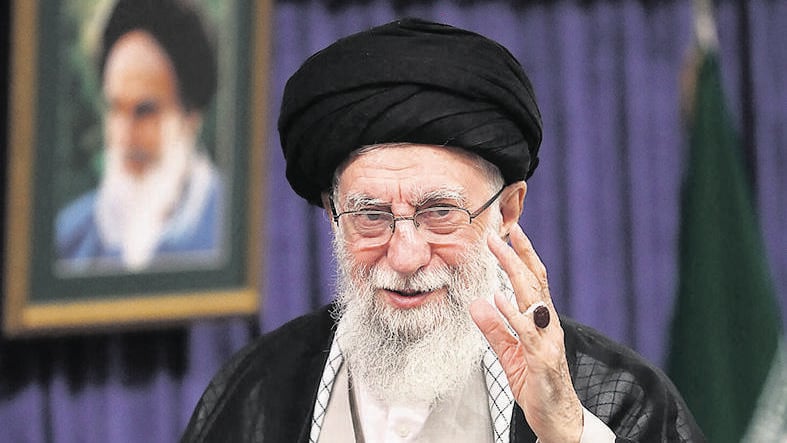
Ali Khamenei
(Photo: Khamenei.ir/AFP)
Iran, for its part, was under immense pressure and on high alert, which pushed Israeli concerns about potential Iranian action to their peak in recent days. Israeli defense officials assessed that escalation could occur through miscalculation — if Iran believed a U.S. attack was imminent and decided to strike Israel first — or through deliberate calculation, in which Iran might launch a preemptive blow against Israel and U.S. bases to prevent an attack or exact revenge in advance, while also scoring points with domestic public opinion.
Heightened alert in Israel and fears over Khamenei’s weakness
Concerns in Israel and Washington also grew due to what appears to be increasing physical and mental weakness on the part of Iran’s supreme leader, Ali Khamenei. Recent speeches by the 86‑year‑old leader suggest he does not fully grasp the situation and does not always respond to events.
In the West, there is concern that this physical — and possibly mental — fragility could be exploited by militant Iranian officials to apply the principle that “the best defense is offense,” meaning a preemptive strike against Israel or Gulf Arab states.
As a result, the past 24 hours saw peak alert levels in political corridors in Jerusalem, within the IDF and throughout the intelligence community. Even earlier, in an effort to prevent miscalculation or a preemptive strike, Israel reportedly conveyed a message to Iran — via Russian President Vladimir Putin — that it had no intention of attacking Iran first.
At the same time, the IDF Spokesperson’s Unit issued two statements emphasizing that the protests were an internal Iranian matter. In other words, Israel had no intention of exploiting regime weakness to topple it militarily. This was more than a signal — it was an explicit declaration.
The carefully worded text, drafted by IDF Spokesperson Brig. Gen. Effi Deferin, was published on the IDF’s official X account in Hebrew, English and Arabic. The platform now serves as a primary global messaging channel, and the statements were intended to prevent Iranian misinterpretation. As a result, alert levels have since dropped significantly.
The strike plan presented to Trump
The plan presented by the Pentagon to the U.S. president included a soft opening phase: first and foremost, economic sanctions — which have indeed been imposed. Tariffs on those trading with Iran were enacted and not lifted, and today sanctions were also imposed on Supreme Leader Ali Khamenei’s national security adviser, Ali Larijani, along with influence operations.
Only afterward was a kinetic move supposed to follow — preferably short and one‑off — though the Pentagon was prepared for a longer operation if required. Trump, according to U.S. media accounts, rejected a prolonged campaign, and it became clear that a short, powerful strike would not deliver the desired results.
As a result, diplomacy is now leading U.S. policy and Trump’s approach. The American strike has not been canceled — only postponed. Whether it proceeds will depend on the outcome of negotiations that are now expected to begin between the United States and Iran. The details are likely to emerge in the coming days.