

Three of the world’s most closely watched technology companies, SpaceX, Anthropic and OpenAI, are moving toward public listings in what could become one of the most consequential IPO waves Wall Street has ever seen.
The companies are not just another group of high-growth startups. Together, they sit at the center of the two biggest technology stories of the decade: artificial intelligence and commercial space. OpenAI brought ChatGPT into everyday life, Anthropic built Claude into one of its strongest competitors, and SpaceX turned reusable rockets and satellite internet into a private empire led by Elon Musk.
Gallery
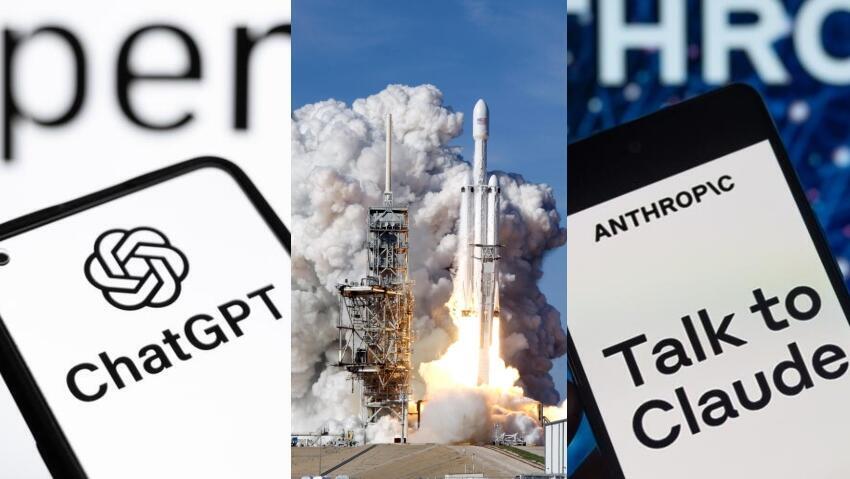
SpaceX, Anthropic and OpenAI are moving toward public listings in a potentially historic Wall Street IPO wave
(Photo: John Raoux\AP, JRdes / Shutterstock.com, Meir Chaimowitz/shutterstock)
Now, all three are preparing to let public investors buy shares. SpaceX is expected to debut first, with reports pointing to a massive offering at $135 a share and a valuation of roughly $1.75 trillion to $1.77 trillion, potentially making it the largest IPO in history. Anthropic has reportedly submitted a confidential filing to U.S. regulators, while OpenAI has also filed confidentially, though it has not committed to a timetable for its listing.
But what does all of this actually mean, and why does it matter?
What is an IPO?
An IPO, or initial public offering, is the moment a private company begins selling shares to the public on a stock exchange.
Before an IPO, ownership is usually limited to founders, employees, venture capital funds, strategic investors and other private backers. After the listing, ordinary investors can buy shares through the stock market.
In SpaceX’s case, the expected public offering would represent only a small portion of the company. Reports say roughly 5% of the company’s shares may be available for public trading, an unusually small float for a company of that size. That means the overwhelming majority of ownership would remain with Musk, existing investors, employees and other insiders. Analysts have warned that such a limited supply of publicly traded shares could make the stock especially volatile once trading begins.
Why do companies go public?
The simplest answer is money.
An IPO allows a company to raise capital from public investors. That money can be used to expand, hire employees, build infrastructure, develop new products, repay debt or fund expensive long-term projects.
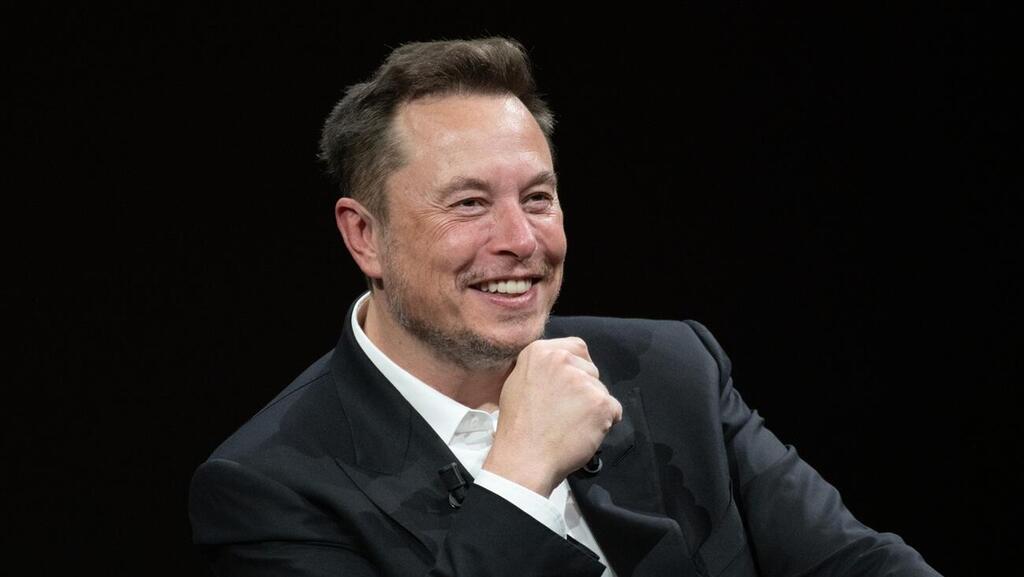
Elon Musk
(Photo: Frederic Legrand - COMEO/Shutterstock)
For companies such as OpenAI and Anthropic, the need for capital is enormous. Leading AI models require vast computing power, data centers, chips, engineers and cloud infrastructure. The race is not just about writing better software; it is about building and financing one of the most expensive technological systems in the world.
For SpaceX, the ambitions are even broader. The company launches rockets, operates Starlink, develops spacecraft and continues to pursue Musk’s long-term vision of reaching Mars. Its public listing would give investors exposure to a business that spans launch services, satellite internet and future space infrastructure.
Going public also gives early investors and longtime employees a chance to cash out part of their holdings. Shares that existed mostly on paper can become liquid, meaning they can be sold in the market.
Why now?
Several forces are coming together.
First, investor appetite for AI remains intense. Since ChatGPT’s launch in late 2022, artificial intelligence has become the dominant growth story in technology. Companies that can credibly present themselves as central to the AI future have attracted extraordinary valuations.
Second, private funding may no longer be enough. OpenAI and Anthropic are competing in a market where every new model, product and data center can require billions of dollars. At a certain scale, the public markets offer access to a much wider pool of capital.
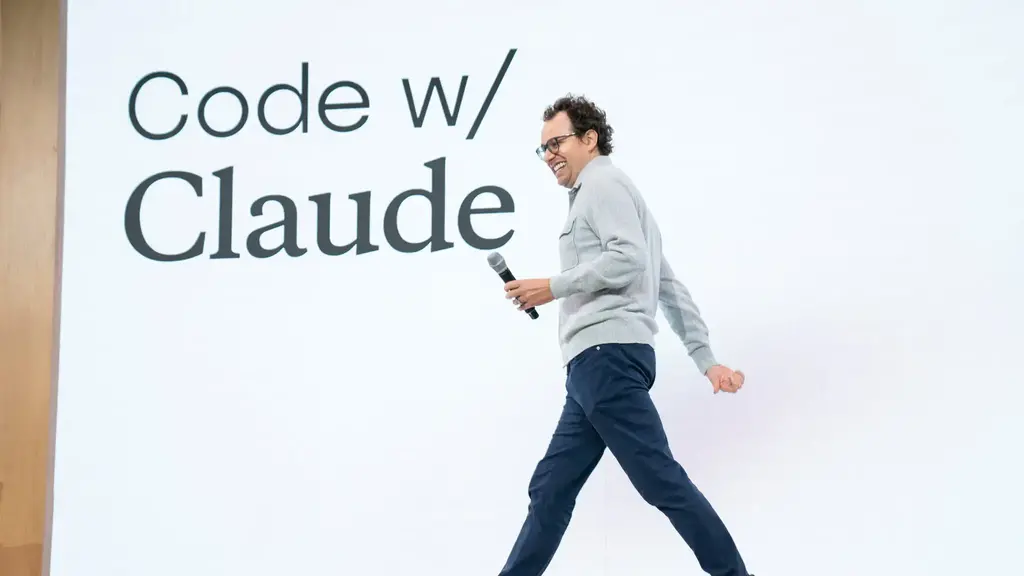
Anthropic CEO Dario Amodei
(Photo: AP)
Third, the IPO market itself appears more receptive to giant technology listings than it was during periods of higher uncertainty. A successful SpaceX debut could make it easier for other massive private companies to follow.
Finally, there is timing. If investors are willing to pay historic prices for AI and space-related companies, the incentive to go public becomes stronger. Waiting could mean risking a change in sentiment.
Who are these companies?
SpaceX is Musk’s aerospace and satellite company. It is best known for reusable rockets that can land and fly again, a breakthrough that helped reduce launch costs and changed the economics of the space industry. It also operates Starlink, the satellite internet network that provides connectivity in remote areas and has played a role in conflict zones such as Ukraine.
The planned SpaceX listing is expected to be enormous. Reports say the company could raise about $75 billion at a valuation near $1.75 trillion, surpassing Saudi Aramco’s 2019 IPO record. MarketWatch reported that the total haul could rise even higher if underwriters fully exercise their options.
Anthropic is one of the leading AI companies in the world. It was founded in 2021 by siblings Dario and Daniela Amodei, both former OpenAI employees, along with other AI researchers. Its best-known product is Claude, a chatbot and AI assistant that competes directly with ChatGPT.

OpenAI CEO Sam Altman
(Photo: Shelby Tauber/Reuters)
Anthropic has marketed itself around safer and more reliable AI development, a positioning that helped it attract major enterprise customers and major investors. The company has reportedly submitted a draft registration statement to the U.S. Securities and Exchange Commission, with a possible listing later this year depending on market conditions. A recent funding round reportedly valued the company at about $965 billion.
OpenAI is the company that made generative AI mainstream. ChatGPT’s launch turned AI from a niche technology story into a daily tool used by students, companies, programmers, writers, researchers and millions of ordinary users.
Led by CEO Sam Altman, OpenAI has grown into one of the most important companies in technology, with Microsoft among its biggest backers. The company has filed confidentially for an IPO, but has signaled that the process may take time and that no final listing date has been set.
If these companies lose money, why would investors buy the stock?
Because public investors are often buying the future, not the present.
Many of the world’s most valuable technology companies went public before they were consistently profitable, or while they were still spending heavily to expand. Investors accepted losses because they believed the companies could eventually dominate enormous markets.
Wall Street
(Photo: Carlo Allegri/ Reuters)
That is the core bet here. If AI becomes the defining technology platform of the next generation, OpenAI and Anthropic could become central infrastructure companies, not just chatbot makers. If commercial space and satellite internet continue to expand, SpaceX could become one of the most important industrial companies in the world.
The danger is that this future is already priced in.
At valuations approaching or exceeding $1 trillion, these companies would need to grow into some of the largest and most profitable businesses on Earth to justify investor expectations. That is possible, but far from guaranteed.
What are the risks?
The biggest risk is valuation.
A company valued at $1.75 trillion is being priced as if much of its future success has already happened. If growth slows, costs rise, regulation tightens or competitors catch up, the stock could fall sharply.
There is also an AI-specific risk. OpenAI and Anthropic depend on costly computing infrastructure and major partnerships with cloud and chip companies. Some analysts have warned that the AI market is becoming difficult to evaluate because the same companies can be investors, suppliers and customers at the same time. That makes it harder to know how much revenue is organic and how much reflects the financial structure of the AI boom itself.
SpaceX carries a different set of risks. Rockets can fail, satellite networks require huge capital investment, and long-term space ambitions may take decades to become profitable. The reported small public float could also amplify stock swings, especially if retail demand surges after the IPO.
History also offers warnings. IPO booms often peak when excitement is highest. In 2021, a wave of public listings and SPAC deals was followed by steep declines in many newly listed companies. Investors who bought at inflated prices discovered that a powerful story is not the same thing as a sustainable business model.
Why could this change the global economy?
These IPOs are more than fundraising events. They are a referendum on the future of AI and the private space industry.
If public investors embrace the listings, it could unlock even more capital for AI infrastructure, chip demand, cloud computing, robotics, space systems and satellite communications. It could also encourage other private technology giants to go public.
If the listings disappoint, the effect could be just as large. A weak debut or a sharp post-IPO decline could cool investor enthusiasm, pressure private valuations and force AI companies to prove that their revenue can support the hype.
That is why the coming listings matter. OpenAI, Anthropic and SpaceX are not just asking Wall Street to buy shares. They are asking the public markets to believe that the next era of technology will be big enough to justify trillion-dollar dreams.