

In late 2005, Steve Jobs accompanied his wife, Laurene, to a 50th birthday party for a friend — a Microsoft engineer. During dinner, the host repeatedly boasted about how Microsoft would dominate the future of computing with tablet software and urged Apple to adopt it.
The exchange would later take on near-mythical status inside Apple.
Steve Jobs presenting the first iPhone


Jobs recalled the moment bluntly in his biography by Walter Isaacson: “This guy badgered me about how Microsoft was going to completely change the world with this tablet PC software and eliminate all notebook computers, and Apple ought to license his Microsoft software. But he was doing the device all wrong. It had a stylus. As soon as you have a stylus, you’re dead. This dinner was like the tenth time he talked to me about it, and I was so sick of it that I came home and said, ‘Fuck this, let’s show him what a tablet can really be.’”
The outburst set off a chain reaction inside Apple.
Scott Forstall, who would later lead development of the iPhone’s software, recalled that Jobs arrived at the office days later furious, gathered his team and made clear he wanted to prove a point.
Jobs’ long-standing opposition to styluses became a guiding principle. “God gave us 10 styluses,” he would often say, raising his fingers — underscoring his belief that touch, not a pen, would define the future of computing.
That conviction led directly to the development of multi-touch technology — the core innovation behind the iPhone. Initially intended for a tablet, the technology was quickly redirected as Apple shifted its focus to building a phone, delaying the tablet project that would later become the iPad.
The story resurfaced as Apple marked 50 years since its founding on April 1. The company began as a partnership between Steve Jobs and Steve Wozniak in a garage in Los Altos, California, formalized by a third partner, Ronald Wayne.
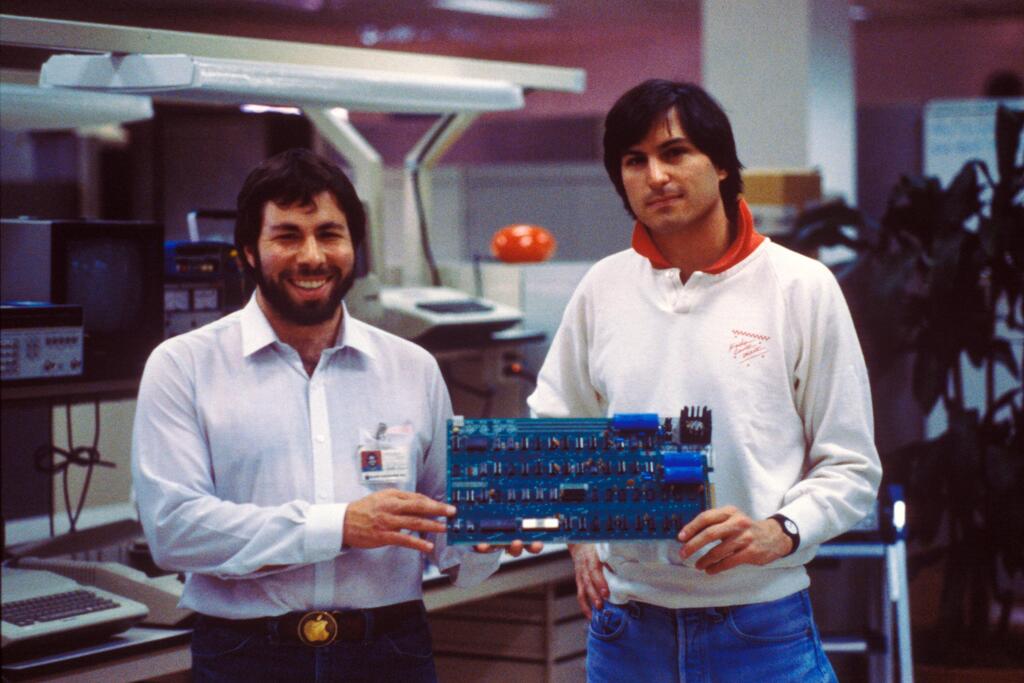
Wayne, then 42, typed the original partnership agreement but withdrew from the company just 12 days later, concerned about the financial risks. “I preferred to be poor and alive rather than the richest man in the cemetery,” he later said.
His decision cost him dearly. His 10% stake in Apple would be worth more than $300 billion today.
From those modest beginnings, Apple went on to create a series of influential products — but none matched the impact of the iPhone, introduced in 2007.
The device transformed not only the mobile phone industry, but also computing, communication and commerce. Today, the iPhone remains Apple’s core business, with about 220 million units sold annually and accounting for roughly half of the company’s revenue. As of 2026, there are more than 1.5 billion active iPhones worldwide — about one in four smartphones.
The origins of the iPhone, however, lie in years of experimentation inside Apple.
In the early 2000s, small teams within the company were exploring new ways for users to interact with computers. Traditional tools like the keyboard and mouse were seen as outdated.
“There’s hundreds of little startups that are just poking around, doing stuff,” said Myra Haggerty, an Apple executive. “Sometimes someone’s like, ‘Hey, come look at what we’re working on!’”
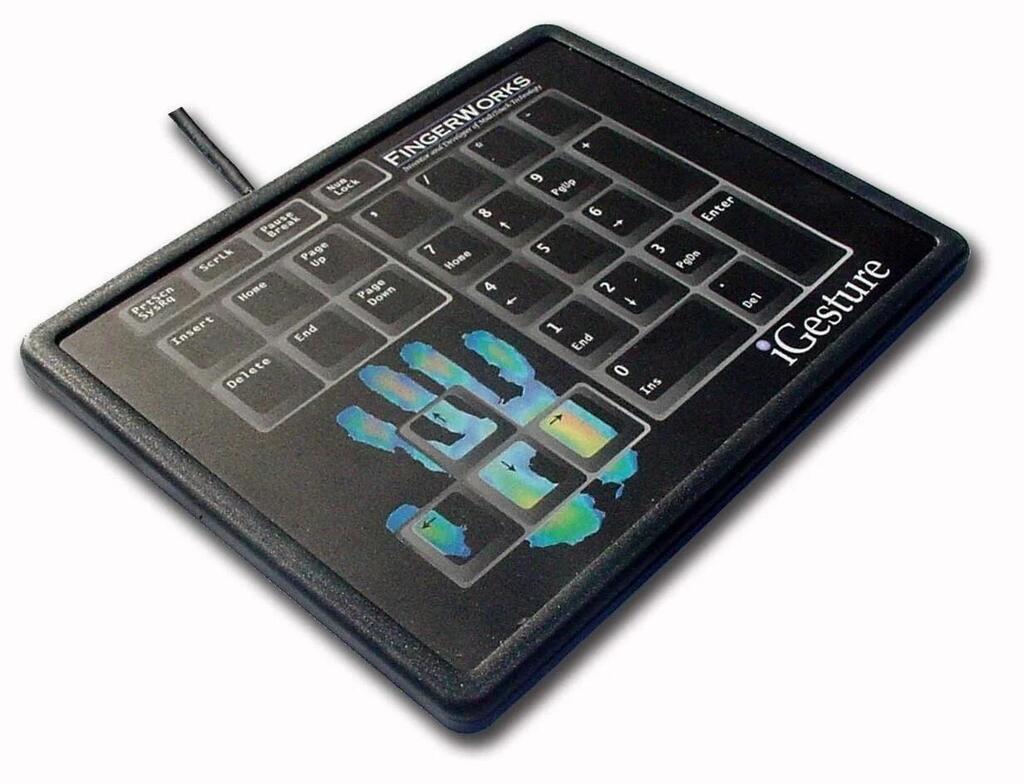
FingerWorks
(Photo: Apple)
One of those efforts, led by designer Duncan Kerr, focused on controlling on-screen objects with fingers. Working with technology from a small company called FingerWorks, Apple engineers developed early multi-touch interfaces capable of detecting multiple finger movements simultaneously.
The demonstrations impressed Apple’s leadership. “Everyone who saw the multi-touch demo loved it,” according to accounts from the development process.
At the same time, Apple faced a strategic challenge. By the mid-2000s, mobile phones were beginning to play music — threatening the dominance of the iPod.
“Nobody wanted to carry two different devices,” engineers realized.
Apple initially attempted to enter the market through a partnership with Motorola. The result, the ROKR phone, was widely seen inside the company as a failure.
“The frustrating part was, people kept calling it the Apple phone,” said Greg Joswiak, Apple’s marketing chief. “It was like, ‘Trust me: We had nothing to do with this.’”
Jobs shared that frustration. Existing phones, he said, were simply not good enough. “We just hated them; they were so awful to use,” he told Fortune magazine.
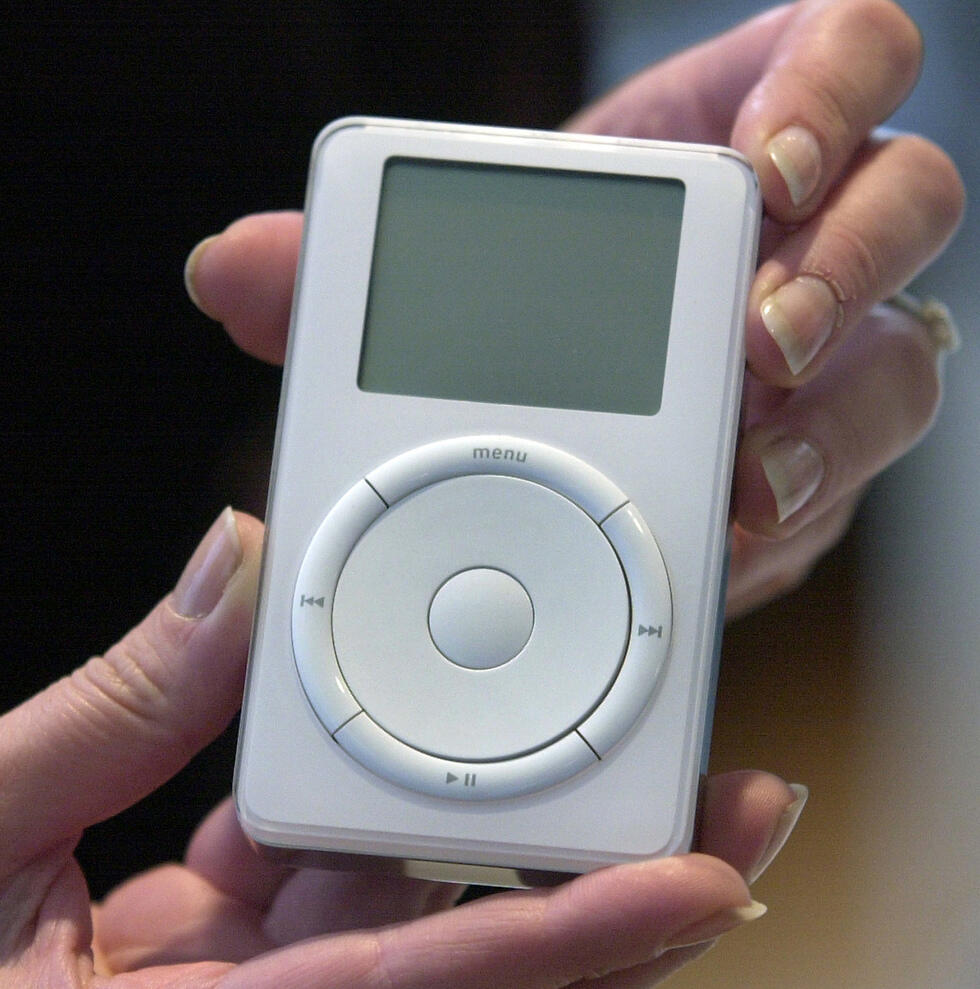
The first iPod
(Photo: AP)
Inside Apple, two competing approaches emerged. One aimed to adapt the iPod into a phone using its click wheel. The other relied on the emerging multi-touch technology to create a full touchscreen device.
The iPod-based approach quickly proved impractical, especially for typing. “We tried for weeks and weeks and weeks to try to make that happen, but it never worked,” said Tony Fadell, who led the effort.
The touchscreen concept, though more complex, offered a radically different experience.
At Jobs’ direction, Apple shifted its focus. The tablet project was shelved, and development of a phone accelerated.
Two teams worked in parallel — one on the iPod-based design and another on the touchscreen model. After months of internal competition, Jobs chose the touchscreen approach.
The project, code-named “Purple,” moved forward under strict secrecy. Teams worked long hours in isolated offices, developing both hardware and software from scratch.
Engineers faced major challenges. Early prototypes were bulky and unreliable. Software had to be redesigned for touch, introducing features like gesture control and inertial scrolling.
Even late in development, problems persisted. Just weeks before launch, Jobs rejected the plastic screen used in prototypes after noticing it scratched easily. He demanded a glass display — leading Apple to adopt what became known as Gorilla Glass.
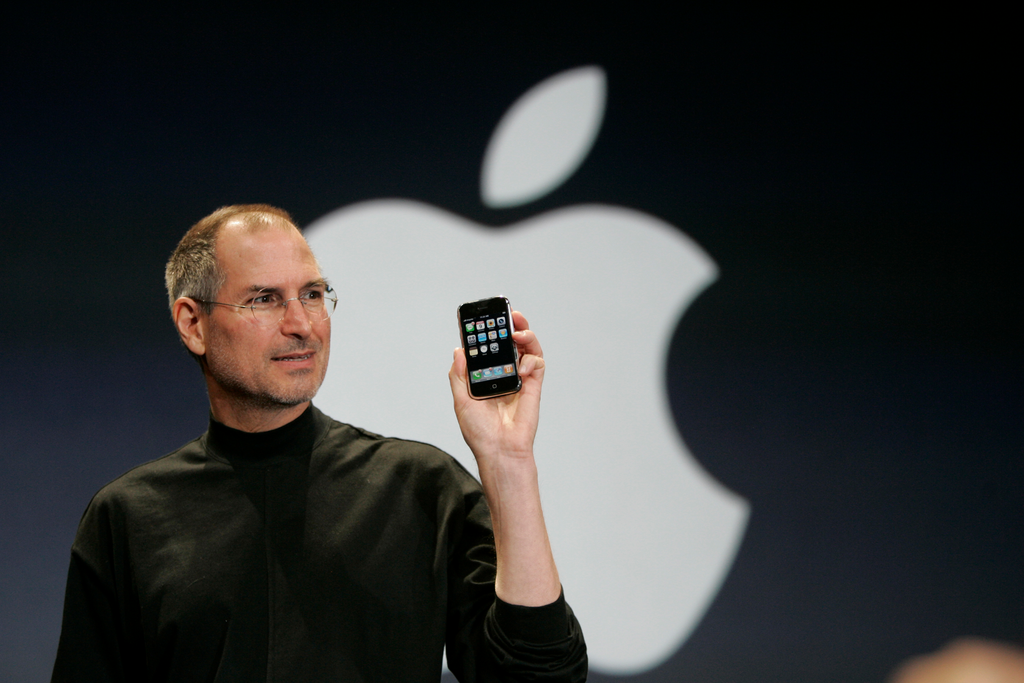
Steve Jobs presenting the first iPhone
(Photo: AP)
On the software side, early versions of the keyboard performed poorly, forcing engineers to make last-minute algorithmic improvements.
When the iPhone was finally unveiled on Jan. 9, 2007, Jobs presented it as “three revolutionary products” in one: a phone, a music player and an internet device.
Behind the scenes, however, the device was still fragile. Engineers carefully choreographed the demonstration to avoid crashes, limiting the sequence of actions Jobs could perform on stage.
Despite those challenges, the launch is widely regarded as one of the most successful product introductions in technology history.
Even inside Apple, few initially grasped the scale of what had been achieved.
Chris Espinosa, one of the company’s longest-serving employees, recalled that the significance only became clear afterward. The moment that stood out to him came just after the presentation, when he received a message from his wife.
“I want one,” it read.