


As France approaches its presidential election in May 2027, growing political unrest, antisemitism and economic uncertainty are prompting more French Jews to consider leaving the country, with as many as 50,000 potentially immigrating to Israel in the coming years, according to Ariel Kendel, CEO of Qualita, the umbrella organization representing French immigrants in Israel.
"What we saw over the past week was just a dress rehearsal for the elections in France in May," Kendel said. He fears the political confrontation between left-wing leader Jean-Luc Mélenchon and far-right leader Marine Le Pen could intensify as the presidential race approaches, potentially triggering widespread demonstrations and unrest.
Gallery
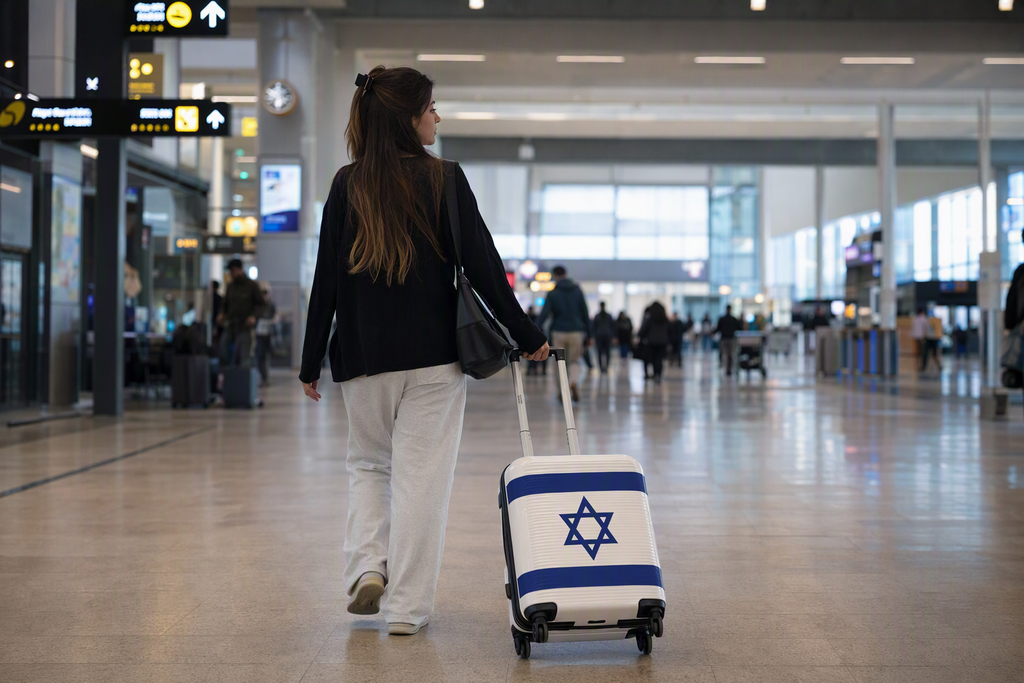
50,000 French Jews could move to Israel as election fears raise concern over money trapped abroad
Kendel identified May 2, the date of the presidential runoff, as a potential turning point. He expressed concern that a disputed or divisive outcome could bring millions of protesters into the streets and plunge France into further instability.
"Already, the situation is causing panic among many Jews," he said. "I don't think there's anyone who isn't considering immigrating to Israel."
France is home to an estimated 470,000 Jews, approximately 200,000 of whom maintain some level of active involvement in organized Jewish communal life. Discussions about immigration, once largely confined to synagogues and community institutions, have increasingly become part of everyday family conversations.
A decade ago, Kendel said, surveys conducted by his organization indicated that approximately 50,000 French Jews wanted to immigrate to Israel. Roughly that number eventually made the move. He believes current research points to similar potential over the next several years.
"The question is whether we're preparing for it and doing what we can to make it happen," he said. "There are factors pushing people out, including antisemitism, economic conditions and political extremism. But it's up to us to create reasons for them to choose Israel, including better absorption conditions and making the decision easier."
Kendel said he receives calls daily from French Jews considering relocation, many of whom are approaching a final decision.
Robert Ejnes, executive director of CRIF, the umbrella organization representing French Jewish institutions, previously told ynet that he did not know a single Jewish family in France that was not discussing the possibility of immigrating to Israel.
Yet leaving France is far from straightforward. Its generous welfare system offers benefits that many families are reluctant to give up, while Israel's high cost of living presents considerable financial challenges.
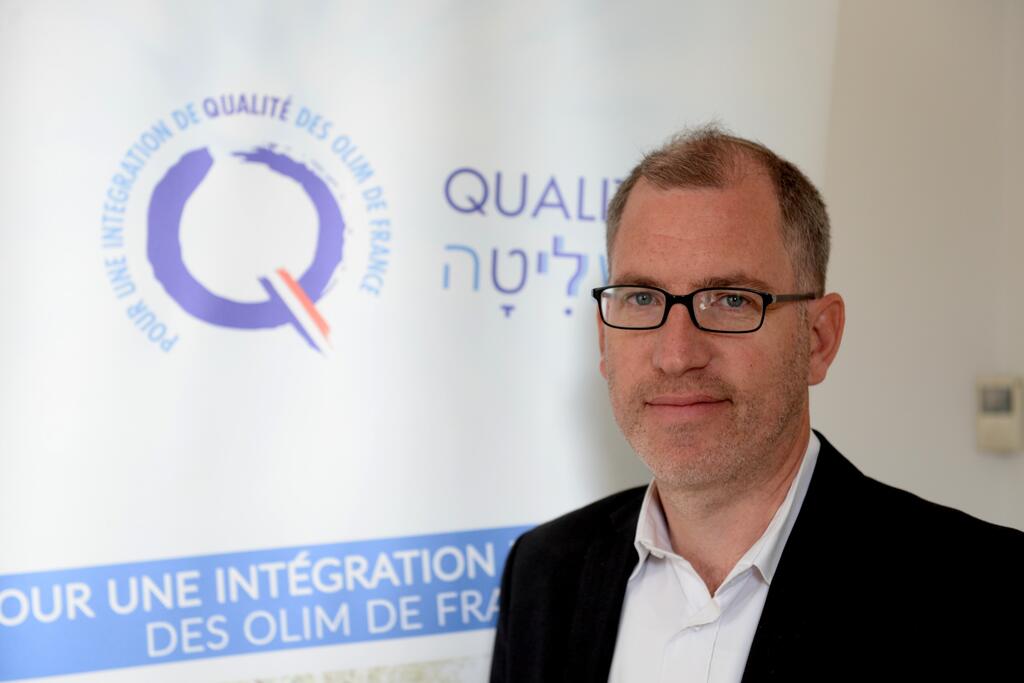
Ariel Kendel, CEO of Qualita
Kendel said the profile of French immigrants has also changed significantly. The image of wealthy newcomers buying apartments in Tel Aviv is increasingly outdated. Most are middle-class families who must adjust their expectations to Israel's housing market and living costs.
Instead of settling in Tel Aviv, Jerusalem, Netanya or Ashdod, growing numbers are choosing more affordable communities, including Netivot, Sderot, Afula, Hadera and Nahariya. Some families arriving from disadvantaged neighborhoods around Paris may initially use immigrant absorption centers, including a renovated facility in Kiryat Gat.
"Most immigrants are not wealthy people buying apartments in Tel Aviv," Kendel said. "They're middle-class families adapting to economic conditions and prices in Israel."
He acknowledged that Israel cannot replicate France's generous social benefits but argued that targeted government assistance could make immigration substantially easier. Simplifying professional licensing, recognizing foreign qualifications, helping newcomers find employment and supporting children's integration into schools could all improve their chances of establishing successful lives in Israel.
Could French Jews be forced to leave their money behind?
Beyond housing and employment, another concern is emerging among French Jews considering immigration: whether they will be able to transfer their savings, property proceeds and other assets to Israel if France's political direction changes.
Kendel said some families fear that economic policies associated with Le Pen's National Rally party could eventually make it harder to move money abroad or maintain assets outside France.
The party's longstanding "national preference" proposals seek to prioritize French citizens in areas including employment, housing and social benefits, potentially affecting some dual nationals. However, the party has not published a complete 2027 presidential platform, and no confirmed proposal establishing a blanket ban on lawful capital transfers has been identified. Under existing European Union rules, free movement of capital is generally protected, including transfers to countries outside the EU.
Nevertheless, Kendel said uncertainty about possible future restrictions is already influencing financial decisions.
"Many Jews are afraid that history could repeat itself," he said, referring to Jewish families who left Morocco and other Arab countries and were forced to abandon property or savings.
He described a hypothetical scenario in which someone sells an apartment in Paris but cannot transfer the proceeds to Israel without paying substantial taxes or meeting restrictive conditions. Similar concerns, he said, extend to pension savings and other financial assets.
Kendel also claimed to have heard of cases in which French Jewish bank accounts were blocked following lawful transfers or donations to Israeli organizations. Those individual cases have not been independently verified.
"That's exactly what's happening now," he said when asked whether people were already looking for ways to move their money. "I'm receiving many calls about it. People are searching for solutions."
Transferring assets is not always simple, particularly for families that own businesses or property requiring lengthy transactions. Kendel said stronger international financial safeguards against illicit money transfers were welcome, but he worried that legitimate funds could also become entangled in bureaucracy or future restrictions.
Despite these challenges, he believes French immigrants represent a substantial economic opportunity for Israel. Citing previous research, he said public investment in immigrant absorption could yield significant long-term returns through employment, business activity and tax revenues.
According to Kendel, approximately half of French immigrants have academic degrees, and many arrive with stronger Hebrew and English skills than previous generations. Those language abilities, he said, allow newcomers to integrate more quickly into existing businesses or establish their own.

Michael Cassar
One example is Michael Cassar, a partner in the French bakery and café chain Moulin Doré, which operates six branches in Israel alongside a production facility and catering business.
Cassar, whose parents and other relatives still live in Paris, said his career developed gradually, from managing one of the chain's branches to becoming a business partner. He believes the company's success lies in its ability to introduce French pastries and cuisine to Israeli customers rather than limiting itself to French-speaking immigrants.
"One mistake many new immigrants make is opening businesses that serve only the French community," he said. "It severely limits their growth and keeps them outside broader Israeli society. You remain trapped in a French bubble."
He said demand for French pastries and catering has expanded well beyond the immigrant community, citing a recent bat mitzvah celebration for an Israeli family with no French background that ordered a menu similar to those served at Jewish celebrations in Paris.
Cassar hopes to help newly arriving immigrants establish and manage additional Moulin Doré branches. Rather than seeking outside investors, he said he wants motivated entrepreneurs capable of bringing French culinary traditions to a broader Israeli audience.
"I want to give them the support they need to open and manage new branches," he said. "There's enormous potential here, and I want to show people coming from France that they can succeed in Israel."