

The battle for supremacy in the sports footwear market never stops. Brands are constantly trying to outdo one another with new designs, innovations and performance breakthroughs. Adidas, one of the industry's two giants alongside Nike, has faced growing competition in recent years from brands such as New Balance, On and Hoka, which have been gaining ground, particularly among younger consumers. Adidas wants to win. Every race, every competition, every arena and every playing field. And it is doing everything it can to make that happen. Every victory by an athlete wearing Adidas shoes is the best advertising money can buy.
London, April 26, 2026. Kenya's Sebastian Sawe, wearing the Adizero Adios Pro Evo 3 with the brand's unmistakable three stripes, stunned the world by stopping the clock at 1:59:30, setting a new marathon world record. In doing so, he became the first runner ever to break the seemingly impossible two-hour barrier over the grueling distance. Just 11 seconds behind him, Ethiopia's Yomif Kejelcha also finished in under two hours, despite making his marathon debut. On his feet? You guessed it. The Pro Evo 3.
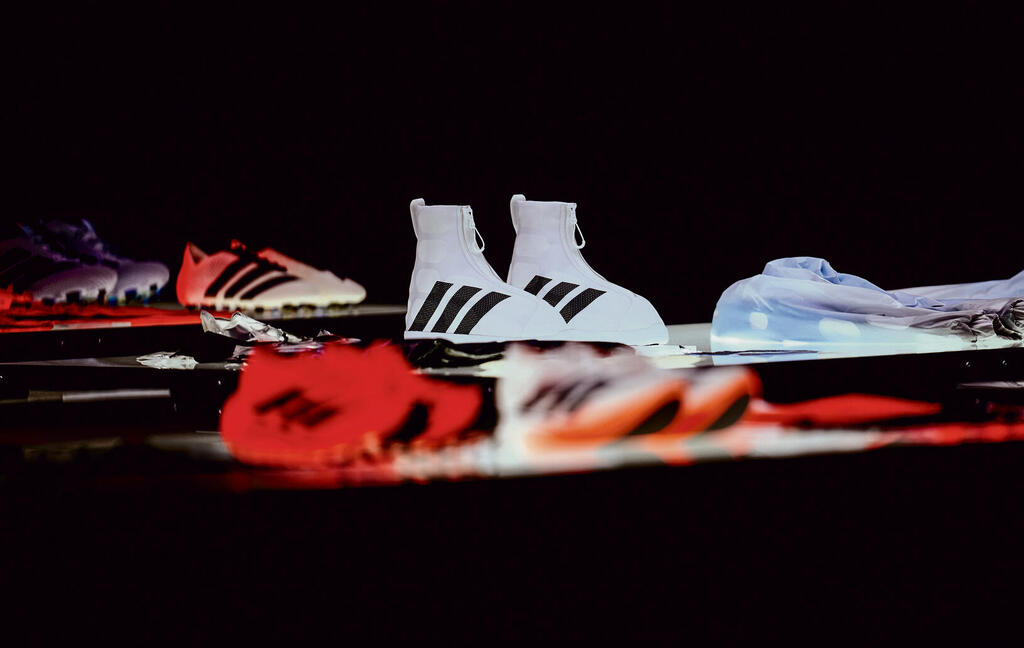
Five months later, in Berlin, Adidas swept the podium. All three men and all three women who finished first, second and third were wearing the company's shoes. But make no mistake: for Adidas, these achievements are merely another milestone on the road. In Herzogenaurach, the company is already working on what comes next.
No, that's not a typo, and nobody made the place up. Herzogenaurach, or simply Herzo, is a small Bavarian town about 450 kilometers south of Berlin, and it has been home to Adidas for 77 years. It all began long before Adidas became one of the most recognizable brands in the world. Adi Dassler started making athletic shoes in the town in the 1920s and established a factory with his brother Rudolf in 1924. But the family partnership did not survive, and the brothers went their separate ways in 1948.
A year later, Adi registered Adidas, a combination of his first and last names, and started his own business with 47 employees. Rudolf, incidentally, stayed quite literally across the road and founded Puma. The small town has since become the setting for one of the world's most famous sporting and business rivalries, and remains the nerve center of Adidas to this day.
Last month, more than 100 journalists, media professionals and content creators from around the world were invited to the campus for Home of Innovation, an event at which Adidas unveiled sports technologies currently under development and offered a look at how they are created.
With help from athletes, the company built a kind of living laboratory, showing not only what it is developing but how the entire process works, from identifying an athlete's problem to taking measurements, conducting tests, making improvements and eventually producing a prototype that reaches the track, field or road.
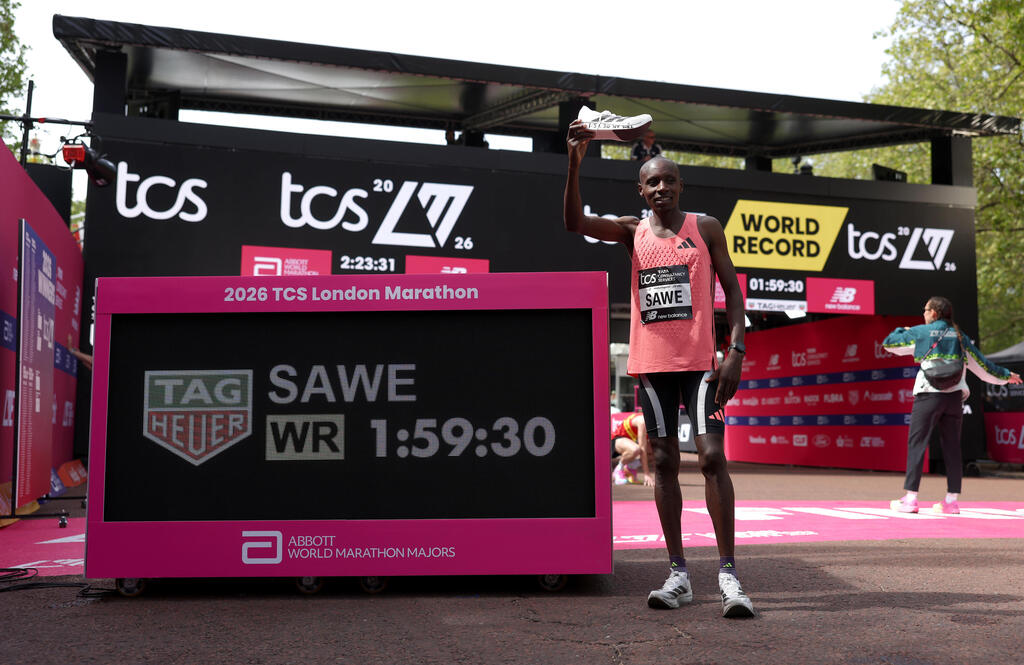
Sebastian Sawe
(Photo: Alex Davidson/Getty Images)
Adidas has faced a string of challenges since the pandemic. After the extraordinary success of its retro footwear line, the company needs to find its next big hit. While Nike has been struggling through a serious crisis, Adidas managed to maintain momentum largely thanks to the Samba, which became a global fashion sensation. But that surge has stalled. Adidas shares have lost around 20% of their value over the past year, and the company understands that it cannot rely on casual fashion alone.
3D printers and flip-flops in the freezer
One of the most intriguing stops on the campus is the Athlete Product Excellence Lab, or APEX, the research and development center where Adidas is trying to understand exactly what happens to the human body when it runs, jumps, brakes or changes direction. Here, athletes undergo foot and body scans, run in front of cameras and sensors, and are measured from almost every conceivable angle.
Teams examine where pressure builds, how the foot strikes the ground, which muscles are working and how the body changes as fatigue sets in. The data then goes to designers and engineers, who attempt to translate the numbers into tangible changes in a shoe, garment or prototype. In other words, less guesswork and more human movement converted into data.
Project R.A.P, short for Radical Athlete Perception, is designed to make the individual customization of footwear part of the manufacturing process itself. Rather than starting with a standard shoe and attempting to adapt it to a player, the process begins by gathering data from the athlete's body: a 3D foot scan, pressure mapping and an analysis of movement mechanics.
"We collect foot scans, but also pressure data and data about running movements. Now we can take all that information and use it to determine the structure of the shoe," one developer explained. According to Adidas, the technology is already being tested and implemented across several sports, including soccer, basketball and American football. The aim is to create a shoe designed not merely around an athlete's measurements, but around how they move, apply force and load their feet.

Former British Prime Minister Rishi Sunak wearing Adidas Samba sneakers
(Photo: Rishi Sunak/Instagram)
In soccer, the technology has already made the leap from laboratory to playing field. Cavan Sullivan, the young American talent at Philadelphia Union, became the first player to wear 3D-printed Project R.A.P boots in a professional match. But the shoes had already been tested by leading players in Europe.
"During development, we worked with Paris Saint-Germain and Atlético Madrid. In Paris, we worked with Khvicha Kvaratskhelia, who trained in the boots, and we also worked with Ademola Lookman," one Adidas employee explained.
According to the developer, the trials did not lead to regular match use at the time because of logistical issues and injuries. Nevertheless, "ultimately they were happy with the boots, they trained in them and were open to the possibility of playing in them." Sullivan, he added, is only the beginning. "It won't end with Cavan. We'll try to bring the boots to players in different leagues and at different levels."
Incidentally, since Sullivan started playing in the 3D-printed boots, his numbers have soared. In 11 MLS matches wearing them, he scored six goals and provided eight assists, compared with one goal and four assists in 13 appearances without them. Then came his goal for the U.S. national team, making him, at 17 years and five days old, the youngest scorer in the history of the senior national side. He also recorded at least one goal or assist in eight consecutive MLS matches and was named the youngest Player of the Month in league history in September.
APEX also showcased an experimental approach to footwear in which the cushioning system itself is 3D-printed from foam. The idea is to combine the advantages of 3D printing with the properties of foam, particularly low weight and energy return. The printed structure allows engineers to control, almost point by point, how the sole compresses and responds to movement, while rapidly changing the design from one prototype to the next.
But in shoes intended for competitive sports, technological advantages also run into regulatory limits. According to the developers, relevant products are submitted to World Athletics for approval.
"At this stage, we're focused first and foremost on reaching the performance level we're aiming for. Once we get there, we can engineer the product to meet the rules. But we're always trying to push things forward, so we also have to work beyond the boundaries of what exists today and look beyond them."

Atlético Madrid's Ademola Lookman (left)
(Photo:CRISTINA QUICLER / AFP)
A completely different technology presented at the lab is called Rapid Liquid Printing, in which a needle produces a three-dimensional silicone structure inside a gel bath. Yes, it is as futuristic as it sounds.
The highlight was a prototype pair of flip-flops designed to cool the feet before or after physical exertion. Manufacturing takes about seven hours, and each flip-flop contains 15 gel-filled cooling chambers. Before use, the footwear is placed in a freezer, after which it can provide a cooling sensation for up to half an hour.
Shoes that shift gears and a jacket with a cooling system
The highlight of the event was a visit to the innovation laboratory, divided into three sections representing Adidas' three main areas of development: Future of Fast, Future of Cool and Future of Strength. This was not simply an opportunity to meet the developers, but a live demonstration of the products themselves, worn and tested by athletes.
In Future of Cool, the starting point was straightforward: when the body overheats, performance suffers.
"Managing body temperature is a universal challenge for many of our athletes, from Formula 1 drivers to runners, tennis players and soccer players," one member of the development team explained. "When they get too hot, everything feels slower and heavier, and they struggle to concentrate."
Standing alongside her was American ultramarathon runner Charlie Lawrence, the newly crowned world champion in the 100-kilometer race and one of the athletes Adidas relies on to test its products outside the laboratory.
"In the climate chamber, you can set the temperature and humidity, but you're on a treadmill, not on the road and not running uphill," Lawrence explained.
According to Lawrence, the most valuable information comes when he takes the products into training sessions and competitions, then returns to the development team with feedback about what worked and what did not.
He is also well acquainted with the cooling technology itself. During the Chasing 100 experiment, he and the other runners used the CLIMACOOL system, which included a cooling vest, an insulated jacket and cooling accessories that were replaced during the run.
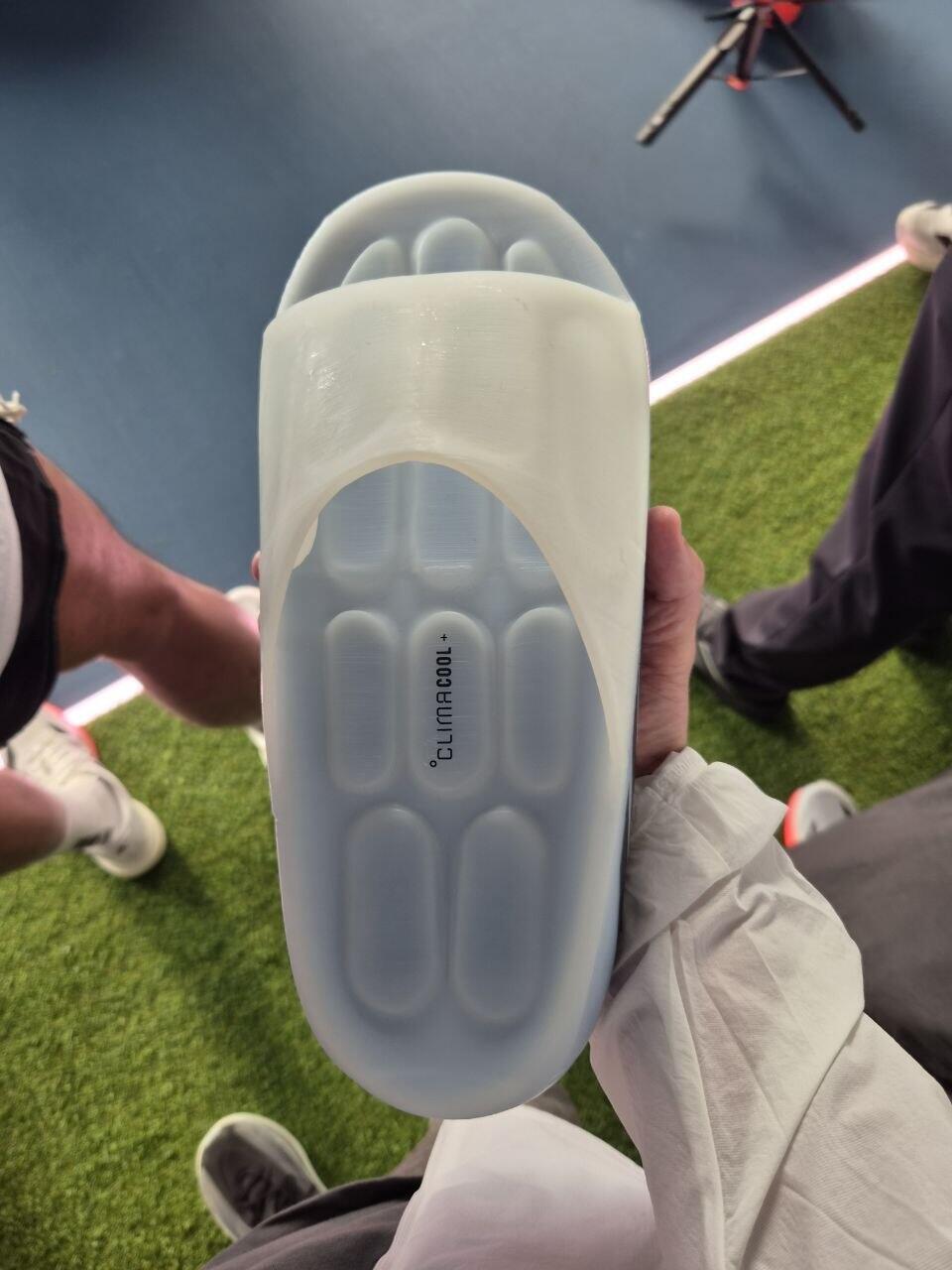
Adidas cooling flip-flops at the company's German laboratory
(Photo: Dvir Reshef)

Adidas innovation laboratory in Germany
(Photo: Dvir Reshef)
The same principle extends all the way down to the feet. Adidas has developed a cooling cover that fits over soccer cleats during halftime and, according to the company, can reduce foot temperature by up to two degrees Celsius within seven minutes.
This is the direction Adidas is taking CLIMACOOL: no longer just a "breathable" shirt or sweat-wicking fabric, but an entire system designed to regulate an athlete's body temperature before, during and after physical exertion.
In Future of Strength, the goal was different. Rather than generating more power, Adidas wants to help the body maintain its strength as fatigue accumulates. Company developers explained that they analyze which muscle groups are activated under stress, then try to support them using clothing with strategically positioned reinforcement zones.
Among those taking part in the demonstration was leading HYROX athlete Cole Laren, who performed squats and explained that at the bottom of the movement, "you feel a kind of stretch, followed by a rebound on the way back up."
According to Laren, that assistance becomes particularly noticeable when it is needed most: "At the end of a race, when you're already exhausted and still have another 100 wall balls to do."
In Future of Fast, one of the standout concepts was the Adizero Gearshift, a trail running shoe whose stiffness can change while the athlete is moving by, believe it or not, shifting gears.
Inside the sole is a component that can switch between a softer, more flexible setting, which one developer called "cruise mode," and a stiffer setting, "attack mode," intended for moments when the runner wants greater responsiveness and propulsion.
Adidas presented two versions of the shoe. In the analog version, the runner presses and slides a small switch on the side of the shoe to change its stiffness. In the electronic version, the transition can be controlled from a smartwatch, with the option of programming changes in advance according to specific points along the route.
The concept is simple: instead of having to choose in advance between a more comfortable shoe and a more aggressive, performance-oriented one, the same shoe should be able to adapt to the runner's pace, terrain and level of fatigue.
At the other end of the speed spectrum, Adidas unveiled an experimental sprinting shoe developed in collaboration with, among others, British sprinter and three-time Olympic medalist Daryll Neita.
"It's amazing to know that my voice was part of the development of this shoe," she said. "Coming out of the starting blocks, it's so powerful, and once I'm running upright, it's incredibly springy. I'm sure these shoes will win a lot of gold medals."
For a sprinter, she explained, even the smallest advantage matters. "When you're standing on the starting line and competing for medals, you want to know that whatever you're wearing on your feet is going to give you every possible advantage."
Which of these developments will eventually reach store shelves, and which will remain prototypes in the laboratory? Even Adidas does not yet know.
But in the world of elite sports, it does not always take a revolution. Sometimes a few grams less weight, a single percentage point of efficiency or a fraction of a second can make all the difference.
Ultimately, all the scans, measurements, foam, gel and gear-shifting shoes must pass one test that does not take place in Herzogenaurach: the scoreboard.
And Sawe has already demonstrated this year that even a barrier considered almost impossible for decades can disappear. For Adidas, at least, that is not the finish line. It is simply the point from which the search for the next competitive advantage begins.