

The budget deficit narrowed further in August as tax revenues rose sharply amid an economic recovery following the prolonged war and the latest conflict with Iran, according to figures released Tuesday by Accountant General Michal Abadi-Boiangiu at the Finance Ministry.
The government recorded a deficit of about 7.9 billion shekels ($2.6 billion) in August 2026, compared with an unusually high deficit of about 9.6 billion shekels ($3.17 billion) in August last year.
The accumulated deficit over the past 12 months fell by another 0.1 percentage point to about 3.2% of gross domestic product, according to Finance Ministry data.
That is significantly below the 4.9% annual deficit target approved by the government and Knesset. The improvement is largely attributed to the economy’s recovery from the prolonged war, including the latest fighting with Iran.
Since the beginning of 2026, the deficit has totaled 19.2 billion shekels ($6.3 billion), while the rolling 12-month deficit stands at 71 billion shekels ($23.4 billion).
However, a major increase in funding promised to the defense establishment by the end of the year is expected to push the deficit to around 100 billion shekels ($33 billion).
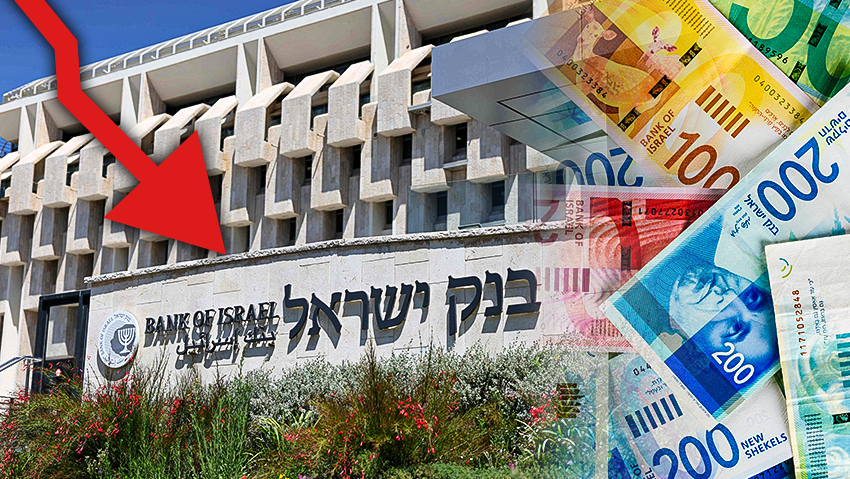
(Photo: AFP, Shutterstock)
The rebound in economic activity following this year's Operation Roaring Lion against Iran has boosted tax collection and government revenues as economic activity picked up.
State revenues totaled about 47.9 billion shekels ($15.8 billion) in August. Since the beginning of the year, revenues have reached about 410.1 billion shekels ($135.3 billion), up from about 367.7 billion shekels ($121.34 billion) during the same period last year — an increase of 11.5%.
Government spending, meanwhile, totaled about 55.7 billion shekels ($18.4 billion) in August. Since the beginning of the year, expenditures have reached about 429.3 billion shekels ($141.67 billion), compared with about 414.5 billion shekels ($136.79 billion) during the same period in 2025.
That represents an increase of just 3.6%, significantly below the growth in government revenues.
The relatively modest increase in spending was attributed largely to Israel operating for three months under a continuation budget, which maintained previous spending levels and had not been updated to reflect activities the government was required to carry out.