

For the first time in 31 years, the U.S. dollar has fallen below the 3-shekel threshold, continuing a prolonged weakening trend against Israel’s currency.
During continuous trading Wednesday, the dollar was hovering around NIS 2.99. Its official representative rate, set earlier in the day, stood at 3.01 shekels.
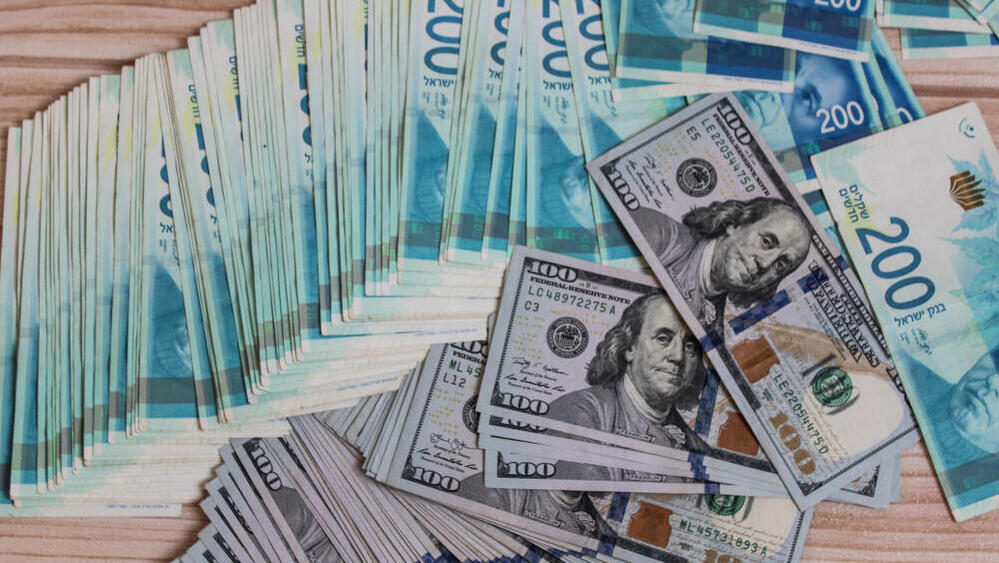
The dollar’s decline has been ongoing for some time. In April last year, it traded near 3.7 shekels, meaning it has since dropped about 16%, its sharpest fall against the shekel since the 2008 global subprime crisis, according to Calcalist.
The weakening comes amid broader geopolitical tensions between the United States and Iran, as well as sustained inflows of foreign currency into Israel. Large volumes of dollars entering the country, particularly through investments in high-tech and industry, are converted into shekels, strengthening the local currency.
A stronger shekel has mixed effects on the economy.
On the positive side, it lowers costs for Israelis traveling abroad and reduces prices for imported goods, including many supermarket items. It also helps moderate inflation. According to a calculation by Dr. Alex Zabezhinsky of Meitav Investment House, if the exchange rate had remained at 3.7 shekels, inflation would currently be around 3% rather than closer to 2%.
However, the stronger currency hurts businesses that earn in dollars but pay expenses in shekels. This includes freelancers serving U.S. clients, export-oriented manufacturers and much of Israel’s high-tech sector, whose products are largely sold overseas.
For such companies, the impact is significant. A business with dollar-denominated revenue and shekel-based expenses effectively sees profits shrink by about 16%, reflecting the currency shift.
Lower profitability can have broader consequences. Companies may cut wages, reduce hiring or shift operations abroad to lower-cost locations. Some may also delay further investment in Israel.
While cheaper imports can offset some losses, most businesses report that the benefits do not fully compensate for the stronger shekel. Surveys by the Manufacturers Association indicate that 46% of firms say the currency strength does not offset losses at all, while 27% report only partial compensation. In high-tech, the impact is even more pronounced, as companies rely less on imported raw materials.
So far, there is no clear evidence of a decline in Israeli exports, but data suggests an increase in production activity abroad by Israeli firms. Survey results should be treated cautiously, as they are based on self-reporting by interested parties, but they indicate growing concern. About 40% of exporters and 55% of high-tech companies say they are considering expanding production overseas.

Israelis traveling abroad benefit from a weaker dollar
(Photo: Shutterstock)
The strength of the shekel is largely driven by market forces. Israel operates under a floating exchange rate system, meaning the dollar’s value is determined by supply and demand. In recent years, inflows of dollars into Israel, particularly from high-tech exports, have consistently exceeded outflows.
Additional pressure comes from foreign investments and financial flows. Foreign investment in Israel has surged, reaching about $39 billion in 2025 and $25 billion in 2024. Much of this capital is converted into shekels, further boosting demand for the local currency.
Institutional investors also play a role. Pension funds and other large investors seek to hedge against currency risk, purchasing financial instruments that effectively increase demand for shekels as their foreign asset exposure grows.
Despite the challenges, manufacturers and high-tech firms are not calling for a fixed exchange rate. Instead, they are urging more targeted measures. These include Bank of Israel intervention through dollar purchases and allowing companies to pay taxes in dollars, which could reduce demand for shekels.
Economists note that such tax changes would not fundamentally alter the currency dynamic, as the government would still need to convert dollars into shekels to cover domestic expenses. The primary benefit would be reduced conversion costs for companies.
The Bank of Israel said in response that interest rate policy is a broad tool and not designed to address specific markets. It added that premature rate cuts could undermine efforts to contain inflation and ultimately harm more vulnerable populations.
The central bank emphasized that its monetary policy will continue to be data-driven, taking into account geopolitical uncertainty, labor market constraints and fiscal policy impacts.