

A federal judge on Monday ordered Paramount and Warner Bros. Discovery to halt their $81 billion merger for at least two weeks, giving a coalition of states more time to pursue its legal challenge to the deal.
California and 11 other states sued last week to block Paramount’s planned acquisition of Warner, arguing that combining the two companies would “extinguish competition” in Hollywood and leave consumers, particularly moviegoers and cable subscribers, with fewer choices.
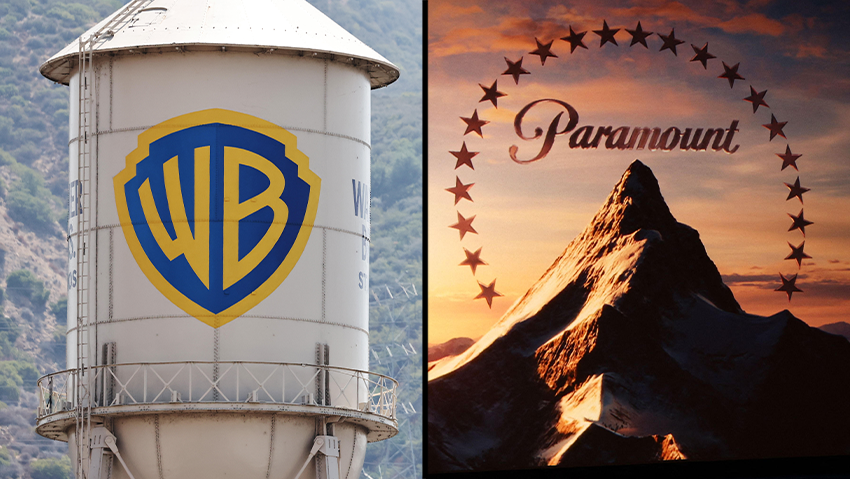
(Photo: Valerie Macon/AFP, Mario Tama/Getty Images)
The states asked the companies not to close the transaction until a court had time to fully consider their claims. After Paramount and Warner refused, the states sought a temporary restraining order, which U.S. District Judge Araceli Martínez-Olguín granted Monday.
The order pauses the transaction for at least 14 days and could be extended to 28 days. The court scheduled an Aug. 3 hearing on the states’ request for a preliminary injunction that could keep the merger blocked while the broader antitrust case proceeds.
“This is a critical first win in our case to ensure this megamerger never sees the light of day,” California Attorney General Rob Bonta said. He warned that concentrating control over markets central to Americans’ lives could result in fewer opportunities and poorer products and services.
A merger would unite two of Hollywood’s five remaining legacy studios, along with major television networks, streaming libraries and news operations. Warner properties including HBO Max, CNN and the “Harry Potter” franchise would come under the same corporate umbrella as Paramount-owned CBS, Paramount+ and films including “Top Gun.”
Paramount did not immediately comment on Monday’s ruling. The company, acquired by Skydance last year, has said it will “vigorously defend” the Warner transaction and has called the states’ complaint wrong on both the facts and the law. It argues the merger would strengthen competition against larger entertainment companies and has pointed to regulatory approvals received elsewhere, including from the Trump administration last month.
The timing is financially significant for Paramount. The companies had been expected to try to complete the deal as early as this week and proposed concluding a preliminary-injunction hearing by the end of August, allowing time for a possible appeal before Sept. 30.
Under the merger agreement, Paramount has pledged to pay Warner shareholders an additional 25 cents per share for every day the deal remains incomplete after Sept. 30, amounting to about $7 million a day.
The states called Paramount’s proposed timetable unprecedented and unfair, arguing that any financial cost after Sept. 30 resulted from risks the company voluntarily accepted. At a hearing Friday, they proposed beginning a trial in April 2027 to allow sufficient time for evidence gathering and discovery.
Paramount’s proposed purchase is valued at about $81 billion in equity and nearly $111 billion when Warner’s debt is included.
The states joining California in the lawsuit are Arizona, Colorado, Connecticut, Massachusetts, Minnesota, Nevada, New Jersey, New Mexico, New York, Oregon and Washington. The Writers Guild of America and others have also filed legal challenges seeking to block the merger.