

Volkswagen, once considered one of the most secure and desirable employers in Germany, is confronting one of the deepest crises in its history, with tens of thousands of jobs at risk, factories facing possible closure and relations between management and workers deteriorating sharply.
The confrontation burst into the open at a recent company gathering in Wolfsburg, where Daniela Cavallo, head of Volkswagen’s powerful works council, accused CEO Oliver Blume of failing to tell employees how serious the situation had become.
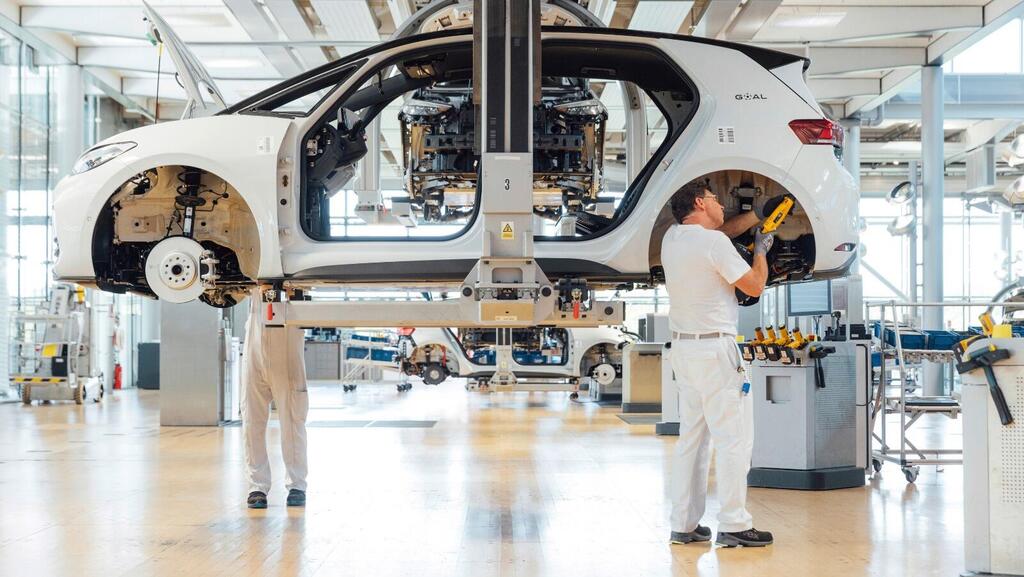
“You cannot work with a CEO who does not tell his employees what the situation really is,” Cavallo said to applause from roughly 10,000 workers.
Her comments came after reports from company headquarters suggested Volkswagen could eventually cut another 50,000 jobs, potentially bringing the total number of positions eliminated across the group to around 100,000, with at least half of the additional cuts in Germany.
Blume sought to play down those figures, describing them as a theoretical calculation rather than a formal target, but his refusal to rule out large-scale cuts did little to reassure employees.
Workers argue that Volkswagen’s problems are rooted above all in years of poor strategic decisions and a failure by management, particularly previous leadership, to move quickly enough into the electric vehicle era. They also complain that the company has failed to explain clearly how far it intends to go in cutting costs.
Rumors of thousands more layoffs and the possible closure of four German plants have fueled anger across the workforce. One Volkswagen employee in Wolfsburg told the German news agency that workers felt their jobs and status were being used simply to improve the company’s balance sheet.
Blume himself has offered an increasingly bleak assessment. In an internal video message to employees, he said Volkswagen’s sales volumes and profit margins were too weak to finance the investments needed for new technologies, products and factories.
“The situation is more serious than critical,” he said.
Workers and management see two different crises
At the heart of the dispute is a widening gap between management’s assessment of Volkswagen’s condition and that of many employees.
One company executive told Die Zeit that management had perhaps failed to communicate the urgency clearly enough, but said drastic measures were unavoidable.
“It is obvious that drastic steps are needed here to save the company, including mass layoffs and plant closures,” the executive said. “The workers do not understand the seriousness of the situation. They still treat this major crisis as something romantic that can be solved through ordinary means.”
Cavallo rejects that approach. She argues that Volkswagen has never been just another corporation governed solely by market forces and that employees have always had a stake in the company’s identity and future.
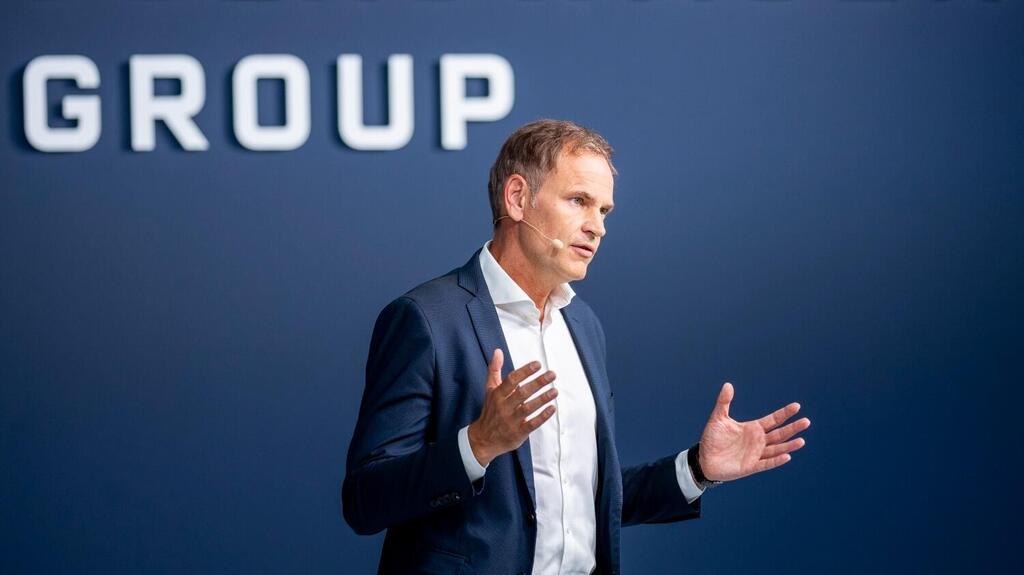
CEO Oliver Blume
“Our trust in management and in Chairman Blume has been damaged,” she said. “Maybe it can still be restored, but it has definitely been damaged.”
She described the restructuring as “an attack on the workers,” adding: “Instead of showing us the light at the end of the tunnel, management is simply pointing to the lights of the train coming toward us at full speed.”
Volkswagen’s cost-cutting plans extend well beyond headcount reductions. The company is considering cutting more than 2,000 internal subsidies and benefits, lowering production costs, scaling back unprofitable model lines, freezing recruitment and encouraging older employees to retire early or shift to part-time work.
The first major round of reductions is already underway. Around 50,000 jobs are being eliminated across Volkswagen, Audi and Porsche, including 35,000 at the core Volkswagen brand. Some 37,000 employees have already signed redundancy or early-retirement agreements.
Germany’s auto crisis hits its flagship
Volkswagen’s problems reflect a broader crisis across Germany’s once-dominant auto industry.
Years of high energy prices, logistical disruptions and supply problems have raised costs, while U.S. tariff policies under President Donald Trump have added another layer of uncertainty. But the biggest long-term challenge has come from China.
German manufacturers have lost market share there as Chinese consumers increasingly buy domestic brands. At the same time, Chinese automakers have become formidable global competitors, particularly in electric vehicles, where they have moved faster than many German companies in technology, scale and pricing.
For Volkswagen, that shift has been especially painful. The company must now spend heavily on new technology just as weaker earnings are reducing its ability to do so.
Blume has been in the job for four years and arrived with high expectations. He was seen as a Volkswagen insider: he grew up near the company’s headquarters, his father owned a supermarket on Porsche Street in Wolfsburg and his first car was a Volkswagen Beetle.
But he inherited a company already in trouble. Since he took over, Volkswagen’s share price has fallen by roughly half and profits have declined for 10 consecutive quarters.
Even symbols of the wider Volkswagen empire have suffered. VfL Wolfsburg, the football club backed by the group, was relegated to Germany’s second division at the end of last season.
Blume is now trying to pull one of Germany’s industrial flagships, a group employing around 600,000 people, out of a prolonged decline. His answer has been aggressive restructuring. The workforce’s response has been distrust and resistance.
That clash is likely to intensify.
Lower Saxony, the German state that is Volkswagen’s second-largest shareholder, has already said it will oppose factory closures. State leaders have argued that every alternative should be explored first, including converting some plants and workers to weapons and ammunition production for the German military and other armed forces.
For Volkswagen, the crisis is no longer only about declining profits or slower electric vehicle sales. It has become a struggle over what kind of company it will be, how much of its traditional social model it can preserve and how far management is prepared to go to restore competitiveness.
The central problem is that executives increasingly believe only drastic cuts can save the group, while many employees still see those same cuts as evidence that management is sacrificing the workforce for failures it created.