

The owner of the Petza'el Crocodile Farm in the Jordan Valley, which was founded about 40 years ago, has filed a lawsuit against the state. Gadi Beitan is seeking approximately 53 million shekels in compensation from the state for alleged economic damages after hundreds of crocodiles at his farm were killed by state authorities on August 3, 2025.
According to Beitan, the incident left him unable to safeguard the lives of the crocodiles or to fulfill a lucrative agreement to sell them to a commercial entity in Morocco for tens of millions of shekels.
The lawsuit was filed last week by attorneys Ohad Shalem, Ya’ala Shahar and Shlomit Beitman of the Shalem–Kerem law firm, against the Civil Administration in the West Bank, Israel Police, the Border Police and the Israel Nature and Parks Authority.
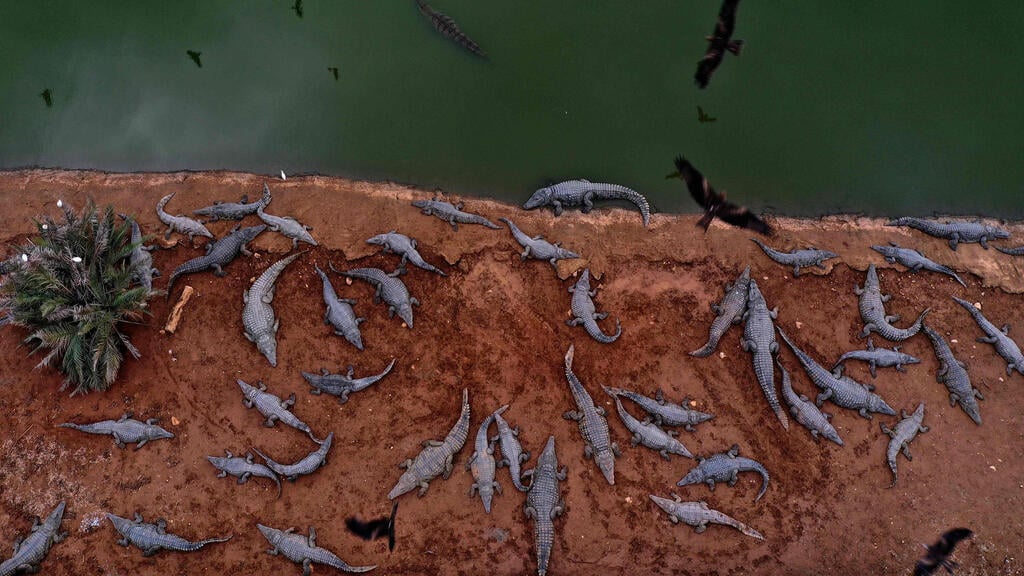
“When they came to kill the crocodiles, they took the farm worker’s phone so he couldn’t notify me, because they knew an injunction could be obtained immediately," Beitan told ynet. "Everything was lost. Some were killed by gunfire. The crocodiles there were between 50 and 150 years old. It was a life’s work. Throughout all the years we protected the crocodiles and they never harmed anyone. In terms of the damage caused, this wasn’t a light blow to the wing — it was a plane crash. Forty years of investment doesn’t just disappear.”
The claim was filed by Beitan Nissim & Sons Ltd., which owns the crocodile farm at Moshav Petza'el in the Jordan Valley. The farm was established in 1987 and managed by Beitan, a senior reserve officer who has worked for decades in agriculture in the Negev and the Gaza envelope area. The lawsuit alleges that the farm was established in full coordination with the state, but that in the early hours of August 3, 2025, all of the crocodiles at the site were killed by the authorities.
Following the incident, the state claimed that hostile elements could have breached the fence and dispersed hundreds of crocodiles, and that the operation was carried out to protect public safety. Beitan, however, maintains that “there was never any safety or security incident that actually endangered the public.”
'They slaughtered 800 crocodiles'
The killing of the crocodiles sparked widespread public criticism, including from environmental organizations and animal rights activists. The lawsuit states that “the defendants, some of them administrative authorities, behaved like common criminals when they executed and slaughtered more than 800 crocodiles over the age of 50 — protected wild animals that were the private property of the plaintiff. It is difficult to describe the horrors of the killing field and the lives of some 800 crocodiles that were put to death for no reason.”
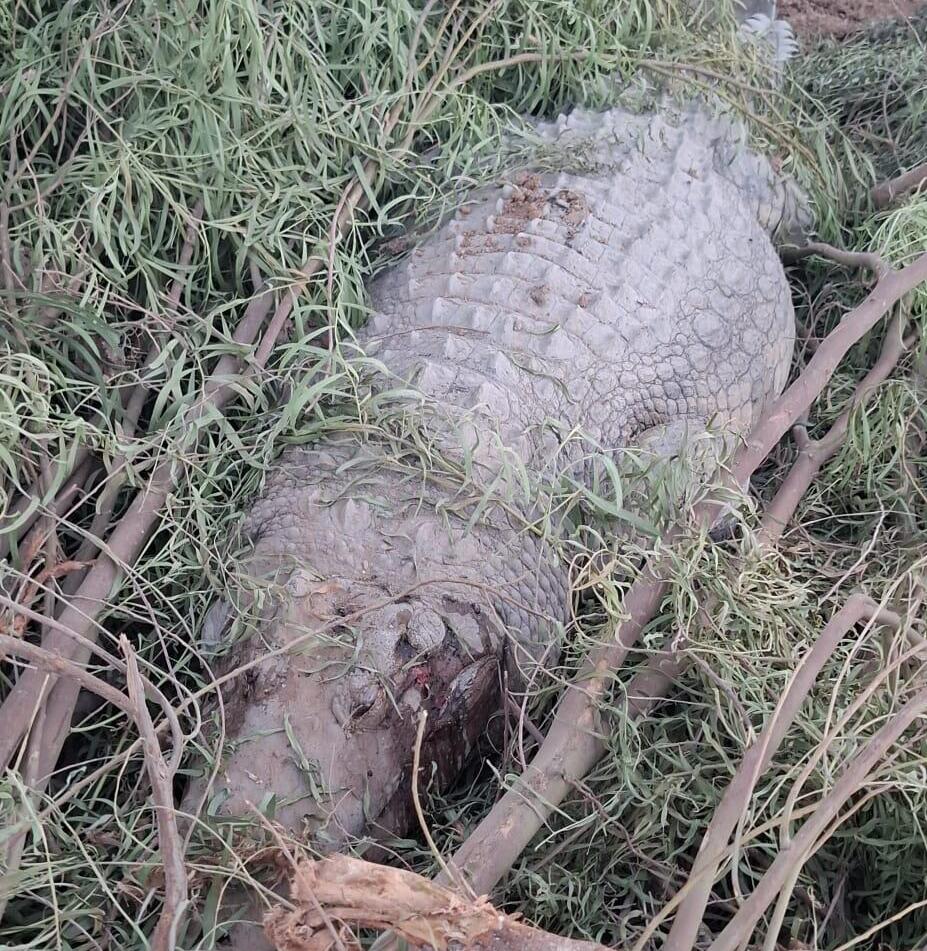
The killed crocodiles were between 50 and 150 years old
(Photo: Yonatan Hanuka)
The plaintiff is asking the court to order the defendants to pay compensation for both financial and non-financial damages, as well as for lost profits.
According to the lawsuit, the farm was founded in full coordination with the state and out of a “Zionist sense of mission” to invest in tourism and agriculture in the Jordan Valley. It says that, nearly 40 years ago, the plaintiff established a Nile crocodile breeding farm for commercial purposes in accordance with the law.
The claim further alleges that after decades of heavy investment in developing the farm — all under state supervision and encouragement — a regulatory change was introduced regarding the legal status of the crocodiles and the ability to conduct trade and tourism at the site. “The regulatory changes meant the plaintiff could no longer trade crocodiles in Israel, leaving it with the animals at the farm and causing severe financial damage,” the lawsuit states. Efforts to resolve the issue, including talks with the defendants to amend the regulations and attempts to sell the crocodiles abroad, allegedly failed.
As a result, the plaintiff petitioned the High Court of Justice and claims that under the understandings reached there, “the defendants committed to assist in any avenue that would lead to the closure of the farm, including helping to obtain licenses to transport the crocodiles abroad” — a claim denied by the state.
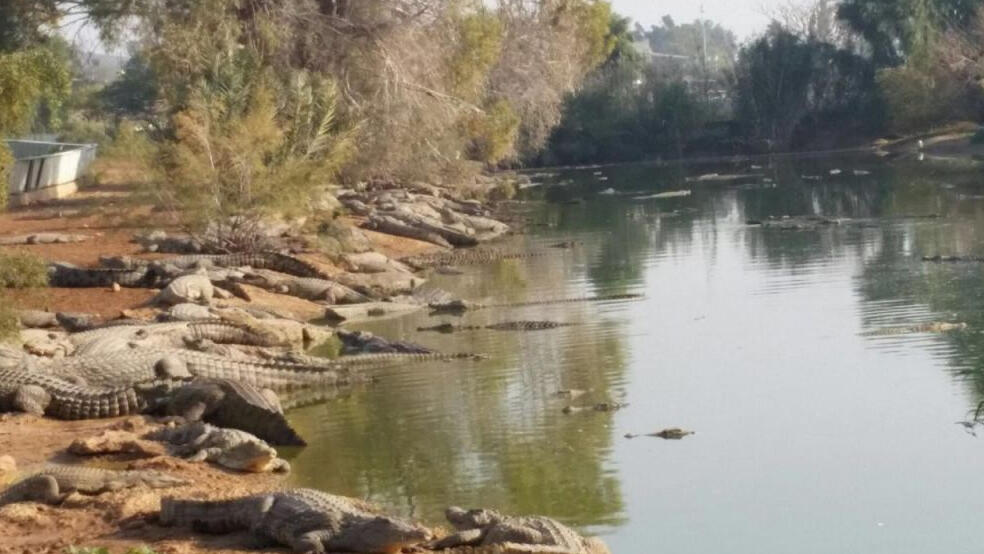
Crocodiles laze in the sun
(Photo: David Ozna)
Until a suitable buyer was found, the plaintiff continued to operate and maintain the farm, including through “a company employee who was present daily at the site and ensured public safety from the crocodiles, as well as the welfare of the crocodiles themselves.”
The lawsuit states that after the plaintiff updated the authorities about negotiations, in July 2022 it signed an agreement to transfer the crocodiles to a commercial entity in Morocco, which paid an advance of €150,000.
'A unilateral killing'
According to the claim, despite representations made to the farm’s owners, the defendants decided unilaterally to kill the crocodiles without any prior notice. Some of the defendants allegedly issued an order to kill 300 crocodiles at the farm. “The defendants concealed the order from the plaintiff, did not notify the plaintiff of its issuance, and provided no warning before carrying it out,” the lawsuit alleges.
It further claims that “like common criminals, in the early hours of August 3, 2025, the defendants arrived at the farm, broke through its gates, forced the guard to hand over his phone and removed and detained him so he could not report their actions or interfere with the mass killing of all the crocodiles at the site — protected animals the legislature sought to protect and that the defendants themselves are charged with safeguarding.”
According to the lawsuit, after ensuring no one could report, stop or document the operation, the defendants killed all the crocodiles at the farm — more than 800 — and then spent the night and the following day destroying and concealing evidence to make it harder to prove the number killed, “having slaughtered roughly three times the number covered by the order.”
The plaintiff also argues that the authorities failed to explain the legal basis empowering an administrative body “to simply slaughter 800 crocodiles defined as protected wild animals, destroy a life’s work worth tens of millions of shekels, and then remove the bodies while destroying evidence.”
The lawsuit further claims the conduct was discriminatory compared with other cases in Israel in which people were harmed by wild animals but the animals were not killed. “In no case did the animal receive a death sentence. What crime did 800 crocodiles commit when they harmed no one?”
The State responds
In November 2025, attorneys for the farm received a response from the Defense Ministry’s legal adviser rejecting the claims. The letter stated that the Civil Administration’s action at the farm “was carried out lawfully and within authority,” and asserted that “the crocodile farm at Moshav Petza’el was severely neglected for more than a decade.”
The response further claimed there was a real danger to public safety and that, despite repeated warnings, little was done to correct numerous deficiencies. It denied the extent of the damage, stating: “Your claim regarding a herd of approximately 800 specimens does not reflect reality. Professional inspections conducted before and during the operation indicate a much smaller number.”
It also said that claims of negotiations with foreign entities were examined and found to be unfounded, and that no commitment was made by the Civil Administration to finance such a solution. Regarding the High Court petition, the state said no commitment was given to fund transport abroad or provide compensation, and that the petition was dismissed.
Attorneys for the farm said in response: “The idea that the Civil Administration and the Nature and Parks Authority can execute hundreds of protected animals without warning, in the middle of the night, with shocking cruelty and in violation of the law, should keep us all awake at night. Those responsible for this horrific slaughter must be investigated. The financial compensation is quite clear — the administration acted unlawfully.”
The Civil Administration and the Israel Nature and Parks Authority said they would not comment on ongoing legal proceedings. However, they provided a separate statement explaining the decision: “After a series of steps promoted by the Civil Administration in cooperation with the Nature and Parks Authority to find solutions for the Petza’el crocodile farm, and following professional discussions, it was decided that due to a real and immediate risk to residents’ lives, the risk had to be addressed immediately through the elimination of the animals at the farm, with full veterinary coordination.”
'Crocodiles escaped into nearby communities'
They added that the decision was also based on urgent veterinary opinions stating that the Nile crocodiles were kept in an abandoned facility under poor conditions amounting to animal abuse, without adequate access to food, which led to cannibalistic behavior.
The statement further said that, since the farm’s closure in 2013, fencing infrastructure had deteriorated, leading to several incidents in which crocodiles escaped into nearby communities and nature reserves, posing a real danger to residents.
“Despite repeated appeals to the farm owner to repair the fencing and care for the animals, there was a lack of cooperation,” the statement said. Although the farm was private, the Civil Administration re-fenced the site in recent years at a cost of hundreds of thousands of shekels, but this did not provide full protection. “After 12 years of attempting to advance solutions and in light of recent events indicating an immediate and real threat to human life, it was made clear that the risk had to be addressed immediately.”
Israel Police said: “There was no involvement of Border Police or police forces in the incident. Border Police volunteers were asked to remain at a nearby gas station solely for localized security in case of public disorder or a security incident, without being informed of what was taking place at the site and without entering it.”