

In the worlds of technology and business, experience is often described as the ultimate advantage, outweighing talent and sharp thinking. But Ricardo Amper, founder and CEO of Incode Technologies, sees it differently. For him, what many view as a weakness among younger workers is in fact a competitive edge.
Amper leads Incode Technologies, a software and AI company valued at $1.25 billion. He argues that entering the workforce with a clean slate and without excessive knowledge is an asset, especially in technology-driven fields.

In a recent interview with Fortune magazine, Amper said young employees can be more effective because they are less biased. "Too much knowledge is actually bad in tech," he explained.
According to Amper, too much experience in tech creates fixed ways of thinking that make it harder to see new solutions. However, inexperienced people will "repeatedly explore and think seriously about how to do it, and then find a solution that suits the current actual situation.”
He said this is even more relevant in the era of generative AI and tools such as ChatGPT. What he looks for in employees, Amper added, are traits such as grit, integrity and character. "Entrepreneurship is mostly about perseverance and character and adversity, and so you need people like that around you."
Amper’s views are grounded in long experience. He has spent more than two decades in entrepreneurship, and he founded and led several successful companies. In 2015, he established Incode, which specializes in AI-powered identity verification.
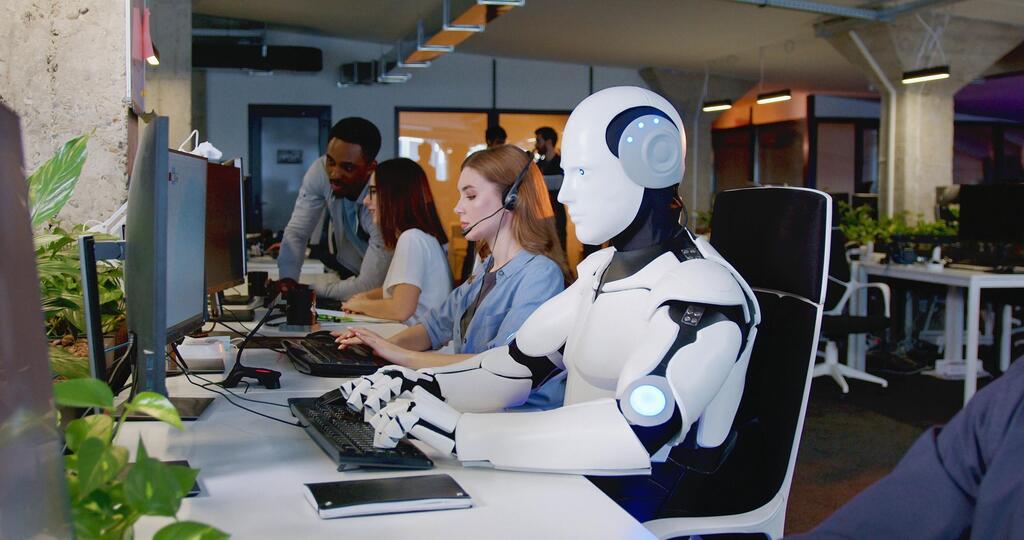
AI and labor market
(Photo: VesnaArt, Shutterstock)
The balance between young and older workers is critical
Despite his strong support for younger workers, Amper does not ignore the drawbacks of Generation Z, (born between 1996 and 2012). While their lack of deep familiarity with industry complexities allows them to focus on tasks without background noise, that "naivety" must be counterbalanced.
Emotional proficiencies "are developed through experiences,” Amper explains. “So it’s a combination. You hire young people, but you also have to hire older employees.”
This approach is not unique. Over the past year, a Chinese AI company credited largely to its exceptionally young workforce, DeepSeek, has drawn attention and concern among U.S. tech leaders.
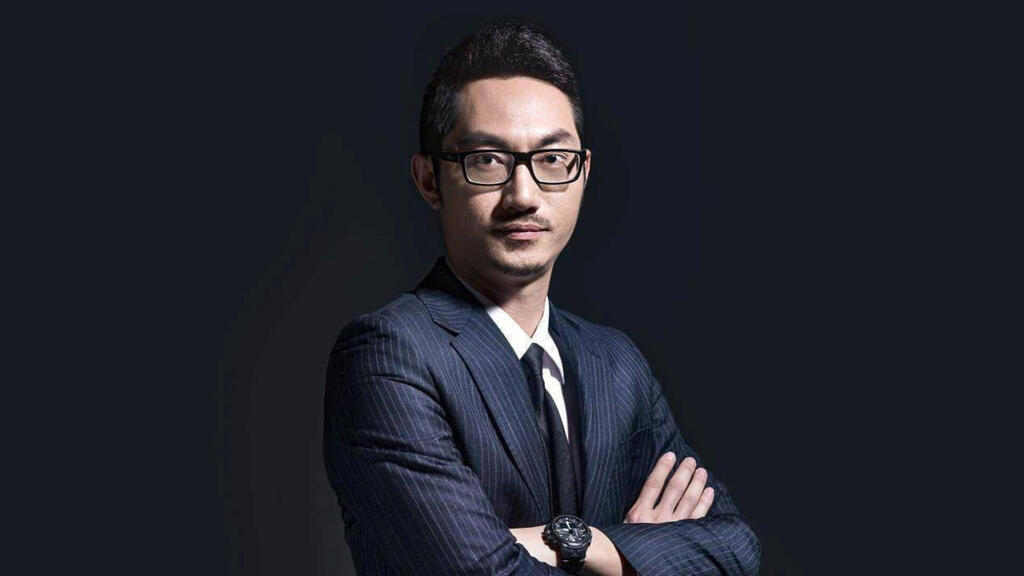
Liang Wenfeng
(Photo: Chinatalk Media, Sohu)
DeepSeek CEO Liang Wenfeng said in a 2023 interview that "If you are pursuing short-term goals, it is right to find people with ready experience. But if you look at the long-term, experience is not that important. Basic skills, creativity, and passion are much more important.”
Unlike the prevailing approach in Silicon Valley, Liang does not focus solely on seasoned computer science graduates. He also recruits young talent and humanities graduates to lead the company’s AI revolution.
He has said that prior work experience is not a top priority. The fact that someone has performed a similar role in the past does not guarantee success today, he added. On the contrary, experienced employees tend to stick to a single "correct" way, while those without experience explore, question and rethink problems until they find the right solution.