

Three months after announcing that it was examining strategic alternatives for its operations, Playtika is in talks to sell its most significant asset. Calcalist has learned that the mobile gaming company is negotiating the sale of Israeli company SuperPlay to Chinese gaming giant Tencent at a valuation of $1 billion to $1.5 billion.
Behind the emerging deal lies a paradox: SuperPlay’s major success has become a financial burden for Playtika. The company acquired SuperPlay in November 2024 from its founders, Elad Netzer and Gilad Almog, both Playtika alumni, for $690 million in cash, alongside an earn-out mechanism of up to $1.25 billion based on the company’s performance in 2025–2027.
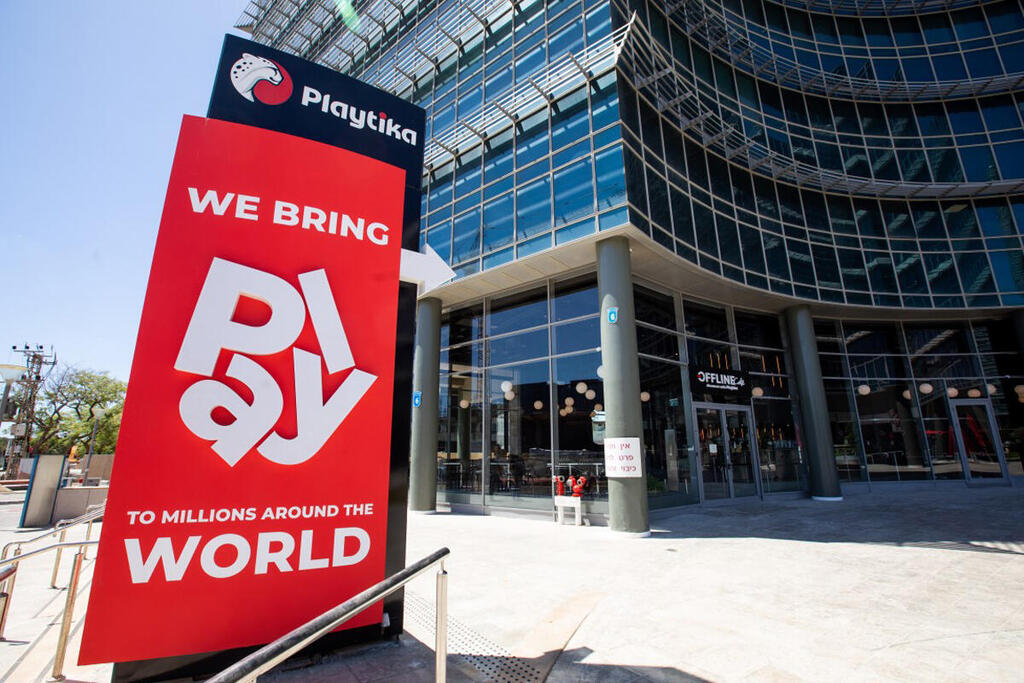
(Photo: Efi Sameach)
Under that mechanism, SuperPlay’s performance targets, mainly revenue, are reviewed at the end of each year, and the amount Playtika is obligated to pay the founders is updated accordingly. The more SuperPlay continues to grow, the larger Playtika’s liability becomes.
The estimate keeps rising
The growth, however, has been far faster than expected. SuperPlay ended 2025 with revenue of $573 million, about 67% above the baseline threshold set for the payment mechanism. As a result, Playtika raised its estimate of future payments to the founders in its 2025 financial reports to an additional $734 million. In its first-quarter 2026 reports, the estimate was updated again to $829 million, and industry sources believe the amount could continue to rise if the pace of growth continues.
One of the main growth engines was a new solitaire game launched by SuperPlay in partnership with Disney, which, according to industry estimates, generates about $300 million in annual revenue.
According to estimates, the price Tencent would pay for SuperPlay, should the deal go through, does not include the future liabilities. The buyer is expected to assume the payments to the founders, thereby freeing Playtika from a liability that could reach hundreds of millions of additional dollars and significantly improve its balance sheet.
The acquisition of SuperPlay symbolized a strategic shift for Playtika: a gradual move from the social casino field in which the company has operated since its founding toward the growing casual gaming market, which is characterized by a broader target audience and higher growth rates. Now, less than two years after the acquisition, the company may part ways with the central engine of its growth strategy.
Balance sheet considerations are also behind the move. Playtika is expected to repay about $2.3 billion in debt in 2028–2029. Part of the debt was raised during the era of zero interest rates, and refinancing it in the coming years is expected to take place at significantly higher rates, potentially increasing the company’s financing expenses by tens of millions of dollars each quarter.
SuperPlay has also become an accounting burden. The cash generated by the activity, including $573 million in revenue in 2025, is included in operating cash flow, but payments to the founders are classified as cash flow from investing activities. In addition, every update to the estimated liability is recorded as an expense in the profit and loss statement and hurts net profit, even though it is excluded from the EBITDA calculation.
In the fourth quarter of 2025, Playtika posted a loss of about $309 million, mainly because of the accounting update to its acquisition liabilities. The company also warned that its cash flow and liquidity may not be sufficient to fund all payments to SuperPlay’s founders, especially if it fails to refinance its main credit facility by 2027. As a result, the company canceled its dividend this year, explaining that it wanted to preserve financial flexibility both for the payments and for taking advantage of business opportunities.
At the same time, Playtika’s older core games continue to weaken. The company stopped publishing revenue figures for Slotomania, which for years had been its main profit engine. Bingo Blitz also posted a 3% decline in the first quarter of 2026 compared with the previous quarter, and a 5.5% decline compared with the same quarter a year earlier, with revenue of $154 million.
Despite this, Playtika, led by founder Robert Antokol, reported first-quarter revenue of $745 million, up 10% from the same period a year earlier, and raised its 2026 revenue forecast to a range of $2.75 billion to $2.85 billion, compared with a previous forecast of $2.7 billion to $2.8 billion. Its EBITDA forecast was updated to $750 million to $770 million, compared with $730 million to $770 million previously.
Playtika’s stock has lost about two-thirds of its value over the past three years. Since the beginning of the year, the stock has risen by about 1.5%, and the company is trading at a valuation of about $1.5 billion, roughly 80% below its peak. Playtika is controlled by Alpha Frontier Limited, which holds about 52% of its shares. Businessman On Chau holds another 21%, while CEO and founder Antokol holds about 4.8%.
In April, Playtika announced that it was examining “strategic alternatives” for its operations. Before that, the company’s management had held meetings with entities in Asia and the Gulf in an attempt to find a solution to the expected financing pressure. Playtika’s business model is based on free-to-play games with low barriers to entry and relatively short lifespans, and in recent years it has struggled to show growth in user numbers, prompting it to consider strategic moves.
Restrictions on video games
Tencent is one of China’s largest technology companies and one of the world’s most valuable internet companies by market capitalization. The company was founded in 1998 in Shenzhen by Ma Huateng, known as Pony Ma, and his partners. It began with the instant messaging service QQ, which for years was one of the most popular platforms in China.
Tencent’s best-known product today is WeChat, launched in 2011, which has become one of China’s central apps. Beyond messaging, WeChat serves as a social network, a digital payment tool, a platform for ordering services and products, and a tool used by businesses, government bodies and consumers in daily life. The app has more than 1.4 billion monthly active users, most of them in China.
Tencent is also the world’s largest video game company by revenue. It fully owns Riot Games, the developer of League of Legends and Valorant, and has significant holdings in other gaming companies, including Epic Games, Supercell and Ubisoft. Gaming is one of the group’s main profit engines, alongside digital advertising, cloud services, fintech and artificial intelligence.
In addition to its operating businesses, Tencent has built one of the largest investment portfolios in the technology world. The company has invested in hundreds of companies in China and abroad, including Tesla and Spotify, although in recent years it has sold some of its holdings as part of a strategic shift.
Like other Chinese technology giants, led by Alibaba and ByteDance, Tencent has faced tighter regulation from the Chinese government in recent years. Restrictions have been imposed on video game activity among minors, oversight of competition and data protection has been tightened, and the state has expanded supervision of the largest internet companies.
These steps have hurt Tencent’s growth rate and led the company to increase its focus on international markets, cloud services and artificial intelligence.