


Elia Naim and Ofek Tragash have already given the country nearly 400 days of reserve duty since the outbreak of the war. Next week, they will begin another round. But anyone expecting them to dwell on the hardship is likely to be disappointed. Instead, the two 28-year-olds would rather talk about the experience and the results of GOOM, the Israeli gummy supplement company they founded during that same period.
“We were both called up on October 7,” Tragash said. “On that terrible Saturday, anyone with arms and legs who could hold a weapon went out to defend the country. It was natural and necessary. There was no other option. Since then, I’ve done 390 days of reserve duty and Elia has done 370. Next week, I’m heading out for another 100-day round, and Elia received a call-up order for August.”

Naim was born and raised in Tel Aviv, the seventh of eight siblings. “We’re not religious, that’s just how it worked out,” he said with a smile. He finished high school and enlisted in the Paratroopers Brigade’s 202nd Battalion. After his military service, he traveled through Asia and South America for about six months. When he returned, he began working with his father, an electrical contractor.
“It meant waking up at 6 a.m. every morning and spending the day connecting electrical cables,” he said, laughing. “I used to listen to marketing podcasts all day, because that was the field that always interested me.”
He later spent several months working at advertising agencies, a job he describes as difficult and not especially rewarding. The turning point came when a car hit the motorcycle he was riding.
“It wasn’t terrible, but I spent one day in the hospital,” he said. “That’s where I told myself, ‘Wow, it’s so quiet in my head here.’ That was the moment I decided to leave everything and start working on GOOM with Ofek.”
Tragash was born in Beit Yitzhak in the Hefer Valley. He is married and also lives in Tel Aviv, where he moved after completing his military service.
“For as long as I can remember, I was drawn to e-commerce,” he said. “I always knew I wanted to be independent, to build something of my own. During the COVID period, together with Shir, who is now my wife and was then my girlfriend, we started a baby clothing business, Basically, and later sold it. Today, Shir specializes in app implementation and handles all the company’s graphics and social media. We’ve been working together for eight years. It’s the hardest thing and the most fun thing. We’re a winning team. We know how to separate work from our personal lives.”
Meaning?
“When we go out on a date, we don’t talk about work at all, and vice versa.”
In truth, it can be said that Naim and Tragash have a pretty good partnership of their own. They complement one another in temperament and worldview. They know how to dream together and execute, and even when they argue, they come out of it intact.
“We’re very different,” Tragash said. “I’m very calculated, very numbers-oriented, and Elia speaks first and thinks afterward.”
“Even though he has dyscalculia, he doesn’t make mistakes,” Naim said with a smile. “It’s true. We saw the differences, for example, when we were in Thailand to mark the brand’s first anniversary. I was saying, ‘Bro, don’t worry, we’ll get there and figure it out.’ A week before we arrived, he was already giving instructions: he had booked the hotel, planned where we would be and where we would eat. If you have a partner who is exactly like you, it’s very hard to move forward. Something has to be different. It’s good that we’re different.”

GOOM
GOOM, in a sense, was born during the squad commanders’ course Naim and Tragash took together. That is where they met, when they were assigned to the same platoon. They describe an immediate connection, largely because of a shared world of interests that spoke to both of them.
“The world of nutritional supplements always interested both of us,” Naim said. “For example, we talked about the importance of magnesium after long marches. That world mattered to us, and we didn’t feel there was a complete answer to that need. From that pain point, it was clear to both of us that one day we would build a brand like this. So the joint work really began with an idea that came up on the first day we met, when we said we would still do things together. It was clear it would happen.
“After we were discharged, each of us went his own way, but of course we stayed in touch, and about three and a half years ago we really started working on it. The war came in the middle, but we never stopped for a moment. On the contrary, the difficulty and stress everyone is experiencing here only sharpened our understanding of the need. The fact that the world is moving more and more toward longevity, meaning not only extending life expectancy but mainly increasing the number of healthy years, proved to us that we were on the right track.”
They began gathering knowledge and say they consulted with the best scientists they could find. Once they understood the composition of the formulas, they decided they wanted the supplements to come in the form of gummy candies rather than pills.
“It was clear that producing nutritional supplements as gummies would be more complicated because you have to preserve taste and texture, but we brought in people who gave us a solution,” Naim said. “Once we were ready with the knowledge and the composition, we started approaching factories in Israel to manufacture the products for us.”
What happened then?
“We ran into the less pleasant side of things. We approached several factories, which we prefer not to name, to develop formulas and place a first order. To put it simply, they threw us down the stairs,” Naim said. “Today we smile about it. Back then, it was one big frustration. The state’s attitude toward reservists’ businesses during wartime was not pleasant. Sometimes they explained that we were too young. Sometimes they said that because we were reservists on the front line, who could guarantee that we would meet our commitments? We found ourselves driving around the country between reserve duty rounds, trying to convince factories to believe in us, and one door after another closed.”
Discouraging.
“True. Looking back, I’m already more forgiving toward them,” Naim said. “Most of the factories didn’t know how to produce gummies, but they also didn’t try to meet us halfway. At one point I said to Ofek, ‘What, they don’t want money?’ We wanted to pay and they didn’t want it. Maybe because most of those factories’ production is for export, and they probably told themselves, ‘Fine, these young guys will place one order and that’ll be it, so why invest in them?’ That said, we also made beginner’s mistakes. At first, we didn’t know how to approach these companies correctly. When I look at emails I sent back then, I wouldn’t have answered myself either. We learned.”
Did the people around you encourage you at the time?
“It was split. Some people close to us were sure we had lost our minds, and others encouraged us. People also asked why we were wasting time here, because so many friends are moving abroad. We refused to hear it. Our focus is here.”
Sometimes, all it takes is one person to believe in you. For the two young entrepreneurs, that moment came when they reached TopGum, an Israeli company that develops, manufactures, sells and markets candies and nutritional supplements, and operates a gummy production plant in the Sderot industrial zone. TopGum is traded on the Tel Aviv Stock Exchange at a market value of 1.7 billion shekels and exports most of its products to the United States. It is considered one of the most significant and surprising Israeli success stories of recent years.
“We managed to convince them to give us a chance,” Tragash said. “Today, they don’t regret it, and we smile with satisfaction.”
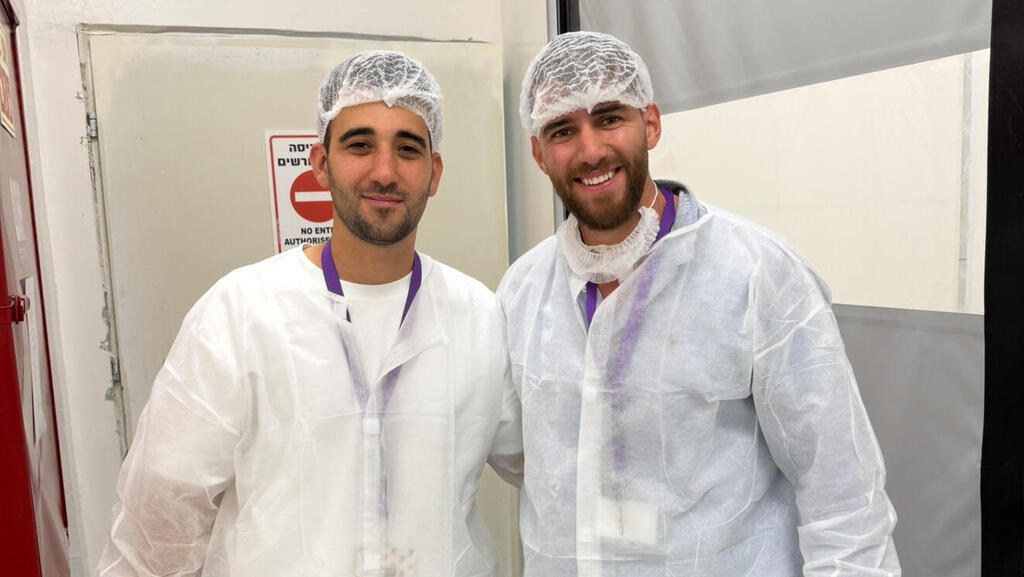
Tragash and Naim at the TopGum factory in Sderot
(Photo: GOOM)
You’re also smiling all the way to the bank.
“True,” Naim said. “It’s proof that determination pays off. Until about two months ago, we hadn’t withdrawn a single shekel from the company. From the first day, we spent money, a lot of it, without knowing if or when it would come back. We invested hundreds of thousands of shekels, maybe even a seven-figure sum, in developing GOOM. You have to pay for everything connected to development and regulation. A lot of money goes into the label, and into getting a Health Ministry license and kosher certification, and the choking warning, and a certain font size on the label. It’s strict regulation and you have to meet it.
“We paid salaries to our employees,” he added. “Today, the company has seven employees. We didn’t take salaries. Now we can breathe. Today, the company has revenue of tens of millions of shekels. We recorded growth of 1,200% in the first quarter of 2026 compared with the first quarter of 2025. We also received several offers to buy the company and turned them down. Believe it or not, in the past two months we’ve already started taking money out. We even went to Thailand. But basically, the money interested us less. What interests us is how much we can grow and how many people we can help through our products. From the beginning, we believed in the product, and we still do. We dream at night about the next thing we’ll do at GOOM.”
Take us back for a moment. When did you realize you were on your way up?
“We went to market a year and a half ago, after almost two years of development,” Naim said. “It’s also important to note that our sales are only through the website, with advertising on social media. I remember the first days of sales. On the first day, we got an order, and on the second day, two or three. We were unbelievably excited. Then, on the third day, suddenly someone asked to cancel her order. I had a crash. I told myself, ‘Why do I need this adventure?’ I recovered pretty quickly. Three months after we started selling, I understood that we were in a good place. We already had solid sales revenue, a fast sales pace, good reviews. People got hooked on the products.”
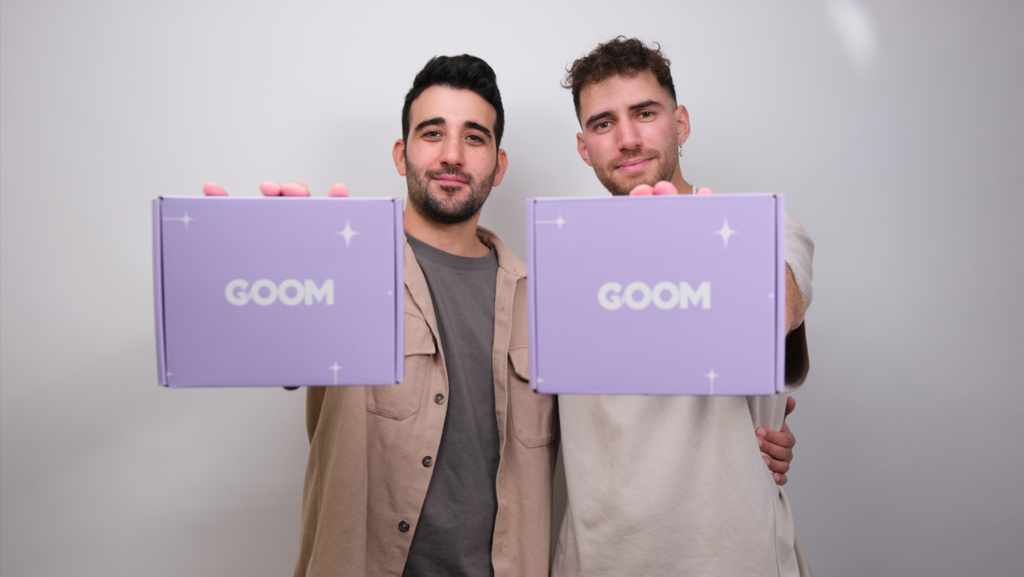
(Photo: GOOM)
Tragash said the first bank transfer to the factory was a moment he remembers clearly.
“It was terrifying,” he said. “But we believed in what we were doing from day one. Then, after six months of sales, when we understood we had returning customers, and in a field like this returning customers are hard to get, we understood we were in a good place. Today, more than 45% of our customers are returning customers, which is an insane figure for a brand that is a year and a half old in one of the most competitive markets there is. The number of friends who said they came to us through a friend’s recommendation is crazy. In practice, pretty quickly we got proof that our product was good, and then the competition stopped being interesting.”
Why not sell through supermarket and pharmacy chains?
“We want control over how the products are received and monitored. We want to control the end customer. That’s important to us. It’s possible we’ll be in the big chains, but that’s a different game. At this stage, we’re still not ready to sell through chains. Maybe that will change in the future.”
Why gummies, by the way? What is wrong with supplements in pill form?
“The idea is consistency,” Naim said. “Taking a pill feels like taking medicine. We researched the subject in depth before making the decision. There are pills and drops, but it’s not fun. We really connected to the book ‘Atomic Habits’ by James Clear. He explains how to embed good habits and make them permanent, and the conclusion is that if you don’t stick to something, most of the time the problem is your environment, not you. The goal is to find something you look forward to, and that’s how it is with gummies, because of the taste and the texture. We emphasize that the formulas are vegan and sugar-free, in accordance with strict GMP and FDA standards, with a focus on quality and safety. That’s an important part for consumers.”
Half a year after you started, the war broke out, and during these years there were also wars with Iran. How did that affect production and sales?
“As of now, we have four formulas, and another four are currently in development,” Tragash said. “Our nutritional supplements can improve daily health. One example is a probiotic and prebiotic formula that balances the digestive system from within and affects energy levels and vitality throughout the day. We all need that on ordinary days, and certainly in days of pressure and stress. Another example is the formula for our flagship sleep product, Deep Sleep, which reached sold-out status during the last war, with a waiting list of thousands of people, because Israelis are looking for sleep solutions during wartime and in general. Now we’re developing four more formulas, three of them for the body.”
And here you are, heading into another reserve duty round. Does it really not worry you?
“Hand on heart, the first moment I get a reserve duty order, it’s an arrow to the heart,” Tragash said. “I ask myself, ‘How will I do this?’ But then we immediately pull ourselves together. The fact is that we’re managing to combine reserve duty with work. We’re definitely not victims, and we’ll continue serving as long as it’s required. By the way,” he added with a smile, “one of the problems was when we came out of Lebanon and I had to decide who to call first: the business, to ask what’s going on, or my mother, so she wouldn’t worry.”
And the answer?
“My mother, of course.”