


Israel Aerospace Industries (IAI) is slowing its hiring pace despite strong demand for additional employees as it assesses how artificial intelligence could reshape its workforce, according to Yair Katz, chairman of the state-owned defense company's workers' union.
Speaking with Sharon Kidan at the "People of the Nation" conference hosted by ynet and Yedioth Ahronoth, Katz said preparing employees for technological change through training and professional development could help the company avoid layoffs as AI becomes more widely integrated into its operations.
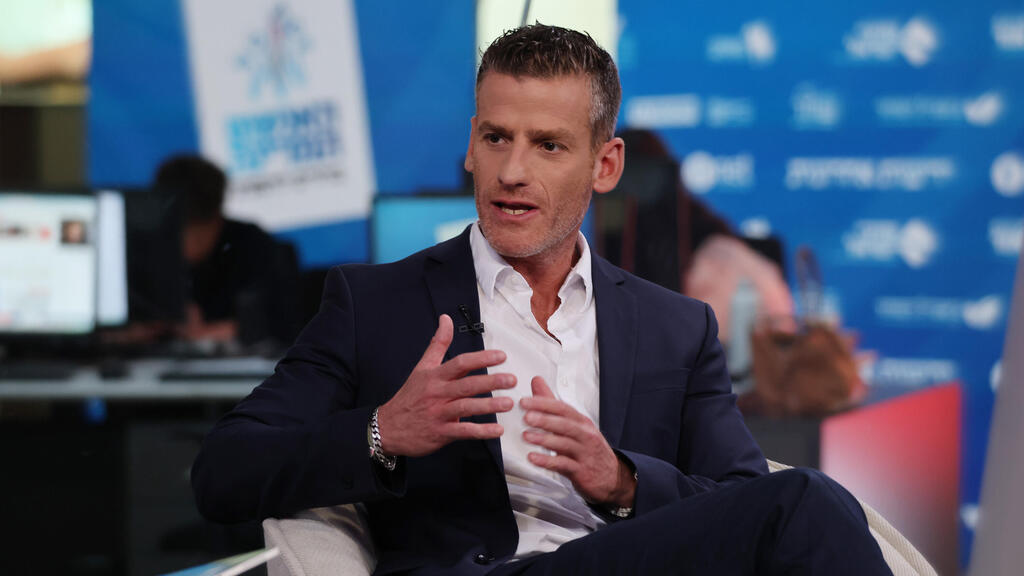
"We're also slowing down recruitment a little," Katz said. "Given the enormous demand at the company, we could hire a great many people, but we need to see how artificial intelligence might reduce some of the need for additional workers."
Katz, who represents approximately 16,000 IAI employees, also discussed the company's planned initial public offering, the challenge of competing with technology giants such as Nvidia for skilled workers and Israel's growing need to reduce its dependence on foreign defense suppliers.
'In the end, technology wins'
Asked whether artificial intelligence could threaten the jobs of the employees he represents, Katz said ignoring technological change would be a serious mistake.
"I'm a great believer in technology," he said. "I'd be failing in my duty if I sat with my arms folded and contented myself with declarations that this technology won't cause layoffs. We will never be able to compete with technology, certainly not with artificial intelligence."
Katz said he had hired an AI adviser for the workers' union to analyze changes in the labor market and help develop a strategy for adapting to them.
That process includes professional training, courses and adjustments to employees' existing skills, alongside a more cautious approach to recruitment.
"If we organize and prepare properly, provide training and slow the pace of hiring, we won't need to lay off employees because of artificial intelligence," he said.
He also urged other labor union leaders to begin preparing their workforces rather than resisting technological advances.
"I'm calling on my colleagues in the workers' unions: Don't ignore what's happening," Katz said. "You can fight it for a day, two or three, but in the end, technology wins. Prepare your employees ahead of time."
Competing with Nvidia for Israel's best engineers
Katz also argued that the government must reduce regulatory restrictions on IAI, particularly those affecting compensation, to allow the defense manufacturer to compete with major technology companies for skilled employees.
"We're competing for the best minds against Nvidia and other high-tech companies," he said.
According to Katz, IAI was ranked Israel's second most desirable employer among job applicants, behind Nvidia.
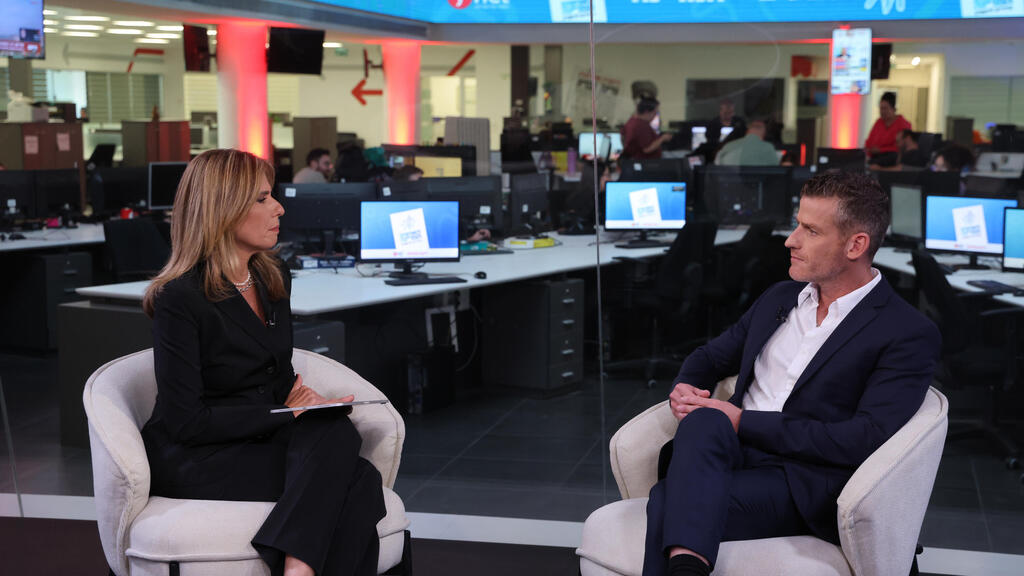
ynet's Sharon Kidon with Yair Katz
(Photo: Yariv Katz)
He said maintaining that position required competitive salaries, excellent working conditions and extensive welfare benefits for employees and their families.
Asked about the workers' union budget of 69 million shekels, Katz defended the spending.
"We're not ashamed of the enormous welfare benefits we provide our employees," he said. "To compete for high-quality human resources, you need to pay well, provide excellent working conditions and offer welfare benefits to employees and their children."
Katz also called for changes to compensation structures across Israel's public sector.
"We can and should raise public sector employees' salaries. They deserve it," he said. "These people make our lives better."
He argued that performance-based bonuses could encourage excellence and improve services to the public.
"If we want employees who are motivated to excel and provide better service to citizens, the payment mechanisms need to change," he said.
IAI's planned IPO: More money for innovation and workers
Turning to IAI's planned initial public offering, Katz said the process should provide the company with additional financial resources to invest in research, development and new technologies.
"An IPO should give the company a multiplier effect," he said. "It should bring in more money for investment in research and development, products and new technologies."
While the government could benefit from the offering by reducing debt or generating additional revenue, Katz said his priority was ensuring that the company and its employees gained from the transaction.
"As someone who represents 16,000 employees, I want to see how they benefit from the IPO," he said.
He argued that easing government restrictions could be an immediate benefit, allowing IAI to offer higher salaries to engineers and other professionals sought by the defense technology sector.
Katz also raised the possibility of employees receiving company shares as part of their compensation.
"Today, we take money from the company's cash reserves and pay bonuses to employees," he said. "Tomorrow, that could be done through shares. Employees would have an ownership stake in the company and a vested interest in its success."
'We cannot afford to depend even on the Americans'
Beyond workforce issues, Katz warned that international arms embargoes and restrictions on suppliers had exposed the vulnerability of Israel's defense industry to decisions made abroad.
He said those challenges had existed for years but intensified significantly following the October 7, 2023 Hamas attack, as some countries and companies stopped cooperating with Israeli defense manufacturers or introduced additional bureaucratic obstacles.
"Even if we're developing a product for another customer and depend on a small component manufactured by a company in Spain, and that company says it doesn't work with the Israeli defense industry, we're suddenly facing a problem," he said.
Katz argued that the restrictions had also created opportunities to strengthen domestic manufacturing.
"We're turning this embargo into an opportunity," he said. "For every component we were prevented from purchasing, we found an alternative, either in Israeli industry or elsewhere."
He expressed confidence that Israel could develop domestic capabilities in areas considered essential to national security.
But he warned that defense manufacturers were not the only institutions vulnerable to foreign dependence.
"Not just the defense industries. The State of Israel, we as citizens, cannot afford to find ourselves dependent tomorrow morning even on the Americans," he said.
As an example, Katz pointed to satellite launches carried out by SpaceX, the American aerospace company.
"What happens if, in two or three years, the United States prevents us from launching satellites?" he asked. "We need to find ways in every field to ensure that we can take care of ourselves."
Could Katz become Israel's next labor federation chief?
Asked whether he might eventually seek the leadership of the Histadrut, Israel's largest labor federation, Katz declined to make a commitment but did not rule out the possibility.
"I've been in my current position for eight years," he said. "We've experienced crises and successes, and we're in a good period."
He described leading the Histadrut as a fascinating and highly important role.
"Time will tell," Katz said.
The "People of the Nation" conference is organized by the Yedioth Ahronoth Group in cooperation with sponsors.