


The United Nations has issued a major update to its blacklist of companies operating in West Bank settlements, adding dozens of Israeli and international firms in a move swiftly condemned by Israel as an attempt to promote boycotts.
The UN Human Rights Office announced late Friday that 68 companies were added to the database and seven removed, bringing the total to 158. The list now includes businesses from 11 countries: Israel, the United States, Canada, China, the United Kingdom, Germany, France, Spain, Portugal, the Netherlands and Luxembourg.
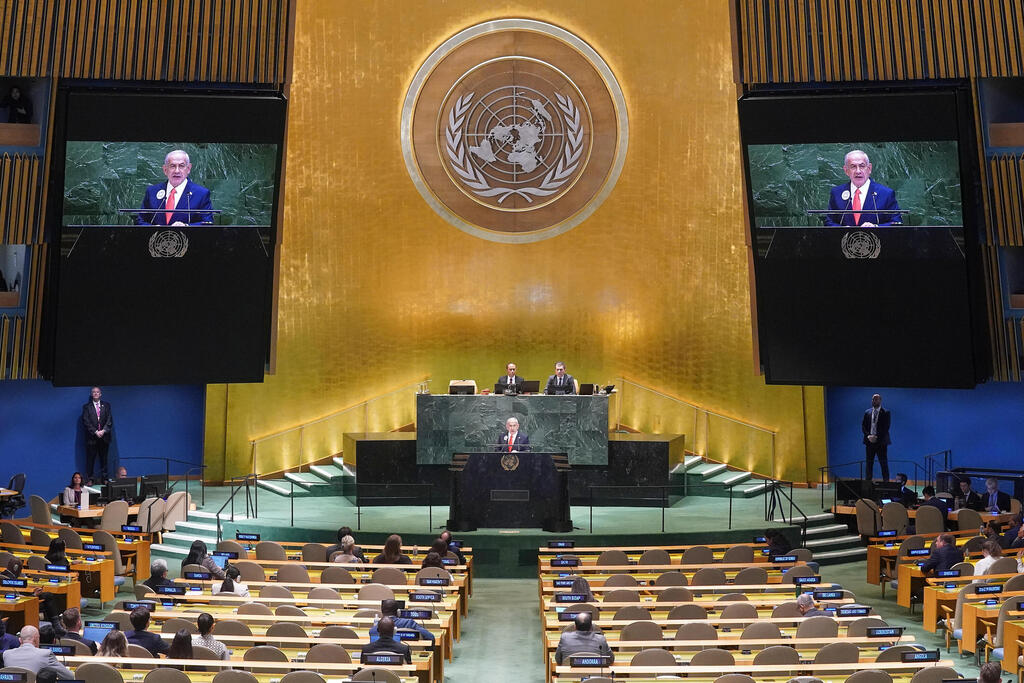
(Photo: AP Photo/Richard Drew)
This is the first update since 2023. Although the blacklist is meant to be revised annually, budget shortages mean it has only been updated every few years.
New and existing companies
Among the newly listed firms are Israeli companies Yes, the Dan bus company, Shikun & Binui Solel Boneh, Ahava Dead Sea products, Ackerstein Industries and Amot Investments. Also added were Heidelberg Materials, a German construction giant, and its Israeli subsidiary Hanson, as well as the Portuguese firm Steconfer and the Spanish company Ineco.
Other companies remain on the list, including Israeli telecom giant Bezeq, supermarket chains Shufersal and Rami Levy, bus operator Egged, gas station company Paz, Hot Mobile, Bank Leumi, Bank Hapoalim and the Cafe Cafe coffee chain. Multinational corporations named include Motorola, real estate broker RE/MAX, and tourism platforms Expedia, Booking.com, TripAdvisor and Airbnb.
Removed from the blacklist were French rail supplier Alstom — one of Europe’s biggest infrastructure firms — Spain’s eDreams and Britain’s Opodo, following UN confirmation that they were no longer involved in settlement-related projects.
Origins of the list
The blacklist was created by a 2016 resolution of the UN Human Rights Council and first published in 2020 with 112 companies. It was updated in 2023, shrinking to 97 after removals, and has now been expanded again.
The current report reviewed 215 businesses, finding 158 involved in settlement-linked activities. Further examinations of hundreds of additional companies are planned.
According to the UN, businesses are listed for activities in 10 categories, including supplying materials for settlement construction and expansion, providing security services, operating transportation and utilities, banking and financial services, and using Palestinian natural resources or disposing of waste in Palestinian areas.
Symbolic pressure, real consequences
The UN emphasized that inclusion in the list is not a legal process and does not carry criminal findings. Instead, it is meant to shine a spotlight on business involvement and apply public pressure to comply with international human rights standards.
Each company was given a chance to respond before publication, the Human Rights Office said, adding that corporate responsibility requires firms to avoid contributing to human rights violations.
Israel harshly criticized the update, calling it “a disgraceful attempt to boycott Israeli companies” and urging governments around the world not to cooperate with the initiative.
Experts say the blacklist is largely symbolic but could still damage reputations and influence the decisions of institutional investors, funds and international corporations, given its publication by an official UN body. Some analysts warn that foreign companies may scale back activity in the West Bank or even in Israel itself over reputational or legal concerns. Others argue the list’s impact is limited since many of the companies are already known targets of boycott campaigns.
The UN report also noted that hundreds of other companies are awaiting review, but that the Human Rights Office currently has funding for only one staff member working on the matter.
Prominent Israeli firms on the blacklist include:
Egged, Ahava Dead Sea products, Alon Blue Square, Elco, Electra Afikim, Amot Investments, Amisragas, Ackerstein Industries, Bezeq, Discount Bank, Bank Hapoalim, Bank of Jerusalem, Bank Leumi, Mizrahi-Tefahot Bank, Israel Discount Bank, Hot Telecom, Hot Mobile, Dor Alon, Delta Israel, Danya Cebus, Yes, Modi’in Ezrahi (private security), Matrix, Mekorot (Israel Water Authority), Sonol, Superbus, Cellcom, Paz, Pelephone, Partner, Electra Group, Ashtrom Group, Delek Group, Hamat Group, Cafe Cafe, Israel Railways, Rami Levy, Shufersal, and Shikun & Binui.