


The Israeli military drone company XTEND has won a contract worth tens of millions of dollars from the U.S. Department of Defense to develop and supply hundreds of artificial intelligence-based attack drones, the company announced this week.
The advanced drone system, developed in cooperation with Israel’s Defense Ministry research directorate known as Maf’at, is already in operational use by the IDF. Foreign media have reported that an XTEND drone was used in the operation that killed Hamas leader Yahya Sinwar by locating and hovering over his position.
XTEND's drones


XTEND competed for the Pentagon contract against several U.S. defense technology companies, including Anduril. Its combat experience in Israel and Ukraine ultimately tipped the balance in its favor, company officials said.
A requirement of the tender was that the drones be produced in the United States using American workers and non-Chinese components. To meet those conditions, XTEND established a production facility in Tampa, Florida, which manufactures systems for the U.S., Ukraine and Israel.
According to a Pentagon statement, the new drone kits — known as modular one-way attack systems, or ACQME-DK — will allow small tactical teams to train and operate more effectively in complex urban and rural combat environments. XTEND will provide training, spare parts, maintenance and production from its Florida facility.
“This is an amazing story,” XTEND CEO and co-founder Aviv Shapira told Israel’s Ynet news site. “The U.S. Department of Defense is turning to Israel to build the army of its future — one that will include a million drones. We are probably among its first contracts.”
Shapira said he briefed Pentagon officials several times on XTEND’s battlefield experience. “We gave them a full perspective — how it is to fight with drones,” he said. “Of course, opening a plant in Florida helped a lot. Somehow, all the stars aligned.”
Dr. Danny Gold, head of Maf’at at the Israeli Defense Ministry, said the partnership reflects a growing focus on defense technology startups. “The growth trend in defense tech is vital to preserving the IDF’s technological edge on the battlefield,” Gold said. “XTEND, one of the companies that began its security work with Maf’at, supplied drones that were successfully used in combat during the war.”
Advanced swarm technology
XTEND’s new system uses coordinated swarms of drones — each carrying out different tasks — that are controlled by a single operator through AI rather than manual joysticks or VR headsets. The operator simply designates the target or mission visually or by voice, and the AI directs the drones accordingly.
“This is the first time that different types of drones can operate as a single attack group,” Shapira said, describing missions that combine outdoor strike drones, indoor breacher drones and even robotic attack dogs. Larger “mothership” drones can deploy smaller attack drones capable of targeting individual militants, he added.
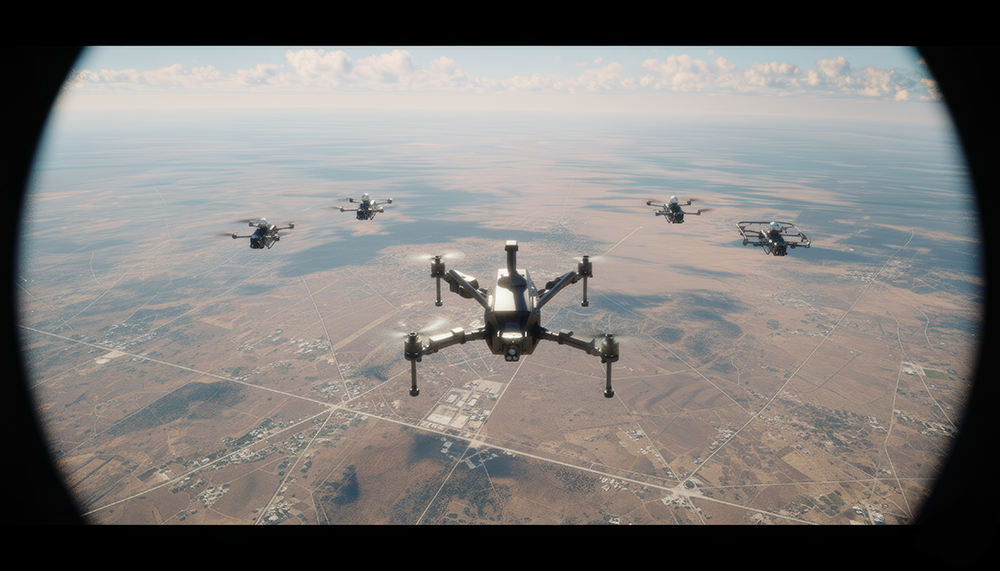
The drones can also switch from wireless communication to fiber-optic links to prevent enemy jamming, enabling operations up to 20 kilometers away.
“The AI is the pilot,” Shapira said. “The soldier just points — attack the car, scan that window. Soldiers no longer need to carry heavy controllers. We can link the soldier directly to the drone.”
He emphasized that human supervision remains necessary for all lethal actions. “It’s not ethical today, and probably won’t be for years, for a drone to attack without human authorization,” he said. “But loitering munitions operated by AI and robotics are more efficient and more ethical than missiles — they can stop if a child suddenly appears. A missile can’t.”
Expansion in the U.S., Europe and Asia
Founded in 2018 and based in Tel Aviv, XTEND employs about 100 people split between Israel, the United States and Singapore. The company raised $70 million in July and has been doubling its sales annually, reaching tens of millions of dollars a year.
XTEND plans to open three new manufacturing sites next year — two in Europe and one in Singapore — to meet growing global demand.
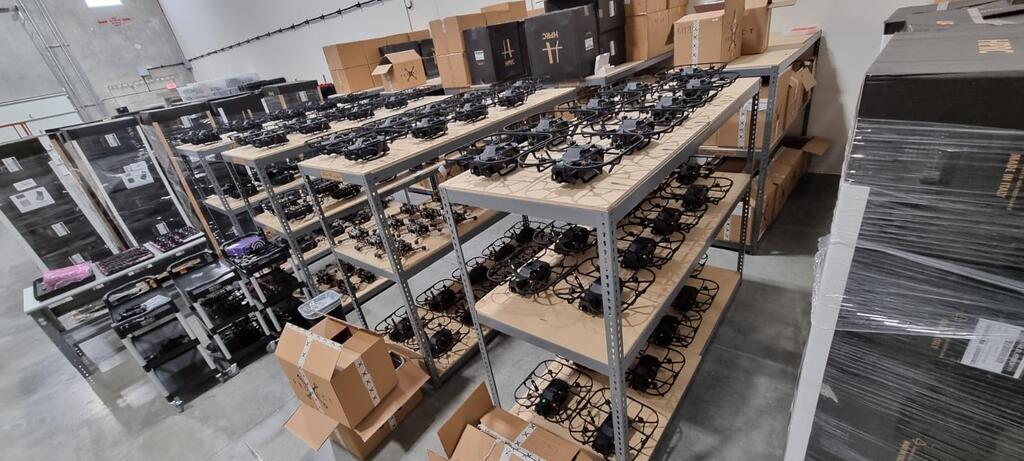
(Photo: Xtend)
In 2023 the company acquired Singapore’s Performance Rotors, which specializes in drones that can fly in GPS-denied environments such as tunnels and enclosed spaces. That technology, XTEND said, proved crucial in Israel’s recent war in Gaza.
Under XTEND ownership, Performance Rotors has also supplied drones to Ukraine. The Singapore plant will now serve as XTEND’s Asian hub, selling across the region subject to U.S. export approval.
Similar initiatives are underway in Europe, where governments are seeking local production and closer oversight of defense technologies.