

For most of modern financial history, decisions weren’t made by models or data. They were guided by instinct, conviction and the ability to tell a compelling story. Analysts built forecasts, managers followed their intuition, and the most persuasive voices usually won.
That world is fading. Over the past couple of decades, markets have moved from intuition to computation. Data, models and disciplined processes now carry more weight than charisma. Quantitative finance, the operating system of global markets, has become the language of modern markets.

(Photo: shutterstock)
And yet, as this global transition toward systematic methods accelerated, Israel, a global powerhouse of technical talent, remained largely absent from the revolution.
To understand the scale of this shift, it helps to look at how it began. This transformation didn’t happen overnight. It began in the 1950s when Harry Markowitz formalized Modern Portfolio Theory, showing that diversification could be optimized mathematically. William Sharpe’s Capital Asset Pricing Model (CAPM) and the Fama-French factor frameworks expanded this into a coherent system for understanding risk and return.
What started as academic theory evolved into factor investing, Smart Beta, and systematic strategies that now guide trillions. Surprisingly, those fields did not flourish in Israel the way they did in the U.S. and other markets. Given Israel’s success in high-tech, one might have expected a similar surge in quantitative finance. Yet the local finance industry remained relatively quiet on this front.
The explanation is structural. Israel’s financial sector has long been concentrated. A handful of large institutions dominate savings and pensions, generating steady fee income. With little competitive pressure, the incentive to experiment with new models was limited.
But that environment is changing. AI tools are becoming cheaper and more accessible, enabling small teams to build capabilities that once required massive infrastructure. Global investors are demanding transparency, repeatability, and data-driven processes. Combined with Israel’s academic depth and its culture of solving real-world problems, these forces may finally spark a shift. At the same time, new U.S. regulation is opening the door for innovation on a global scale.
The SEC’s Rule 18f-4, introduced in 2020, modernized how ETFs use derivatives. It enables quantitative ETFs that employ advanced hedge-fund-style strategies within a fully compliant structure. This development could motivate more Israeli entrepreneurs to apply their strengths to quantitative investing.
Just as cybersecurity became a national export when the world needed digital defense, the next frontier may be the export of quantitative strategies and investment technologies that deliver genuine diversification to global portfolios.
Israel’s research culture is uniquely positioned for this moment. Universities train elite mathematicians and physicists; the defense sector develops talent skilled at extracting weak signals from vast, noisy environments. When that capability meets global finance, it creates new layers of applied research, translating academic ideas into deployable investment models.
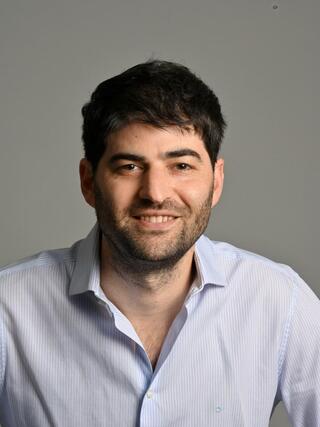 Oded Shimoni
This shift coincides with the maturation of machine learning and AI techniques in finance, allowing systems to become adaptive rather than static. Institutions are adopting them quickly, because mathematics now supports flexibility grounded in data rather than intuition.
Israel, whose global reputation was built on cybersecurity and defense innovation, can now shift towards exporting quantitative asset-management technologies. Just as Israeli cyber tools help secure the world’s data, Israeli financial models may soon help safeguard its capital.
The question is no longer whether Israeli quantitative technology will reach Wall Street, only how quickly and how far it will scale.
Oded Shimoni is the CEO of AlphaBeta ETF