

Israeli cybersecurity startup Brava Security emerged from stealth Thursday with $15 million in seed funding, unveiling an artificial intelligence platform designed to identify weaknesses in corporate threat detection systems before attackers can exploit them.
The funding round was led by Pitango Venture Capital and F2 Venture Capital, with participation from angel investors including executives from Anthropic, Microsoft and Check Point. The company said it has already signed customers among Fortune 100 companies in the retail, energy and hospitality sectors.
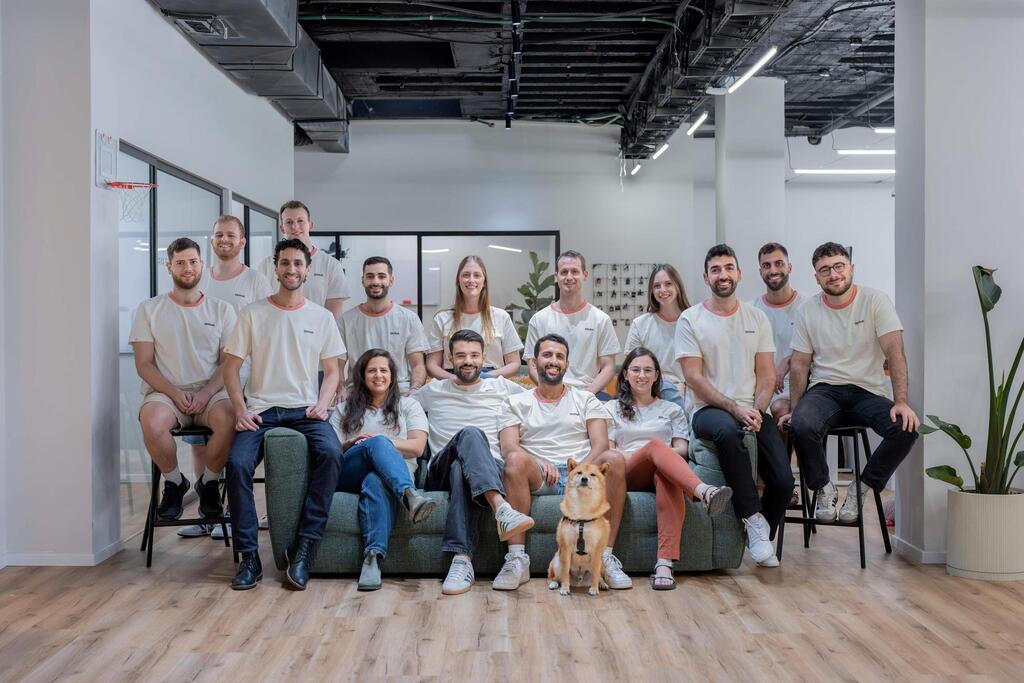
Brava team
(Photo: Roei Shor)
Brava is seeking to address a growing vulnerability in corporate cybersecurity as companies increasingly rely on AI-powered systems to investigate threats and respond to attacks.
While AI agents can analyze security alerts within seconds, their effectiveness depends on the quality and completeness of the information they receive. Missing security logs, malfunctioning data pipelines and ineffective detection rules can leave companies exposed to attacks that their automated systems never recognize.
Brava's technology is designed to identify those blind spots by modeling how cyberattacks would appear in an organization's security data without actually carrying out the attacks.
The platform uses multiple AI agents to predict the digital evidence that specific attack techniques would generate, compare those predictions with a company's existing monitoring capabilities and identify threats that might go undetected.
It can then modify detection rules and data feeds within existing security information and event management systems, known as SIEM platforms, to address the identified gaps.
"Everyone is racing to put AI in charge of the SOC," said Idan Basre, Brava's co-founder and CEO, referring to the security operations centers responsible for monitoring and responding to cyber threats. "You can't automate a decision based on evidence no one ever proved."
"We're solving the problem that comes before AI can make the right decision: making sure the security infrastructure actually sees the threats it's supposed to detect," he added.
The company said its approach allows businesses to strengthen their defenses without replacing the security infrastructure they already use.
Testing defenses without launching attacks
Unlike traditional security testing methods that may involve executing simulated attacks against corporate systems, Brava's technology models the telemetry, or machine-generated security data, that an attack would be expected to produce.
The platform analyzes how different attack techniques would manifest across an organization's existing log sources and determines whether its monitoring systems would recognize them.
Brava said the technology can identify missing logs, gaps in telemetry collection and detection rules that fail to recognize particular attack patterns.
"The hard part of security was never writing detections," said Itay Gabbay, Brava's co-founder and chief technology officer. "It's knowing exactly what an attack will look like in a specific environment, across all of its log sources, before it ever happens. That's the problem our models were built to solve."
The company said its platform can deliver initial findings within 10 to 15 minutes of onboarding, allowing security teams to begin evaluating potential weaknesses without a lengthy deployment process.
It integrates with Splunk, Google SecOps, CrowdStrike and more than 70 additional security tools, data sources and destinations.
Brava's system is also designed to investigate potential threats alongside human security analysts, gathering evidence from multiple sources to support their decisions.
The company said its customers include commercial real estate services firm Cushman & Wakefield and WELL Health, one of Canada's largest healthcare companies, in addition to several Fortune 100 businesses.
"Our SecOps journey is about applying AI where it makes our people more effective, and Brava sits at the center of that," said Erik Hart, chief information security officer at Cushman & Wakefield.
"It investigates alongside our team, bringing evidence together so decisions rest on facts rather than on searching," he said.
Founded by IDF technology veterans
Brava was founded by Basre and Gabbay, both veterans of Israel's military technology and intelligence establishment.
Basre is a graduate of the IDF's elite Talpiot program and spent a decade in Unit 8200, the military's signals intelligence and cyber unit, working as a threat researcher.
He later led product management for Microsoft Defender, the technology company's cybersecurity platform.
According to Brava, his experience at Microsoft exposed recurring problems in corporate security operations, particularly the inability of security teams to investigate incidents effectively when critical data was missing or unavailable.
Gabbay spent seven years in the Israel Defense Forces developing core AI systems, including work on a joint research program involving the U.S. Defense Advanced Research Projects Agency, or DARPA, and Israeli researchers.
The founders combined their experience in threat research, enterprise cybersecurity and artificial intelligence to develop a system that evaluates whether an organization's security infrastructure can actually detect the attacks it is designed to stop.
Brava employs approximately 20 people, including AI researchers and cybersecurity specialists. Its research and development operations are based in Israel, while its commercial team is expanding across the United States.
The company said the new funding would support further development of its technology and accelerate its expansion in North America.
It also plans to pursue additional customers in financial services and government, sectors where the ability to identify threats reliably is particularly important.
Investors see growing demand for reliable AI security
The investment comes as cybersecurity companies race to introduce autonomous AI agents capable of investigating incidents, analyzing threats and recommending or executing defensive actions.
Brava's investors argue that the growing reliance on automation creates a need to verify the underlying security information on which those systems depend.
"AI is fundamentally changing the threat landscape on organizations," said Yair Cassuto, general partner at Pitango. "This requires a fundamental change in how we protect organizations from cyberattacks."
Cassuto said Brava's technology could help security teams address a broader range of threats by applying AI-driven capabilities to the detection process itself.
"Brava is bringing agentic capabilities that scale against the breadth of threats organizations are facing and provides security certainty to their internal teams," he said.
"With an exceptional team and strong early traction among leading enterprises, Brava is well positioned to redefine how organizations defend themselves in the AI era."
Maor Fridman, general partner at F2 Venture Capital, said the company's central appeal was its focus on validating security systems rather than simply automating their existing processes.
"Most SOC teams take their detection on faith," Fridman said. "As AI takes on a bigger role in the SOC, that becomes a real risk, because an agent is only as good as the evidence it relies on."
"Brava replaces faith with proof, showing exactly which attacks a company's defenses would catch before an attacker ever tests them," he added.
"Idan and Itay are building the ground truth that AI-driven security operations will run on."
Brava is betting that as enterprises expand their use of cloud services, AI applications and AI-assisted software development, demand will grow for tools that can verify whether increasingly complex security systems are collecting the information needed to detect attacks.
The company argues that even the most advanced AI security agents cannot compensate for threats that remain invisible to the systems feeding them information.
Its approach aims to make that underlying evidence more reliable, allowing businesses to deploy AI-driven security operations with greater confidence in what their defenses can actually detect.