

Nearly 6,000 miles from Tehran, inside a modest industrial building in Yonkers, New York, a quiet collaboration is unfolding. Iranian, Israeli and American partners are working together to revive a Persian national drink that nearly vanished after it was banned under Iran’s Islamic Republic.
Dorit and David Nahmias, alongside four Iranian expats, are producing “aragh sagi,” a traditional Iranian spirit once central to social life before the 1979 revolution outlawed its production, sale and consumption. For them, the effort is “a cultural and historical correction for an entire community.”
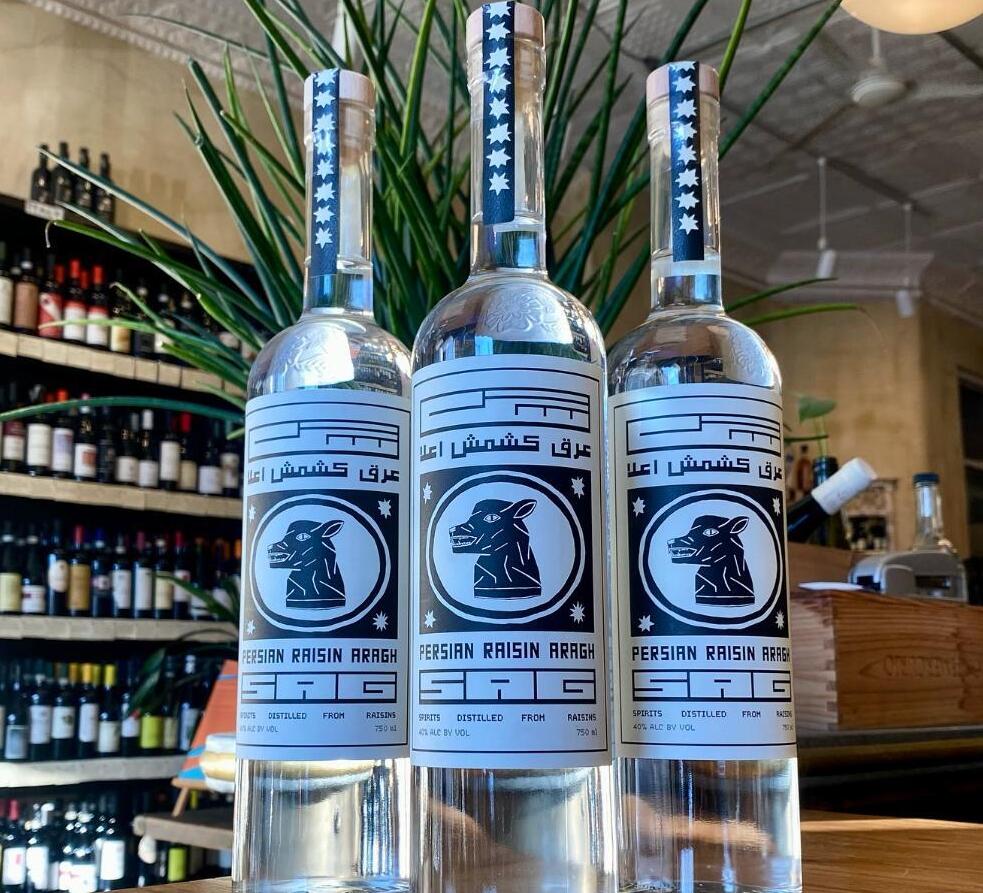
Aragh sagi is a clear spirit with about 40% alcohol, long associated with gatherings and celebrations in pre-revolutionary Iran. Now, through this unlikely partnership, it is making a comeback on American soil, even as tensions persist between Iran, Israel and the United States.
The project traces its roots to a group of teenagers in Tehran in the early 2000s. They would meet on weekends at a skate park, listening to music and drinking aragh sagi obtained on the black market. The alcohol, sold in unmarked plastic bottles, was consumed in secret. One weekend, they were caught and sentenced to 80 lashes, an experience that left lasting physical and psychological scars. When they later left Iran for studies and work, they did not imagine the drink tied to that trauma would become their life’s work in New York.
The Israeli-Iranian connection was immediate
The term “aragh” comes from Arabic, meaning “sweat,” a reference to the distillation process in which vapor condenses into droplets. The word has been adopted across the Middle East to describe distilled spirits. “Sagi,” meaning “dog” in Persian, traces back to a popular 1960s Iranian brand that featured a beagle on its label. Consumers began calling it “the dog aragh,” a nickname that became a generic term for raisin-based spirits. After alcohol was banned, the term became associated with illicit, often low-quality liquor.
The young entrepreneurs named their new brand SAG, a nod to the drink’s original name and a wink at “swag.”
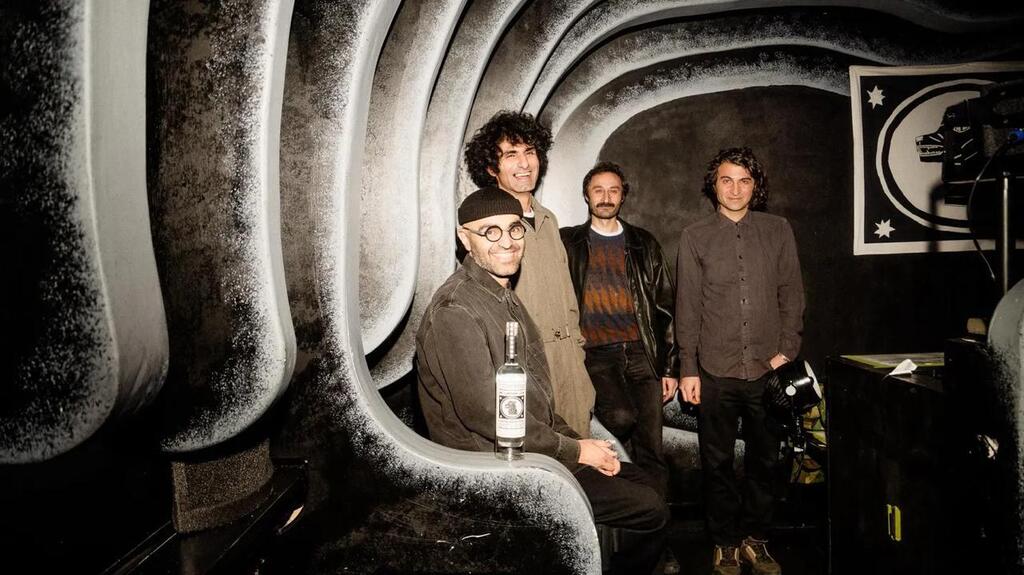
(Photo: SAG)
Their search for a production site led them to Nahmias et Fils Distillery in Yonkers. David Nahmias, a former software engineer, and Dorit Nahmias, who spent more than two decades at Bank Leumi USA, founded the distillery to preserve David's family’s Moroccan distilling tradition. Their flagship product had been mahia, a fig-based spirit once common among Moroccan Jews but largely lost after migration to Israel, Europe and the United States.
Dorit Nahmias said the connection with the Iranian partners was immediate. She recognized in them “the same inner drive” that led her and her husband to revive Moroccan drinking traditions. Technically, the processes are similar. Both figs and raisins are high in sugar and require comparable fermentation methods.
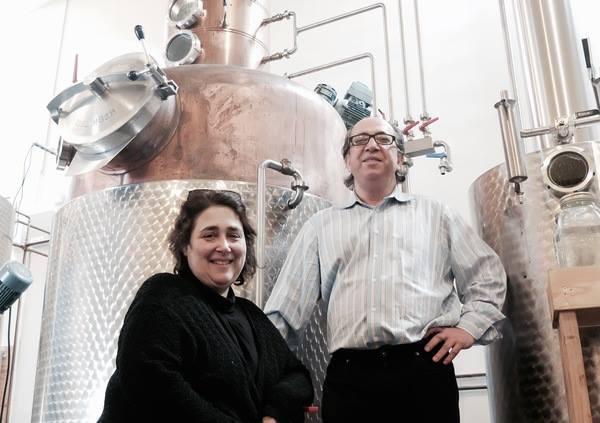
Dorit and David Nahmias
“I’ve seen Iranians who left the country break down in tears after a single sip”
Production in Yonkers combines traditional techniques with strict quality control, a stark contrast to Iran’s black market. There, illicit alcohol nowadays can be deadly. Without regulation, producers sometimes use improper equipment or spoiled ingredients, leading to methanol contamination. Iranian reports indicate that an average of 10 people a day are hospitalized with alcohol poisoning, often suffering blindness, brain damage or death.
For the Iranian partners, producing the drink safely and legally, in a Jewish-owned distillery, is in itself a full-circle moment.
To replicate the taste they remember, the team uses large quantities of California raisins, similar to varieties grown around Shiraz and northern Iran. About 3,000 kilograms of raisins are needed to produce roughly 1,000 bottles. The raisins are soaked and naturally fermented for weeks before being distilled in traditional copper stills. The result is a clear spirit with notes of dried fruit, molasses and caramel.
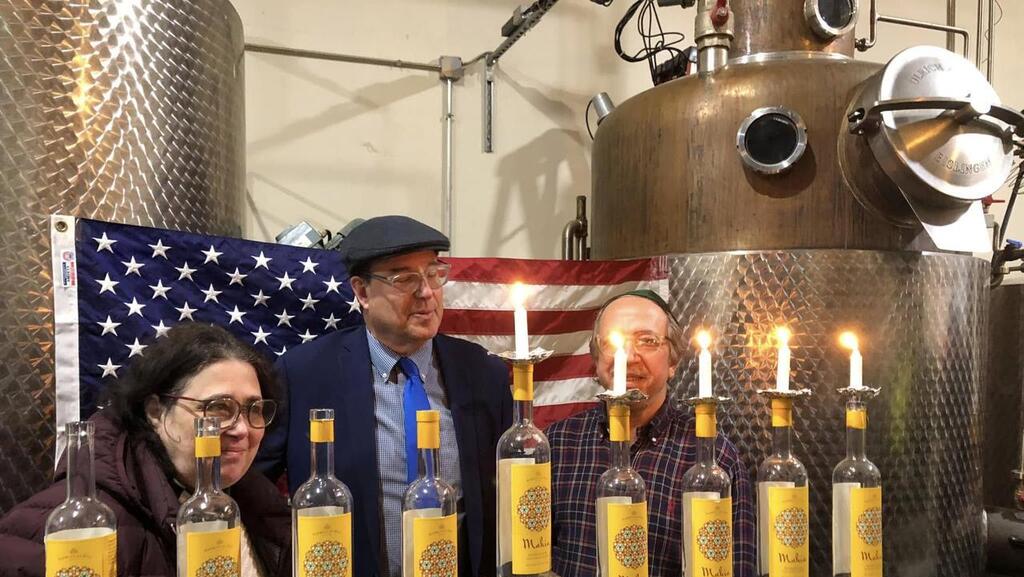
The Nahmias family at a Hanukkah event at their distillery
Unlike the aragh common in the Middle East, aragh sagi contains no anise. Its profile is closer to a refined grappa or young brandy and is typically served straight or over ice. While Lebanese and Israeli aragh is typically made from grape distillate or neutral spirits, which give it its distinct flavor and milky color when mixed with water, the Iranian version is distilled exclusively from raisins.
The launch of SAG in New York has resonated with the Iranian diaspora living there. The owner of the Masquerade bar in Brooklyn said his venue has become a gathering point for Iranian Americans seeking a taste of home.
“I’ve seen men and women who left Iran decades ago burst into tears after a single sip,” he said. “The aroma brings back memories of family, of parties in Tehran before the revolution, of a freedom that was lost. The bottle, with the dog on the label, gives them back a piece of their identity.”
A bottle costs about $55
Today, the spirit is sold in more than 50 restaurants and bars across the U.S. In New York, a 750-milliliter bottle sells for $50 to $55, placing it in the premium category. All of this comes at a challenging time for the industry. Consumers are drinking less and cutting back on spending, while smaller brands are fighting for shelf space and menu placements. U.S. distilled spirits revenue fell 2.2% in 2025 to nearly $37 billion, and the number of active craft producers dropped by more than a quarter over the past year.
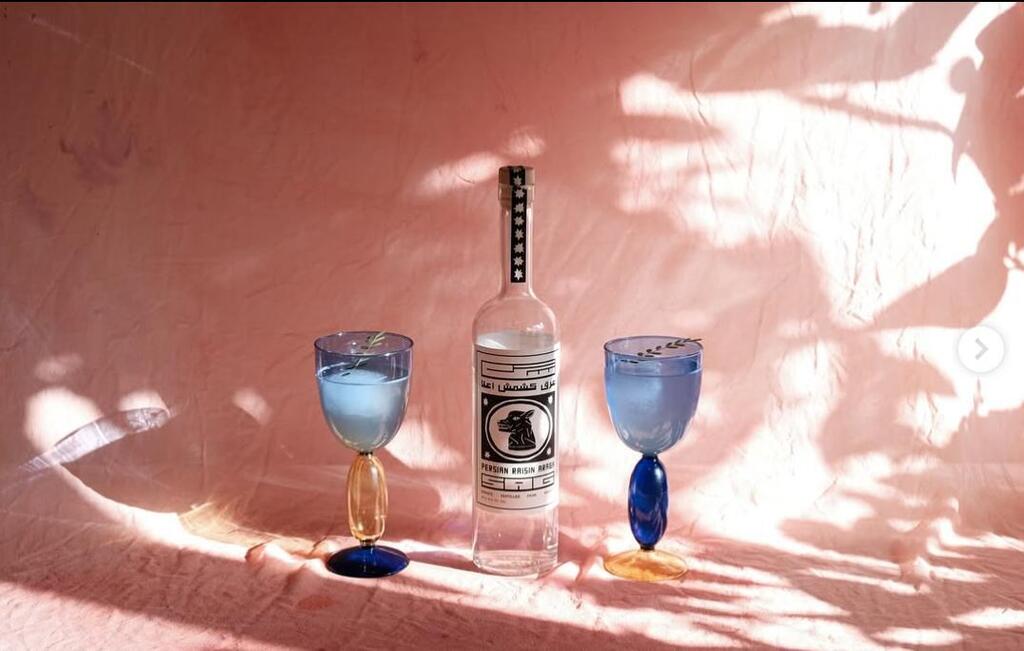
Aragh sagi
(Photo: SAG)
Still, SAG distributors report rising demand, not only among Iranian Americans but also among U.S. consumers seeking new flavors. At Masquerade, young Iranians and Israelis can be seen raising glasses together, toasting “l’chaim” in Hebrew and “noosheh jan” in Persian.
The fact that the drink is produced in a Jewish-owned distillery at a time of war involving Iran, the United States and Israel has naturally drawn added media attention. Nahmias said the partnership shows that on a human and cultural level, connections between people are stronger than government policies.
For the Iranian brothers, who arrived in the United States with almost nothing, see aragh sagi as their new identity. They are involved in every stage of the process, from selecting the raisins to designing the labels and marketing the bottles in some of Manhattan’s most sought-after bars.
They are now exploring expansion into Europe, home to large Iranian exile communities, and planning with the Nahmias family to develop additional spirits based on Middle Eastern botanicals.
As Iran’s Islamic Republic continues to punish citizens over alcohol and issue threats across the region, this partnership in New York suggests a different kind of response, one sometimes best served in a glass at 40% alcohol.