


Israel is seeking to secure a place in the emerging nuclear fusion industry, a global market that could be worth hundreds of billions of dollars in the coming decades, according to a strategic report released Thursday by the Energy and Infrastructure Ministry. The initiative comes as global electricity demand surges, driven in part by the enormous energy requirements of artificial intelligence and data centers.
The ministry's report identifies nuclear fusion, widely regarded as the ‘holy grail’ of clean energy, as a potential cornerstone of future electricity generation and outlines a national strategy to position Israeli technology companies at the forefront of the emerging industry.
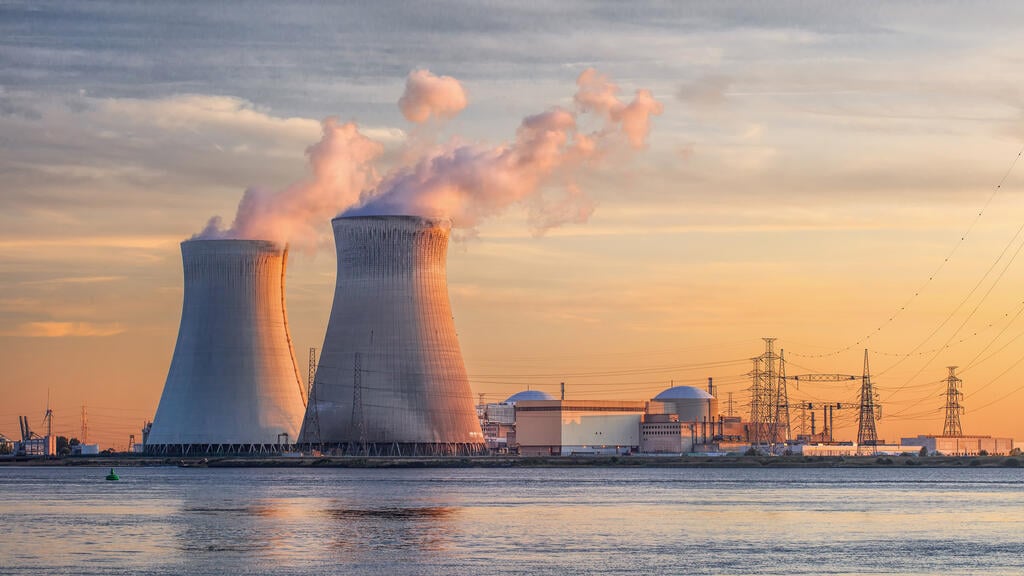
Israel eyes a place in nuclear fusion's future market worth hundreds of billions
(Photo: Shutterstock)
Unlike conventional nuclear fission reactors, which generate energy by splitting heavy atoms such as uranium, nuclear fusion combines hydrogen isotopes to form helium, releasing enormous amounts of energy. The process does not produce greenhouse gas emissions during electricity generation and is expected to generate significantly less long-lived radioactive waste than conventional nuclear reactors.
Because fusion does not rely on fissile materials such as uranium, it could also provide Israel with a route into civilian nuclear energy technology without some of the political, regulatory and international treaty restrictions associated with conventional nuclear power.
The report, prepared by the ministry's Policy Planning and Strategy Division and Chief Scientist's Unit, projects that the global fusion industry could develop into a market worth hundreds of billions of dollars over the coming decades. It identifies the next several years as critical, as the technologies, regulations and supply chains that will shape the industry are established.
Interest in fusion has accelerated alongside growing concerns about the electricity demands of artificial intelligence. Technology giants including Microsoft and Google have already entered investment and future electricity purchase agreements with private fusion developers, while more than $14 billion in private investment has flowed into the sector since 2021. According to the report's projections, the first commercial fusion power plants could begin connecting to electricity grids during the 2030s.
The ministry believes Israel has several technological advantages that could allow it to become a significant supplier to the global industry. These include high-powered laser systems, power electronics and radio-frequency technologies, artificial intelligence and advanced simulations, specialized materials and robotics. Many of these capabilities have been developed through Israel's defense industries, technology sector and academic institutions.
Israel already has the foundations of a domestic fusion research ecosystem, including the Institute for Nuclear Fusion and Hot Plasma Research established by the ministry, national facilities such as the SARAF particle accelerator and the Soreq Nuclear Research Center, as well as private startups operating in the field.
However, the report warns that shortages of specialized personnel and experimental infrastructure could prevent Israel from realizing its potential unless the government commits substantial resources to developing the sector.
To address these challenges, the ministry has outlined three possible investment strategies, each reflecting a different level of government involvement and financial commitment.
The most limited option would allocate between 50 million and 100 million shekels over five years, primarily to scholarships, professional training programs and expanding academic research. This approach would strengthen Israel's existing capabilities without requiring a major expansion of national infrastructure.
A second option proposes investing between 500 million and 1 billion shekels over five to seven years. The funding would support the establishment of a national research center and make existing research facilities more accessible to private companies, helping connect academic expertise with commercial development.
The most ambitious proposal calls for a comprehensive national program costing between 1 billion and 2 billion shekels over a decade. It would establish a dedicated national authority to coordinate the sector and could include examining the possibility of constructing an experimental fusion demonstration reactor in Israel in cooperation with international partners.
Dr. Shahar Dolev, a senior official in the ministry's Policy Planning and Strategy Division and one of the initiative's leading proponents, said fusion could fundamentally transform the global energy sector.
"Against the backdrop of continuously growing energy demand and the need for clean, reliable and readily available electricity, nuclear fusion has the potential to be a genuine breakthrough," Dolev said.
"Based on our analysis of industry trends, technological developments and Israel's comparative advantages, it appears that we are standing on the threshold of an extraordinary strategic opportunity: to join the global race to develop nuclear fusion today, secure a meaningful position in the industry's global value chain and establish Israel as a leading technological power in this field."
With Israel heading into its October 27 elections, however, the future of the initiative remains uncertain. Energy Ministry officials warn that without government action, Israel could miss a historic opportunity to establish itself in an industry expected to reshape global energy production.
The ministry hopes the next energy minister will approve the initiative and allocate the funding needed to move it forward. The challenge is whether Israel will commit to developing its capabilities while the industry is still taking shape, or find itself trying to catch up once the technologies and supply chains of the future have already been established.