

Canadian-Israeli investment firm Awz Ventures on Thursday announced plans to establish a revolutionary semiconductor fabrication plant (Fab) in southern Israel, investing 5 billion shekels (approximately $1.3 billion) in a new advanced chip manufacturing facility designed to serve both defense and civilian industries.
Dubbed a strategic national initiative, the Fab will anchor Awz’s new national deep-tech center, The RISE, located in the emerging Tera-Park industrial zone in Ashkelon. The project is being developed in collaboration with Israel’s Ministry of Economy and Industry, Ministry of Finance, Israel Innovation Authority, Directorate of Defense R&D, Israel Lands Authority and the Ashkelon Municipality.
The new facility will produce advanced semiconductors that promise to dramatically outperform standard silicon chips in data transfer speed and energy efficiency. These next-generation components are considered critical for technologies such as artificial intelligence, quantum computing, 5G/6G communications, and strategic defense systems.
Gallery
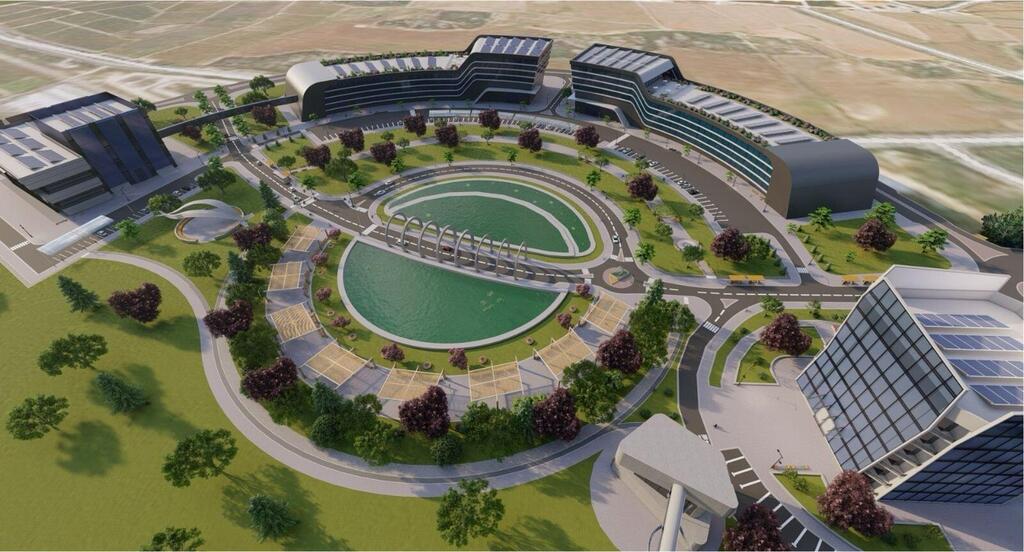
Awz’s new national deep-tech center, The RISE, located in the emerging Tera-Park industrial zone in Ashkelon
(Photo: Courtesy)
The Fab will be the first of its kind in Israel to produce chips based on III-V compound semiconductors on silicon and other substrates. It will also feature advanced packaging and integration capabilities, serving as a hybrid manufacturing hub that will support both local and international production lines. It will operate under an “Open Fab” model, offering access to Israeli startups, research institutions and multinational corporations.
Awz CEO and founder Yaron Ashkenazi described the initiative as a “once-in-a-generation project” aimed at boosting Israel’s security, technological sovereignty and economic resilience, especially in the wake of the October 7 Hamas attack. "The RISE will serve as a central pillar in the South’s revival," Ashkenazi said, adding that the center will help turn Israel into a global deep-tech and semiconductor powerhouse.
Alongside manufacturing, The RISE will also serve as a one-stop-shop for deep-tech research, design services and startup incubation. In partnership with global academic institutions, Awz will launch an applied academic training center to address the growing shortage of skilled engineers and scientists in the field.
Economy Minister Nir Barkat lauded the investment, calling it "a leap forward" in efforts to position Israel as a global chip manufacturing hub. “This project perfectly aligns with our vision — combining international investment, Israeli innovation, and regional development,” Barkat said during a site visit with Ashkelon Mayor Tomer Glam and Ashkenazi.
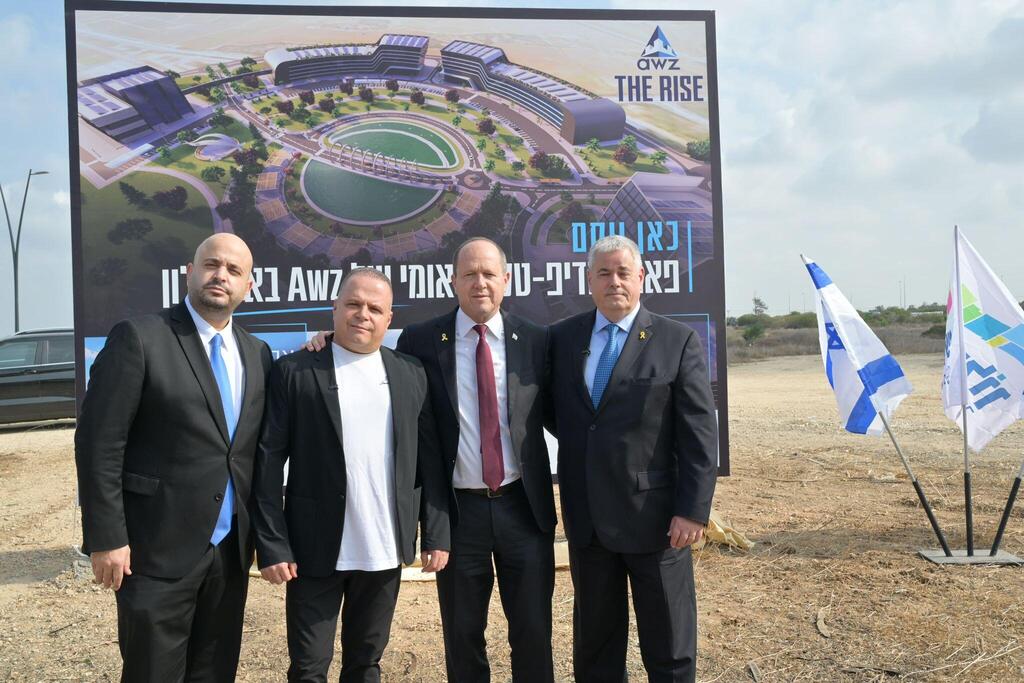
Groundbreaking of The Rise
(Photo: Courtesy)
Ashkelon, frequently targeted by rocket attacks, has become a symbol of resilience and innovation. Glam welcomed the project as “an extraordinary vote of confidence” in the city’s future and capacity to lead in innovation and industrial growth.
The first phase of the project will receive 3 billion shekels in funding. Over the past eight and a half years, Awz has invested over 2 billion shekels in Israeli dual-use deep-tech startups. The infrastructure initiative marks a strategic shift for the group, which typically operates as a venture capital fund managing over $500 million globally.
The announcement comes amid a global race to develop national semiconductor capabilities and reduce reliance on foreign supply chains. Israel’s effort to establish domestic chip manufacturing is seen as a crucial step in both economic and national security policy.
Awz’s advisory board includes high-profile figures such as former Canadian Prime Minister Stephen Harper and former heads of the CIA, FBI, and the Mossad. The group maintains strong partnerships with defense and intelligence agencies as well as Fortune 500 companies.
Ashkenazi emphasized that The RISE is not only about technology but also about social impact. The project aims to attract young families and veterans of elite IDF tech units to relocate to the South, reinforcing the region’s economic and strategic importance.
“This is a cornerstone for Israel’s independence in semiconductor production,” said Ashkenazi. “We are building not just infrastructure, but a future.”