

Palo Alto Networks is acquiring Israel’s CyberArk in a $25 billion cash and stock deal, marking the second-largest exit in the history of Israel’s cybersecurity industry—second only to Google’s $32 billion purchase of Wiz earlier this year.
The deal reflects a 26% premium on CyberArk’s recent valuation on Wall Street. CyberArk’s stock jumped 13.5% on Tuesday, closing at a $21 billion market cap following media reports about the impending deal.
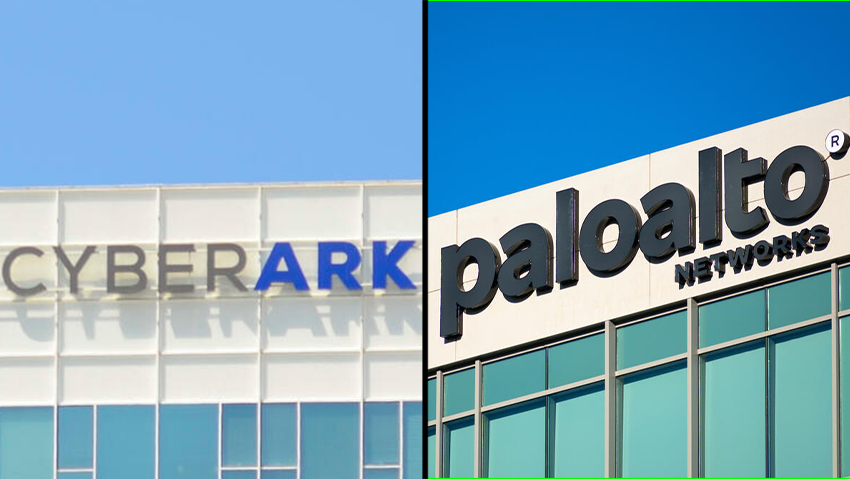
CyberArk is the final piece in Palo Alto’s effort to transform itself into a comprehensive, multi-solution cybersecurity company. Interestingly, Nir Zuk, Palo Alto’s Israeli founder and current CTO, had previously dismissed identity management—the sector in which CyberArk specializes—as a field he wasn’t interested in.
But the rapid rise of AI and the role of compromised identities in many recent cyberattacks have turned identity security into one of the hottest categories in enterprise cybersecurity. As the field heated up, CyberArk enjoyed a surge in growth, with its stock price quadrupling over the past five years.
Founded in 1999 by Alon Cohen and Udi Mokady, CyberArk predates Palo Alto Networks, which was established in 2005. Mokady recently transitioned from CEO to chairman of the board. Today, CyberArk employs nearly 4,000 people—about 1,000 of them in its Petah Tikva offices.
Get the Ynetnews app on your smartphone: Google Play: https://bit.ly/4eJ37pE | Apple App Store: https://bit.ly/3ZL7iNv
In 2024, CyberArk made a significant acquisition of its own, purchasing U.S.-based Venafi for $1.5 billion. The company ended 2024 with $1 billion in revenue, reflecting more than 30% year-over-year growth. While CyberArk’s revenue is comparable to that of SentinelOne—another acquisition target considered by Palo Alto—it stands out for generating positive cash flow.
CyberArk had planned to report $1.3 billion in revenue and $225 million in operating profit this year, making the deal attractive to Palo Alto, whose own growth has slowed to about 15% annually.
Although Palo Alto is an American company led by CEO Nikesh Arora, it was founded by Israeli entrepreneur Nir Zuk and operates a major R&D center in Israel with over 1,000 employees.

Nir Zuk and Udi Mokady
(Photo: Amit Shaal, Photo: Ryan Frois)
This acquisition is Palo Alto’s largest to date. Known for its aggressive acquisition strategy, the company had previously capped its purchases at under $1 billion and focused on acquiring private startups with all-cash deals. But with its market cap now hovering around $130 billion—fueled by a surge in its stock—Palo Alto has the firepower to pursue this bold move.
Unlike Wiz, CyberArk is legally registered in Israel. However, its ownership is highly dispersed following its 2014 IPO on Nasdaq, with the vast majority of shares held by foreign institutional investors.
CyberArk’s largest shareholder is investment giant BlackRock, followed by Fidelity, Wellington, and private equity firm Thoma Bravo, from whom CyberArk acquired Venafi.
One person who could have benefited greatly from this acquisition is Erel Margalit, founder of venture capital fund JVP and a former Labor Party Knesset member. Margalit was one of CyberArk’s earliest investors but has since sold off his holdings.
The company’s founders also no longer hold significant stakes in CyberArk. However, Udi Mokady continues to benefit from the company’s success, receiving an annual compensation package worth $8.6 million.