

As artificial intelligence transforms the software industry, companies are confronting a new business challenge: every prompt, generated image, automated workflow and AI agent action carries a cost.
Unlike traditional software-as-a-service products, where revenue was largely tied to the number of users or subscription plans, AI-powered products incur computing costs every time customers use them. That has forced software companies to rethink how they manage access, usage and pricing in real time.
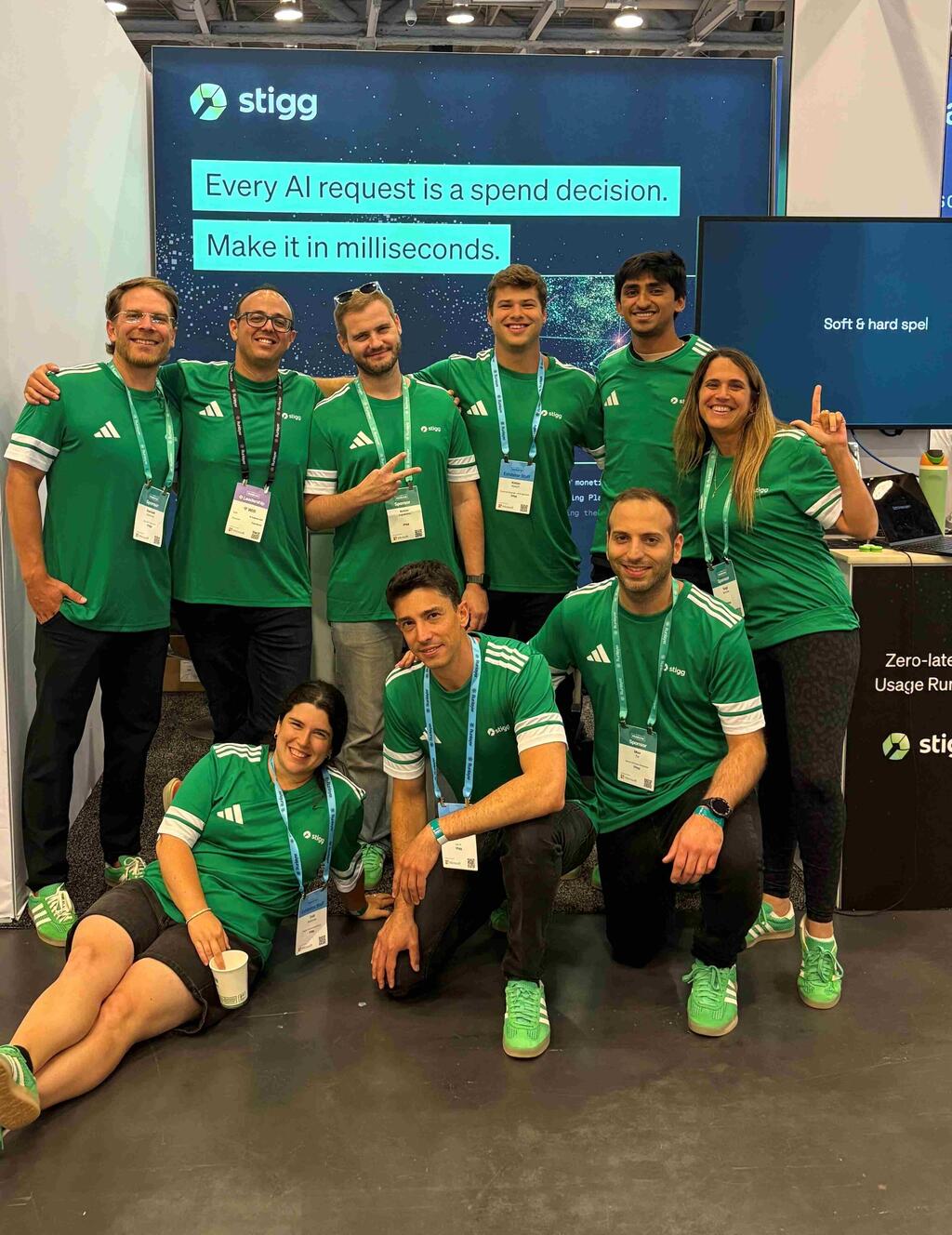
Stigg team
(Photo: Stigg)
The issue has become significant enough that some of the world's largest AI developers, including OpenAI, have begun building their own internal infrastructure to determine whether a user has the credits, permissions and budget to complete an AI request before it is processed.
Israeli startup Stigg says it was built to address that problem.
Founded in Tel Aviv in 2021 by former New Relic colleagues Dor Sasson and Anton Zagrebelny, the company develops software that allows vendors to control, in real time, what customers, teams or AI agents are permitted to use and how much of a service they can consume.
The founders say the idea emerged from Sasson's experience leading AI product development at New Relic. While customers embraced AI-powered log analysis tools, the company struggled to determine who had access to the features, how they should be priced and how usage should be managed.
"The answer came back as a spreadsheet," Sasson said, describing the company's existing entitlement system.
The experience highlighted what the founders viewed as a broader weakness across the software industry: while companies had become highly efficient at developing products, systems governing pricing, feature access and customer entitlements often remained fragmented across billing platforms, application code and manual processes.
The rapid adoption of AI has intensified those challenges.
Traditional SaaS companies typically charged customers by subscription tier or number of users. AI products, by contrast, often must monitor multiple variables simultaneously, including prompts, image generation, automated workflows, AI agent actions, credits and spending limits.
That complexity has led enterprise customers to seek greater control over AI spending. Companies increasingly want to allocate AI budgets by department, limit how much individual employees or AI agents can consume and prevent unexpected computing costs, according to Stigg.
The company says it has seen cases in which a single heavy user exhausted an organization's AI budget in one day before administrators realized what had happened.
OpenAI offered a glimpse into how major AI developers are approaching the challenge earlier this year when it published details of its internal infrastructure, describing a system that checks user limits, credits and entitlements before processing requests. Stigg's founders say the architecture resembles the approach they adopted when designing their own platform.
This week, at the AI World Fair conference, Stigg introduced what it calls its "Usage Runtime" platform, which is designed to manage the full process from measuring AI usage to billing customers. According to the company, the system includes real-time usage tracking, spending controls, high-volume metering and the ability for enterprise customers to deploy the platform within their own cloud environments.
Stigg says collaboration software company Miro implemented an AI credit model using its platform in less than six weeks, a project the company estimated would otherwise have required about 5,000 engineering hours if developed internally.
The startup has also introduced a free version aimed at early-stage companies while continuing to target large enterprise customers whose AI infrastructure requirements become more complex as they grow.
Industry analysts increasingly view usage management as becoming core infrastructure for AI businesses rather than simply part of billing systems. As AI services continue expanding, companies are seeking ways to ensure that rising customer demand does not also produce unpredictable operating costs.
For startups such as Stigg, that shift represents an opportunity to provide technology that many companies may find too costly or complex to build themselves.