

In June 2024, the dollar stood at 3.72 shekels and the euro at 4.03 shekels. Last Friday, the dollar was already selling for 2.81 shekels, while the euro was worth 3.27 shekels. A simple calculation shows that over two years, the dollar and euro weakened against the shekel by about 25% and 19%, respectively.
That means an Israeli exporter now receives 281 shekels for every $100 in exports, compared with 372 shekels two years ago — 91 shekels less.
(Photo: Alex Kolomoisky, shutterstock, gettyimages)
To compensate for the lost income, that exporter would have to raise the dollar price of his goods by a third, from $100 to $133, risking the immediate and very real loss of customers and possibly the entire market. He cannot offset that depreciation through “efficiency,” mass layoffs or major wage cuts, without killing his own business.
The situation of an exporter to the European Union is not much better: Selling goods for 100 euros would now bring in 327 shekels, compared with more than 400 shekels two years ago.
Buying dollars is not necessarily a magic solution
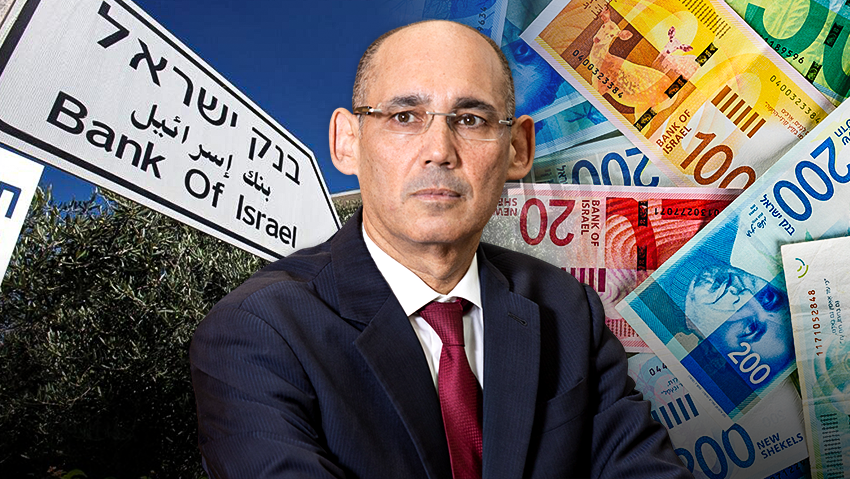
Does the Bank of Israel have tools to reverse the appreciation and prevent the Israeli currency from strengthening further? Governor Prof. Amir Yaron can try to achieve the desired result in one of three ways.
The first is direct dollar purchases. This is not a new tool; the Bank of Israel used it intermittently until about four and a half years ago. The method is simple, but simplicity comes at a cost: Buying dollars enriches currency traders who bet on such a move and encourages them to keep betting, greatly increases the amount of money in circulation and, based on past precedents, has little chance of leading to a significant weakening of the shekel. At most, it may prevent further appreciation.
And even that is no longer certain. Daily shekel-dollar trading volume is now close to $23 billion, and to have a significant impact the Bank of Israel would need massive, sustained intervention, meaning the purchase of billions of dollars. The Bank of Israel’s reserves are enormous, $236 billion, and it is doubtful there is any logical reason to increase them further.
Cutting interest rates: A partial solution with drawbacks
The second option is to cut interest rates by another 0.75%, or even a full percentage point, as Rafael chairman and former finance minister Dr. Yuval Steinitz urged in an interview with ynet. The hope is that such a sharp rate cut would make financial investment in shekels clearly unattractive, leading to a weaker shekel and a stronger dollar and euro.
Using interest rates to influence the foreign exchange market has quite a few drawbacks, stemming from the fact that it is only an indirect intervention tool. After all, the central bank’s main interest rate is meant to suppress inflationary pressures and accelerate growth, not to take part in supply-and-demand games in the foreign exchange market.
Changes to the rate have broad effects across the economy — on savings components, investment decisions, credit prices and many industries and markets, such as housing. Such a move would signal a reversal in the Bank of Israel’s priorities. A necessary condition for success would be strict adherence to a restrained government budget and a deficit no higher than 4%-4.5% of GDP, even if that requires raising taxes.
Nor should the anti-inflationary benefits of a strong shekel be dismissed. It has not brought relief from the cost of living, but it has significantly moderated price increases in oil, gasoline, electricity and water, among other things.
And what happens if the Bank of Israel does nothing? A continued appreciation of the shekel will eventually worsen the balance of payments; defense exports are better protected, but technology services exports are more exposed and vulnerable, leading to slower growth and rising unemployment. In the future, negative developments could influence major currency traders and cause them to start selling shekels. But it is unclear how, how much and when.
In any case, “sit and do nothing” is not a risk-free choice. That option is itself a considerable risk.