

When Mentee Robotics announced a significant funding round last year, it drew attention not just for the dollar amount, but for the milestone it represented: a Tel Aviv-based company building humanoid robots had moved from a research-stage concept to a company that had reached significant institutional scale. For 10D, who led their series A, the recent acquisition of Mentee Robotics confirmed a thesis the firm had been building for years: that the next wave of transformational technology would come from companies sitting at the intersection of deep engineering and artificial intelligence.
10D was founded in 2019 and operates as an early-stage fund focused exclusively on Israeli entrepreneurs, investing from pre-seed through Series A. Its portfolio spans robotics, quantum computing, cybersecurity, health technology, defense, and generative AI infrastructure, though the firm describes itself as a generalist investor with dynamic, evolving themes.
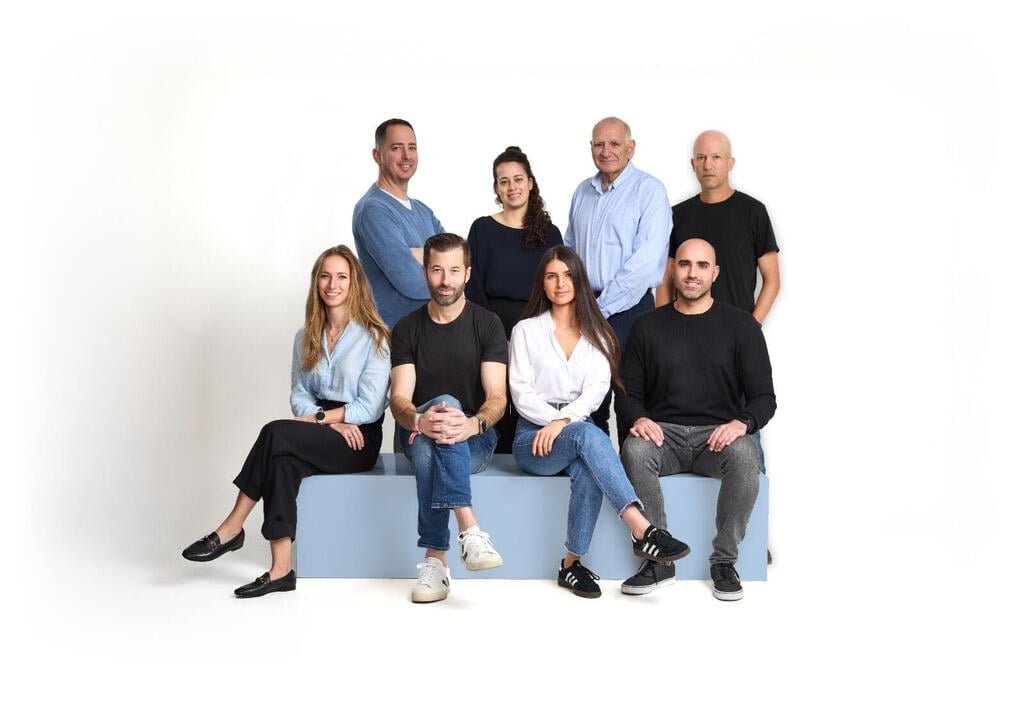
(Photo: 10D)
Before 10D became one of Israel’s most closely watched early-stage funds, it was built by investors who had already helped shape some of the country’s biggest tech success stories. At the center of it is Yahal Zilka, a venture capitalist with more than two decades of experience in the Israeli tech ecosystem and a track record that includes multi-billion-dollar exits. Over the years, Zilka has been involved as an investor, advisor, and board member in companies such as Onavo (acquired by Facebook), CloudEndure (acquired by Amazon), AppsFlyer, Argus (acquired by Continental), Innoviz (which went public), and Aidoc, whose AI platform is used by hospitals across the U.S., Europe, and Asia.
He is also widely associated with one of the defining success stories of Israeli tech: Waze. At a critical early stage, Zilka made a move that stood out even by today’s standards. Instead of supporting a $6 million seed round, he pushed to double it to $12 million—an unusually large round at the time. His rationale was simple but forward-looking: extend the company’s runway, accelerate user growth, and increase the likelihood of a significantly higher valuation in the next round. The bet paid off, as Waze went on to become one of Israel’s flagship startups before its acquisition by Google.
Zilka was joined by Rotem Eldar, formerly partner at Gemini Israel Ventures, a fund whose legacy includes companies like PrimeSense (acquired by Apple), Moovit (acquired by Intel), and WalkMe (which went public). Eldar is a graduate of the IDF's Talpiot program and Unit 81, Israel's elite technology intelligence unit, brings with him deep ties to Israel’s most sought-after technical talent.
Those connections have become a defining advantage for 10D. The fund consistently gains early access to highly in-demand founders, and crucially wins competitive deals. One example is Jeremy Suard, the CEO of Exodigo, who was already attracting significant attention from investors immediately after completing his military service. With a reputation that signaled outsized potential regardless of the path he chose, Suard had no shortage of offers. 10D not only secured the opportunity to invest, but led the company’s seed round, and has continued to back it through its growth stages.
Today, the fund is led by five partners whose careers reflect the breadth of the Israeli technology ecosystem. Yahal Zilka and Rotem Eldar, General Partner Itay Rand was an investor with 83North and leverages business strategy experience from his time at the Boston Consulting Group. Alon Kantor co-founded Toka and previously led corporate development at Check Point Software. Emmanuelle Lipski joined the firm from McKinsey & Company, where she focused on healthcare.
The Mentee Robotics example is illustrative for understanding how 10D operates. The fund’s edge lies in identifying technology opportunities at inflection points – when something the moment when something moves from academic or research-stage into commercial viability, and to understand what others miss when evaluating them. In Mentee’s case, that meant recognizing the uniqueness of their technical approach, their capital efficiency and cost structure, and the dynamics of a market where the number of eventual winners and the path to consolidation was overlooked by others who evaluated at the company for a potential investment.
The same logic applies to other areas the fund entered early. In quantum computing, 10D invested in both Quantum Source and Quantum Transistors - two Israeli companies working on different approaches to building efficient, highly scalable quantum computers – at a stage when the commercial potential of these technologies was still taking shape. In defense technology, the fund backed Remondo before geopolitical developments in Europe and the Middle East made defense startups.
Physical AI: the next bet
Within the fund's portfolio, Physical AI has emerged as a defining theme. The term, which describes AI systems that operate in and interact with the physical world, through robots, autonomous systems, and intelligent hardware, has gained traction in the broader tech conversation, but 10D's investments in this space predate the current hype cycle.
Exodigo, another 10D portfolio company, maps underground infrastructure using sensor fusion and AI, a problem that has significant commercial and safety implications for utilities and construction companies worldwide. Mentee Robotics, for its part, was working on general-purpose humanoid robots designed for industrial settings. Both are examples of what 10D calls infrastructure-layer deep tech: companies solving hard engineering problems that sit beneath more visible application-layer software.
"The distinction between the infrastructure layer and the application layer matters a great deal at the early stage," said Eldar. "Infrastructure companies take longer to build, require more technical depth, and are harder to evaluate, but they also tend to have stronger moats and more durable business models once they reach scale."
Israel's engineering pipeline
Central to 10D’s thesis is the quality and specificity of the Israeli technical talent pool. The country's mandatory military service, combined with specialized units such as Talpiot, Unit 8200, and Unit 81, has produced generations of engineers with hands-on experience in signals intelligence, systems engineering, and applied mathematics before they enter the private sector. 10D's own team reflects this: both Eldar and Kantor came through elite IDF technology programs.
The fund invests exclusively in Israeli entrepreneurs, including those who have relocated globally, on the premise that this pipeline continues to produce founders with unusually deep technical expertise and problem-solving experience.
Concentrated by design, diversified by discipline
10D's investment model is intentionally concentrated. Rather than spreading capital thinly across a large number of bets, the fund invests in a select number of high-conviction startups, deploying the bulk of its capital at the seed stage and seeking meaningful ownership positions. The logic behind this approach is straightforward: a focused portfolio allows the team to invest significant resources and attention in each company, while remaining broad enough to ensure diversification, because in early-stage deep tech, even the most carefully chosen investments require patience and the humility to recognize that no fund gets every call right.
That active engagement takes multiple forms. According to the fund's partners, involvement begins before investment, often helping founders shape their go-to-market strategy, define their ideal customer, and structure their early commercial offering. Post-investment, the fund assists with executive hiring, fundraising preparation, and investor introductions, adapting the level of involvement based on whether the founder is building a company for the first time or returning from a previous venture.
The themes 10D has long backed,physical AI, defense technology, quantum computing, are now drawing wider attention from the investment community. But the fund is already looking ahead. The partners describe a deliberate process of identifying the next decade's defining technologies, well before consensus forms. The clues often come from entrepreneurs whose ideas sound improbable at first, but when several of these seemingly unrelated pitches start revealing a shared undercurrent, or founders in different fields begin gravitating toward the same frontier, a pattern emerges. What follows is a rigorous examination of the underlying science, markets, and technical feasibility, and sometimes, what began as a collection of unconventional pitches becomes a new investment theme. For a fund built on the belief that the best investments rarely look obvious when they are made, that ability to read early signals isn't incidental, it is the strategy.