

NoTraffic, an AI-based traffic management company, said Tuesday it raised $90 million in a Series C funding round led by PSG Equity, with participation from M&G Investments, Grove Ventures, LifeX, Meitav Investment House and Next Gear Ventures.
The company said the new funding will be used to accelerate its rollout across North America and expand its portfolio of software-based mobility applications as cities face growing congestion, rising safety demands and more complex traffic patterns with limited staffing and resources.
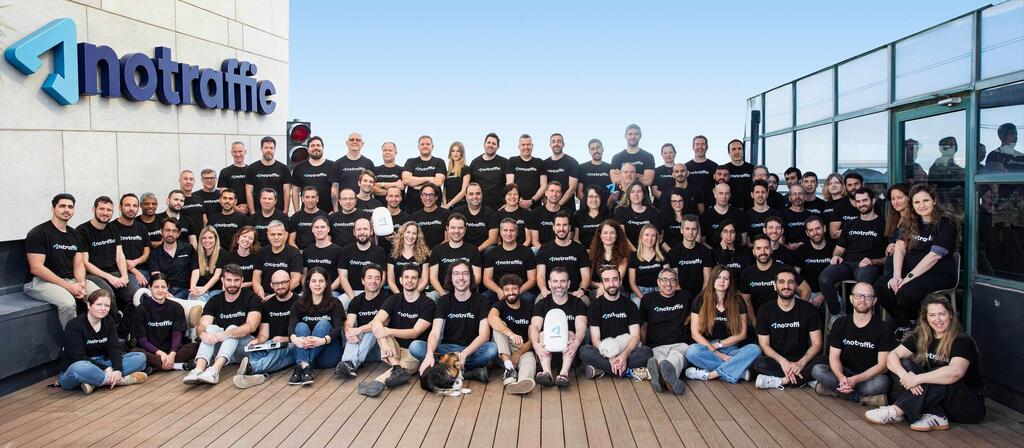
The NoTraffic team
(Photo: Courtesy)
NoTraffic said its platform is expected to be deployed by 1 in 10 traffic agencies across the United States and Canada by mid-2026, positioning the company as a growing provider of digital traffic control systems that allow cities to manage intersections dynamically rather than as fixed infrastructure.
The company said traffic agencies are under increasing pressure to manage more unpredictable and congested road networks with smaller teams and higher public expectations. Its platform is designed to convert traditional traffic signals into what it describes as software-defined infrastructure, allowing agencies to manage intersections through customized policies aimed at improving safety and efficiency, supporting advanced mobility uses and integrating with connected and autonomous vehicles as transportation systems evolve.
With deployments across nearly every major U.S. region and in Canada, NoTraffic said its technology has been adopted by hundreds of traffic agencies in more than 40 U.S. states and Canadian provinces, including metropolitan areas such as Houston, Phoenix and Oklahoma.
Phoenix Mayor Kate Gallego said the city had seen measurable gains after deploying the company’s AI-driven system, including improved signal timing, shorter commute delays and reduced pedestrian wait times.
“The result is more efficient intersections, less congestion, and a more sustainable future for our residents,” Gallego said.
Tal Kreisler, NoTraffic’s co-founder and chief executive, said legacy traffic systems were built for a different era and argued that digitizing what he called one of the last major analog layers of urban infrastructure could unlock new operational value for cities.
“Static systems and fragmented tools can’t keep up with modern transportation demands,” Kreisler said. “Our platform allows agencies to operate intersections dynamically, respond instantly to changing conditions, and continuously improve outcomes using AI.”
Ronen Nir, a managing director at PSG Equity, said cities increasingly need software-driven traffic systems that can adapt continuously rather than relying on infrastructure updates every few years.
In addition to its core platform, NoTraffic said it operates a 24/7 operations center that provides remote diagnostics, monitoring and over-the-air updates to help agencies maintain performance across deployments.
The company said it has also built strategic partnerships with major distributors to support its expansion in the U.S. and Canadian markets.