

After three tumultuous years of war, Israel's new government faces one of the most critical turning points in the history of the country's economy. The economy, which previously demonstrated extraordinary resilience, has suffered deep structural damage: Israel's credit rating has been downgraded, the deficit has swollen to new highs, and confidence among international investors has been shaken.
To get the economy back on track after years of turmoil and ensure stability and financial strength, the new government will need a comprehensive, bold economic emergency plan free of narrow political considerations.

These are the most urgent tasks awaiting the new prime minister and finance minister.
1. Fiscal stabilization: The 2027 budget and restoring market confidence
The most immediate and important task is drafting and approving the 2027 state budget. Since 2019, only one year has begun without a stopgap budget, and another such arrangement is expected in the first quarter of 2027. This time, however, it is by no means just another routine budget. It will send a critical signal to international markets and credit rating agencies, which have downgraded Israel's rating three consecutive times to historic lows, raising the interest rates the country must pay on the massive loans taken out to finance the war.
To restore confidence, the budget must present a clear path toward reducing the debt-to-GDP ratio, which climbed from 59% on the eve of the war to approximately 70% following heavy wartime spending, with the prospect of a further increase next year. The 2027 budget must demonstrate fiscal restraint, transparency and professionalism, while putting the broader economy ahead of sectoral interests. Those interests were a hallmark of the outgoing government, championed by Finance Minister Bezalel Smotrich and the ultra-Orthodox parties, with the blessing of Prime Minister Benjamin Netanyahu.
2. Tax reform, ending exemptions and deep spending cuts
To finance the costs of the war and reconstruction without plunging the country into a severe debt crisis, the government will have to undertake sweeping tax reform. Regrettably, but out of necessity, this will include planned tax increases and the elimination of longstanding exemptions that can no longer be justified economically. These include VAT exemptions in Eilat, on tourism services and on fruits and vegetables, even though there is no comparable VAT exemption for medicines, as well as the cancellation of various tax breaks granted to specific sectors.
However, the public will not accept a heavier tax burden unless the government leads by example. The new administration must therefore take a series of drastic efficiency measures, beginning with the complete elimination of coalition funds, which totaled 22.5 billion shekels over the past four years.
At least 10 unnecessary government ministries should also be shut down, a move that would save billions of shekels in salaries, overhead and bureaucracy. Why does Israel need ministries for diaspora affairs, heritage, Jerusalem (the capital already has a good mayor!), national missions, the Negev and Galilee, regional cooperation, settlements, social equality and intelligence?
3. The defense equation: A massive budget versus economic restraint
The report of the committee established to examine Israel's defense budget, known as the Nagel Committee, has already become something of an archaeological artifact. Where are its recommendations for annual defense budgets of less than 100 billion shekels, compared with today's demands for budgets approaching 200 billion shekels a year in the coming years?
The new geopolitical reality requires a substantial increase in defense spending. However, the incoming government must cancel the decade-long, multiyear budget framework set by Netanyahu, which automatically increases annual defense spending by approximately 40 billion shekels. Civilian ministry budgets simply cannot withstand such an increase.
The economic challenge is twofold: providing the IDF with the resources needed to build up its capabilities against threats on multiple fronts while ensuring that the defense budget does not become a bottomless pit that strangles the civilian sector.
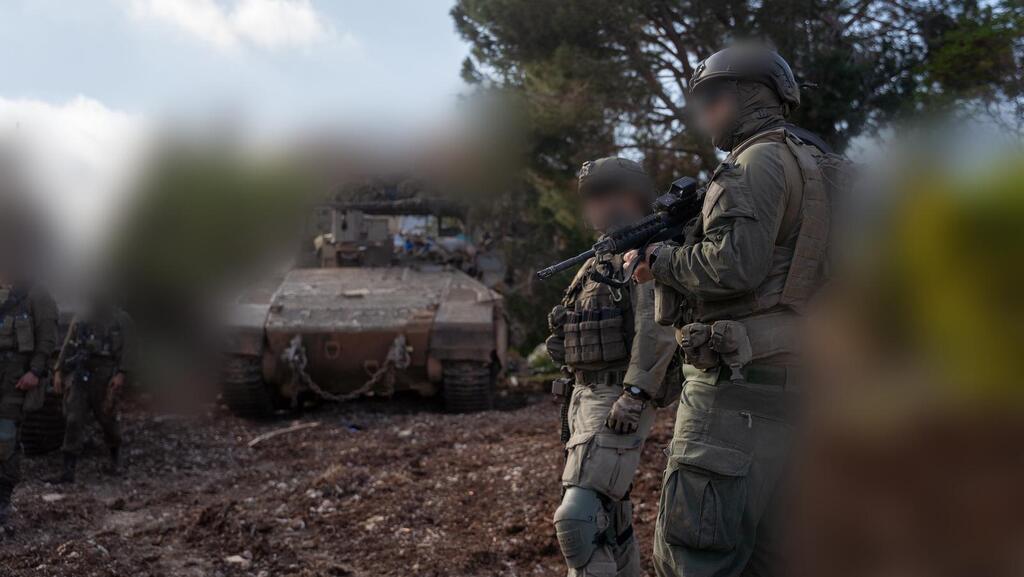
IDF forces operating in southern Lebanon
(Photo: IDF Spokesperson's Unit)
4. Rebuilding at home: The northern border and frontline communities
Three years of fighting have left northern communities battered and emptied. Kiryat Shmona, Metula, Shlomi and other Galilee communities have become ghost towns, while local businesses, from tourism and agriculture to small-scale manufacturing, have collapsed.
The government must launch a "Marshall Plan" for northern Israel. The region has been devastated, and many residents have left permanently. The challenge is to encourage large numbers of them to return while attracting new residents to strengthen the northern border, as has been achieved with considerable success along the Gaza border.
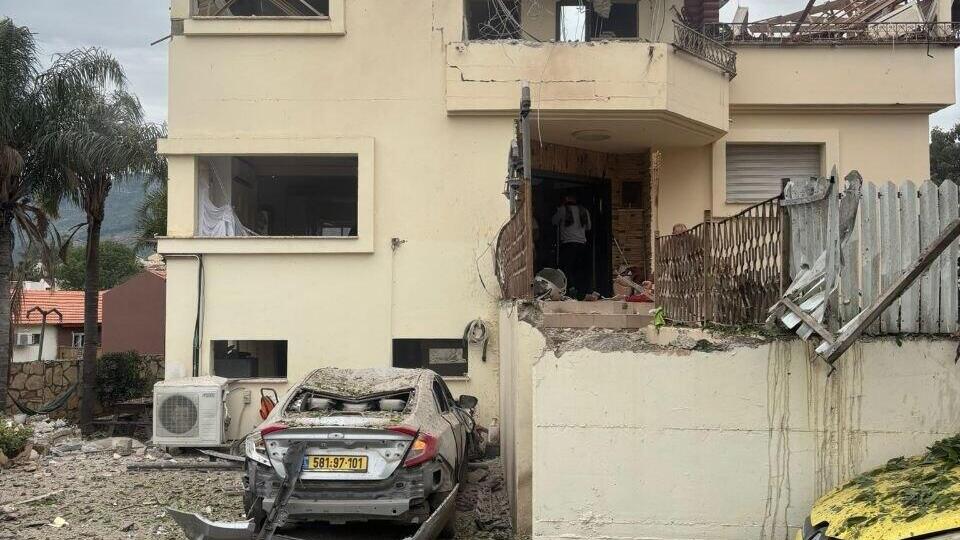
Impact in Kiryat Shmona
(Photo: Used under Section 27A of the Copyright Law)
To accomplish this, the government must act quickly by providing startup grants and increased compensation to businesses that survived and want to reopen; investing heavily in civilian infrastructure, protected educational facilities and advanced medical centers; and offering far-reaching tax incentives to residents, high-tech companies and industrial businesses willing to relocate their operations to the north, bringing economically established residents back home.
5. Housing market: Curbing prices and developing long-term solutions
Israel's housing crisis remains a ticking time bomb. The new government must act on two parallel fronts: lowering home purchase prices and developing a stable rental market.
Increasing housing supply: Accelerating the planning, marketing and development of land by the Israel Land Authority, while addressing the construction industry's labor shortage, which has been severely affected by the lack of foreign and local workers.
A national long-term rental housing program: Creating attractive financial models for institutional investors, including insurance companies and pension funds, to encourage the construction of entire neighborhoods designated for protected, regulated rentals lasting 15 to 20 years, similar to European models.
6. Engines of growth: A transportation revolution in greater Tel Aviv
Traffic congestion is the Israeli economy's most expensive luxury tax, costing billions of shekels annually in lost working hours and air pollution. According to previous calculations by experts, Israelis spend millions of hours stuck in traffic every month, at a cost of hundreds of millions of shekels to the economy.
The next government therefore cannot afford further delays in infrastructure projects, particularly in greater Tel Aviv, while also improving connections between outlying regions and the center of the country. And, of course, after eight ceremonies over 40 years announcing and laying foundation stones for a railway to Eilat, dating back to Economy Minister Gad Yaacobi in 1987, it is time to finally build this long-overdue project.

(Photo: Ido Erez)
The metro project: All bureaucratic and political obstacles delaying the largest transportation project in Israel's history must be removed. Its final cost is expected to approach 200 billion shekels. The metro has the potential to drive urban renewal and enormous economic growth.
Congestion pricing: Introducing a congestion charge for vehicles entering the Tel Aviv metropolitan area is a bold but necessary step. The revenue collected must be earmarked exclusively for improving and subsidizing public transportation, while creating realistic, fast alternatives to private vehicles.
7. Civilian infrastructure: Education and health care in crisis
Israel's real engines of growth are its human capital, but the systems responsible for developing and sustaining that capital are in crisis.
The education system: The alarming decline in student achievement on national Meitzav assessments, along with the overall deterioration in the quality of public education, demands structural reform. This is not simply a matter of injecting more money into the system, but of changing teaching methods, introducing performance-based salary increases for teachers and narrowing educational gaps between the country's periphery and its center. Mandatory core curriculum studies in ultra-Orthodox schools must be introduced by Israel's next government.
The health care system: The massive deficits facing health maintenance organizations and hospitals, combined with the troubling departure of doctors and other medical professionals for positions abroad, a phenomenon known as the "brain drain," require an emergency plan. The government will have to stabilize budgets, improve working conditions for young doctors and invest in preventive medicine and the digitalization of the health care system.
8. Socioeconomic time bombs
Beneath the surface, two structural problems threaten Israel's economic future in the medium and long term.
The National Insurance Institute's actuarial deficit: Actuarial reports warn that the National Insurance Institute's funds could be depleted within a matter of years, potentially as early as 2029 and certainly from 2035 onward. The new government must undertake comprehensive reform, including adjusting the retirement age to reflect life expectancy, with an increase to age 70 already recommended, changing the institute's investment model and streamlining the welfare benefits system.
Reducing poverty: The war has pushed more Israelis into poverty, particularly working families in outlying regions that have lost their livelihoods. Poverty should be addressed not through welfare payments, but through measures that generate economic growth, including vocational training, subsidized daycare and tax incentives that encourage employment.
9. Integrating population groups into the workforce: A condition for survival
Israel cannot maintain a first-world economy if large segments of its population remain outside the modern workforce. Only 60% of Israeli adults currently participate in the labor market, a low and deeply troubling figure that raises serious concerns about the economy's future.
This time, the new government must make two initiatives a top national priority: integrating ultra-Orthodox men and Arab women into the workforce.

Ultra-Orthodox Jews
(Photo: Shalev Shalom)
10. The new government's historic test
The government must urgently establish a 30-day task force, rather than the 100-day teams formed in the past, to prepare an action plan for implementing all the economic measures on the agenda, even if they are complex and require difficult political decisions.
A government that acts courageously, cuts unnecessary ministries, ends the distribution of politically motivated funds, invests in national infrastructure and integrates all sectors of society into the workforce will not only rescue Israel from its current crisis but also propel it toward a decade of renewed growth, stability and prosperity.