

$5.5 trillion — give or take — is Nvidia’s current market value, making it the world’s largest tech company, worth more than Apple, Google or Microsoft. Its extraordinary growth is considered among the fastest in corporate history.
The giant operates research and development centers in 38 countries, but its largest is in Israel — despite the distance, the wars, the missiles and employees repeatedly being called up for reserve duty. One employee at the center, Avinatan Or, was abducted by Hamas from the Nova music festival on October 7 and released only after 738 days.
And Nvidia is doubling down. In a few months, the first bulldozers are expected to move onto a 22-acre site in Kiryat Tivon and begin construction of Nvidia’s next campus in Israel. The futuristic complex, inspired by the company’s iconic headquarters in Santa Clara, California, is designed to accommodate 10,000 people — nearly twice Nvidia’s current workforce in Israel, which stands at 6,000, and close to a third of the company’s global workforce of more than 36,000. This year alone, Nvidia added 1,000 employees in Israel, spread across Yokneam, Tel Aviv, Ra’anana, Beersheba and Tel Hai.
The campus will include parks, a visitors center, cafes and restaurants, alongside laboratories and shared spaces for other companies. In the complex bidding process Nvidia conducted to find land for the project, dozens of local authorities in northern Israel competed fiercely, among them Yokneam, Haifa, Migdal HaEmek, Afula, Harish and even Netanya. They knew the winner would reap enormous benefits — substantial municipal tax revenues, thousands of new jobs and commercial and transportation development across the region, not to mention local prestige and a major branding boost. Kiryat Tivon won.
The move will, of course, have major implications for Israel as a whole. Nvidia’s activity in the country is already having a significant impact on Israeli economic data. According to Central Bureau of Statistics reports published only last month, remove Nvidia from the figures and the deficit grows, the dollar weakens and economic growth contracts sharply. One can only imagine what the numbers will look like once the company doubles its presence here.
There is a downside as well: Israel’s economy is becoming increasingly dependent on Nvidia’s phenomenal success. The company provides a major boost to headline economic indicators, but that also creates an unhealthy reliance on a single corporation.
Much of this can be traced to one man: Nvidia CEO and Chairman Jensen Huang, perhaps the most influential figure in technology today. Huang is regarded as a strong supporter of Israel and rarely misses an opportunity to praise — or invest in — the company’s Israeli operation.
After the October 7 attack, in which Daniel Waldman, the daughter of his friend Eyal Waldman, the founder of Mellanox, and her partner, Noam Shay, a former Nvidia employee, were also killed, Huang sent condolence letters and emails to employees in Israel that were among the most moving seen in the industry.
But sympathy is one thing and business is another. From Huang’s perspective, the decision is entirely rational, even if it seems to rest on something close to a miracle: COVID, wars, missiles — whatever happens, the Israeli teams continue to meet their targets and often exceed them.
Revenue generated by Nvidia’s Israeli division accounted for about 11% of the company’s global revenue in early 2025. This year, that figure jumped to 18%.
“Israel,” Huang says, “is home to some of the world’s brightest technologists and engineers, and it has become Nvidia’s second home. The new campus will be where our teams can collaborate, invent and build the future of AI.”
The future? And what if artificial intelligence brings about the end of the world in 2030, as some industry leaders have recently warned? Huang is not concerned about that either, declaring this week that such predictions amount to baseless fearmongering.
“There is a zero percent chance that will happen,” he said.
The AI risk: ‘Some roles will disappear and others will be created’
The man tasked with preparing for the search and recruitment of 4,000 new employees, while also overseeing the day-to-day welfare of thousands already working at the company, is Gideon Rosenberg.
Rosenberg, 49, has served for the past five and a half years as Nvidia Israel’s vice president of human resources. Until recently, he also served concurrently as deputy general counsel. Before that, he held senior roles in the company’s legal department for about a decade, dating back to the Mellanox era, on which Nvidia’s Israeli center was built.
Although he has no technological background, Rosenberg’s broad responsibilities give him a distinctive status within the company. He is part of the old guard — former Mellanox employees who became employees of the global corporation overnight when Nvidia acquired the company for about $7 billion. Market estimates suggest that many became millionaires thanks to shares they held.
“I’m a veteran?” Rosenberg says. “We have plenty of employees next to whom I’m still young.”
Why do those longtime employees keep working despite the fortunes they made from the acquisition?
“Most of them stay because of the technological challenge and because they want to be part of something exciting,” Rosenberg says.
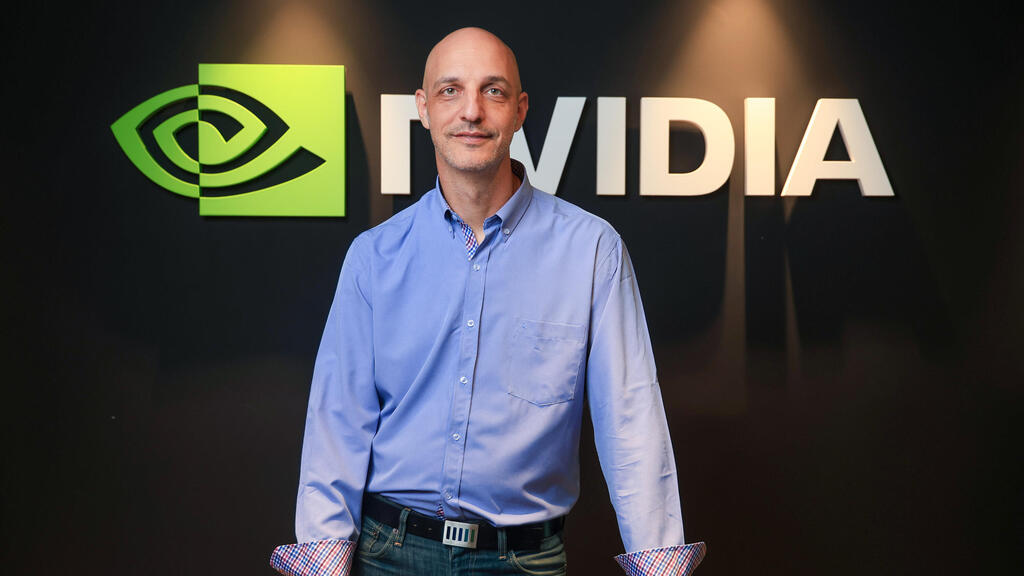
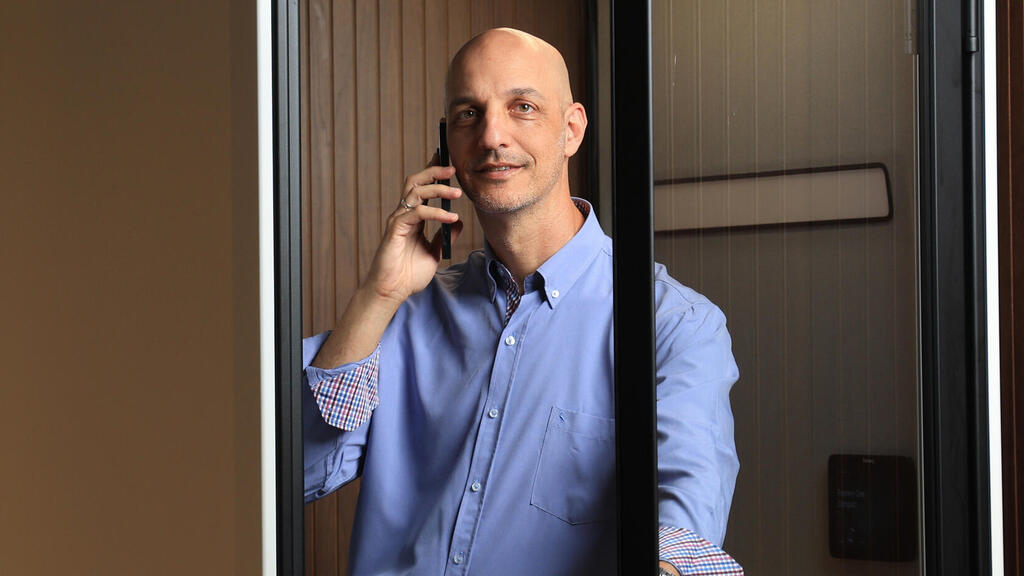
Gideon Rosenberg
(Photo: Avigail Uzi)
The company is heading toward nearly doubling its workforce. How do you prepare for such a transformation?
“You’d be surprised, but I’m not required to think about it all right now. You can’t hire 5,000 people overnight. I’m a little like the Rita song — I live day by day. When I took on the role at Mellanox, we had 2,300 employees in Israel. Today we’re already almost three times that size, so dealing with the expected jump in numbers will actually be easier. We’re already growing at a significant pace, but we’re building it gradually.
“Even though the new campus won’t be full the day we open it, we’ll grow here organically over the coming years. There may also be acquisitions. And we won’t grow only at the Kiryat Tivon campus, but also in our Tel Aviv offices and in Beersheba, where we moved into new offices only about two months ago.”
There is a risk here: Isn’t AI supposed to reduce the number of employees you need? And beyond that, people work from home now. Could you end up building a white elephant in Kiryat Tivon?
“The opposite. We have a labor shortage. Over the past year, we hired more than 1,000 people, and just an hour ago I approved several more open positions, meaning more people to recruit. We have around 430 open roles today.
“We’re very flexible about requiring employees to come into the office, partly because we don’t have enough space for everyone. I wouldn’t say we use a hot-desking system, but it’s fairly similar. I, for example, don’t have an office here. We have a computerized system where you can find and reserve a workspace in advance.
“And as for the future — AI is actually creating work. Until a few years ago, the average programmer could produce X lines of code. Today, with AI, that programmer can produce 10 times as much. Technology is also becoming much more complex. We’re only beginning to scratch the surface of the really difficult issues involving physical AI, such as autonomous vehicles and the like.
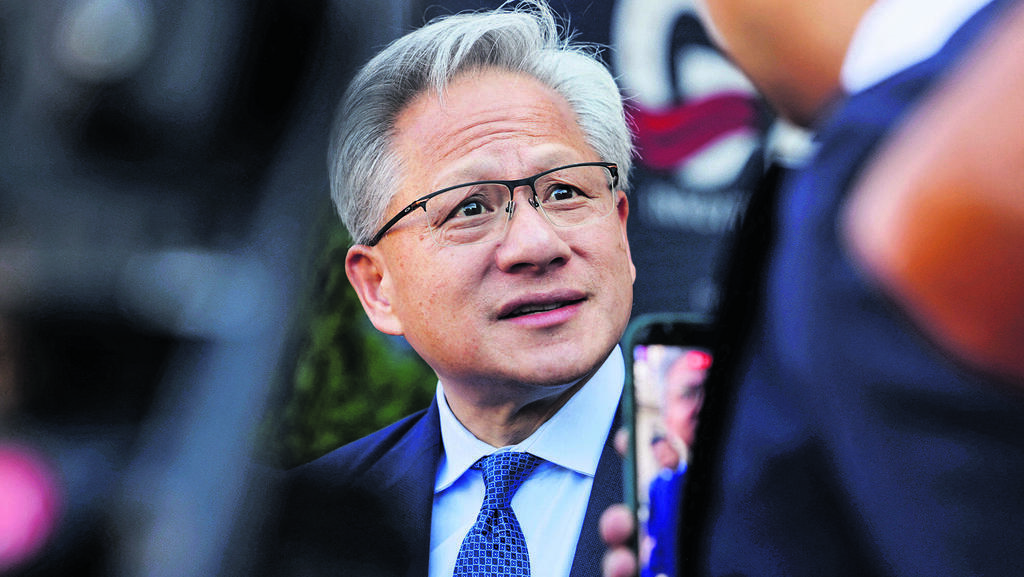
Nvidia CEO Jensen Huang
(Photo: Jonathan Drake/Reuters)
“We believe AI will give every employee superpowers in their field. AI will be a partner that allows people to focus on the things that really matter, the things that require creativity and originality, and spend less time on repetitive, mundane work.
“Certain jobs will disappear and others will be created. Until a few years ago, there was no role called ‘prompt engineer,’ because who was using prompts? Today, that job already exists.”
There is an argument that you’re going to ‘vacuum up’ all the talent in the field and in doing so damage Israel’s tech industry.
“I think there will be enough for everyone. I imagine that 20 years ago you could have asked my counterpart at Intel Israel the same question. Human nature isn’t going to change.”
The location: ‘We’re very proud of the decision to grow in the north’
Rosenberg lives in Tel Aviv with his wife, Roni, a gynecologist, and their three children. In 2003, after completing his law degree at University College London, he began his legal internship at Bank Leumi. His move into tech came at Medcon, then a sister company of Medinol. When Medcon was acquired by an American corporation, he moved to the United States.
He returned to Israel because of Roni.
“The friend who introduced us knew I would come back to Israel only for one of two things — either a better job or a partner. So she found me a partner. Back here, I joined Mellanox’s legal department. I planned to stay for a short time and then move to some truly serious startup that would go public and make an exit.
“But on the day I started working there, my boss called me from the United States and said, ‘Gideon, we’re starting the acquisition process of a company called Voltaire.’ I still had no idea what Mellanox even did, and I was already working on acquiring a subsidiary.
“That’s how it started. And as the saying goes, we started at top speed and accelerated from there. From that moment on, I haven’t had a single boring day here.”
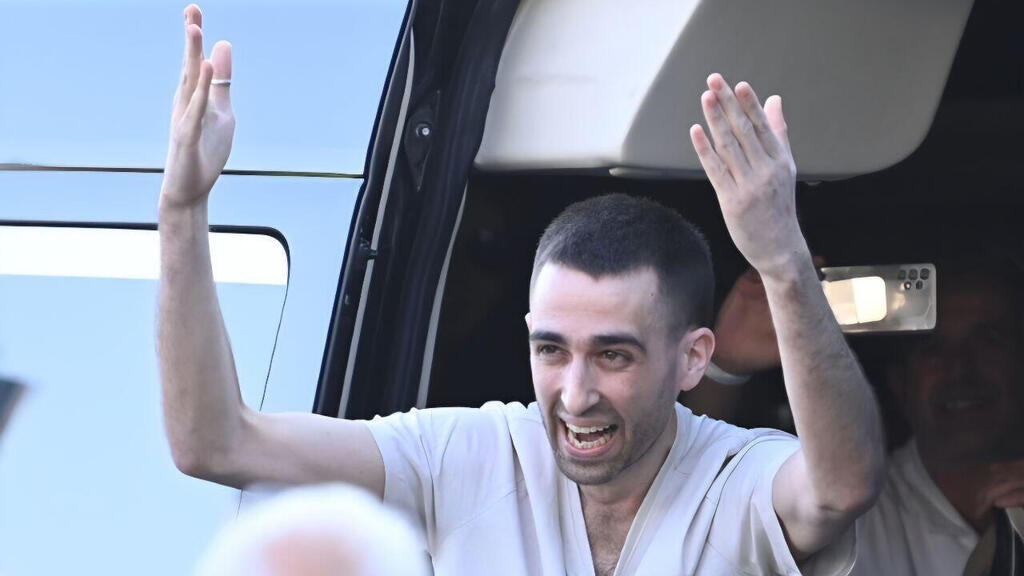
Avinatan Or
(Photo: Yair Sagi)
You decided to build the new campus in Kiryat Tivon. Does that mean you’re mainly targeting employees who live in the area?
“From the moment we decided to expand, it was clear to us that it would happen in the north. It’s in the company’s DNA. Most of our employees are from the north. I’m not going to relocate them to central Israel.
“Nvidia’s center of gravity, based on Mellanox, is in Yokneam. Kiryat Tivon is a seven-minute drive away. The most natural thing for us is to keep growing there. There wasn’t even a debate about it. It was clear to everyone, including management in the United States. We’re very proud of that.”
But the number of people you’ll need in the north will double.
“We’re not worried. It’s true that the tech industry is concentrated in central Israel, but there are plenty of excellent tech professionals in Haifa, the Krayot, and the moshavim and kibbutzim throughout the north. And if people choose to relocate from central or southern Israel to the north because of this campus, great.
“We believe location shouldn’t be an obstacle. We have offices around the country, and the principle is that almost every employee, wherever they live, should be able to reach an office within roughly 30 to 40 minutes. I’m not going to try to import workers from Tel Aviv.
“When I started working at Mellanox, we built our first building in Yokneam. At first, we built only four of the six floors we had planned. But while we were still moving into them, the person in charge came to me and said, ‘Sign new contracts quickly, we urgently need another two floors.’
“We’re building the future. To this day, we have never suffered from excess space. Even now, before Kiryat Tivon, we’re building another building in Yokneam.
“We announced that the new campus will accommodate 10,000 employees, but we’ll aim for several thousand more employees by 2031.
“We try to be close to universities and colleges. We took space in Kiryat Atidim because it’s close to Tel Aviv University. We set up sites near universities in Beersheba and Tel Hai to make things easier for students who work for us. In Beersheba, we have 100 students who walk to the office during breaks between classes. We even have employees in the Golan Heights, and one in Eilat.”
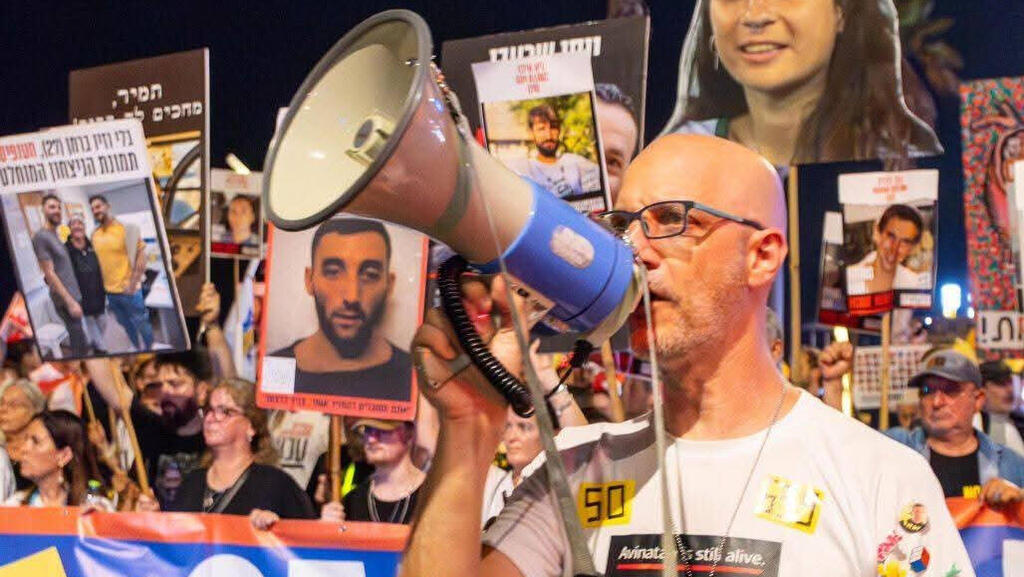
Gideon Rosenberg at Hostages Square
(Photo: Uriel Even Sapir)
Will you also hire juniors, university graduates who haven’t yet had time to gain experience?
“Of course. That’s the foundation of the company. Throughout Nvidia’s history, many people started here as students and now hold very significant positions. That’s how we grew and how we’ll continue to grow. You can’t build any company on senior employees alone, because at some point they retire. I have to develop the senior employees we’ll need 10 or 15 years from now.
“Every student here is given responsibility for a project of some kind. Once they become expert in it, they can guide the people around them, even if those people are more senior than they are. So alongside the organizational hierarchy, we also have a project-based hierarchy.
“My assumption is that if I help them develop, they’ll stay with me for the long term.”
I want to apply. What do I need?
“If you have friends who work at Nvidia, that’s always helpful. The threshold is, of course, technological. In most cases, we’re looking for people with specific training, mainly engineers.
“But I don’t just look at whether you were on the dean’s list at the Technion. That doesn’t mean you’ll be a better employee than someone from another university with an average grade of 83.
“The X factor I’m looking for is people with passion, people who want to work at the absolute cutting edge of today’s technology. That’s true in every field here — everything is challenging, everything is very large-scale and very significant.
“I’m also looking for people with critical thinking, creativity and the ability to admit mistakes and take responsibility for them. When someone fails here, they don’t fail alone. We usually work in teams, so the failure belongs to the team.”
The lavish conditions: ‘People work hard here’
About two years ago, Bloomberg published an investigative report about extreme work pressure at Nvidia. The Israeli branch was not mentioned, but the article described a demanding corporate culture and excessive expectations of employees.
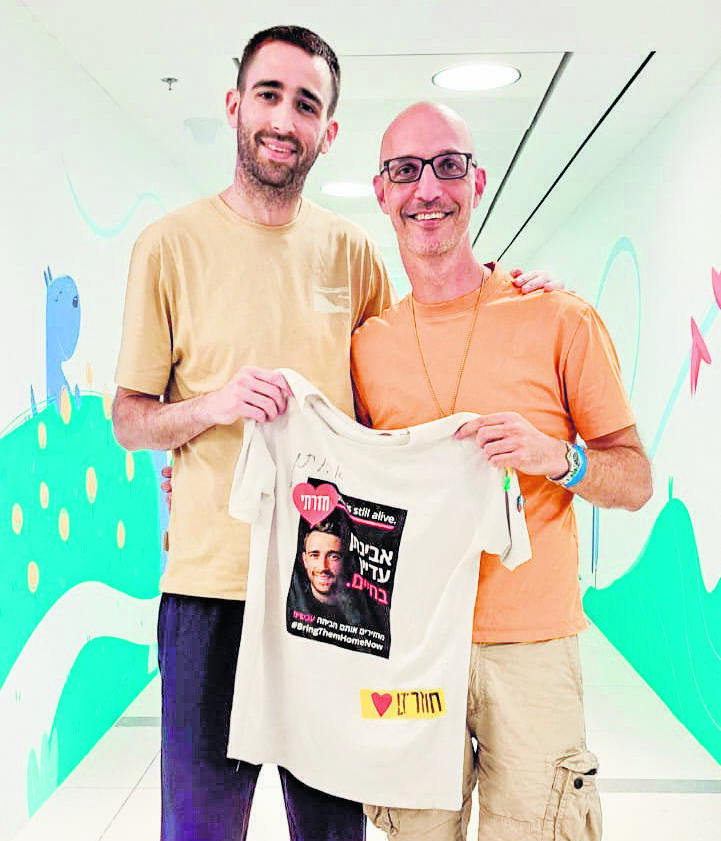
Gideon Rosenberg with Avinatan Or after his release
(Photo: Private album)
What’s the truth?
“We work at the world’s most advanced technology company. Being No. 1 comes with obligations. We constantly have to move fast, and the pace is very intense.
“In the past, we would release a flagship product once every year and a half or two years. Today, a new generation comes out every year, and it’s five times faster than the previous one. And the chip isn’t becoming simpler to design and manufacture. Quite the opposite.
“So of course there’s a lot of pressure here, and employees work hard.
“I tell everyone I interview: ‘Guys, this is a completely different experience.’ So you ask whether we have managers who manage to be nice even under pressure? Some do and some less so.
“Jensen Huang once told me that our job as managers is to make sure that every morning, our employees choose again to work for us. So I’m constantly asking myself how I make that happen. People give their heart and soul, and I think they get a great deal in return.”
Are the salaries here the best in the industry?
“I don’t know. Not necessarily. We pay what we think is appropriate for the role — what we believe is the right offer.
“Even if a candidate asks for less, they’ll get the amount we planned to offer. Of course there are negotiations, but in the end I think we pay very well. Are we the best? I don’t know.”
Even if Nvidia does not pay more than everyone else, its employees have little to complain about. The list of benefits seems endless — from restaurants operated by chef Assaf Granit’s Machneyuda Group to gyms, music and treatments, as well as yoga classes.
Once a quarter, employees are also entitled to an extended weekend break paid for by the company. Nvidia offers shares at a 15% discount.
Rosenberg is especially proud of the company’s full financing for employees seeking surrogacy or adoption in Israel or abroad, as well as other family-building procedures such as sperm or egg donation, egg freezing and in vitro fertilization.
That is before even mentioning funding for studies at leading U.S. universities, parental leave after childbirth and a long list of other benefits.
Sounds terrible.
“I don’t think people come to work — not just at Nvidia — for perks like food, lavish parties and things like that.
“And in fact, unlike other tech giants, we don’t organize extravagant vacations or huge parties. That’s not by accident. People worked here for years even when the food wasn’t gourmet.
“If you don’t enjoy what you do, you won’t last anywhere over time, even if you’re paid well.”
Speaking of which, there are major disagreements among industry leaders over working from home. What’s your approach?
“Except for laboratory employees, who have to come in four or five times a week, most employees come to the office two days a week. Some groups have already started coming in three times, and of course some employees come in every day.
“We’re very flexible and allow each manager to set the policy for their team.
“Yes, there are disagreements within Nvidia on the issue as well, and both sides have a point. I can’t say whether the result would have been better if we had done things differently. The fact is, Nvidia has gotten to where it is.
“Maybe if we required every employee to come into the office five days a week, we’d already be a $10 trillion company. Who knows?”
You made an interesting decision to allow employees in Israel to email one another in Hebrew. At multinational companies operating in Israel, the rule is usually unequivocal: everything is in English.
“I’m a native English speaker. My mother is English, and my entire professional career has been in English. It’s easier for me to write in English.
“But I never really understood why, when you’re talking to other Israelis and trying to convey routine messages, you’re required to do it in a language that isn’t your mother tongue.
“Professional communication with teams around the world is still primarily in English, but here in Israel, I genuinely think people are more focused when they read in their own language.”
The fight to bring the hostages home: ‘The focus was on Avinatan’
Anyone who finds Rosenberg’s face familiar is not mistaken. Over the past three years, far beyond what his Nvidia role required in the campaign to bring Avinatan Or home, he became a prominent activist in the broader campaign for the return of the hostages.
Armed with a megaphone, he led family marches to Jerusalem and served as an announcer at Hostages Square. Since then, he has remained active with “255,” an organization of hostages and their families, and he also closely supports other families that suffered bereavement during the war.
You became completely immersed in the issue. You’re a private individual, but weren’t you ever concerned that you might be harming the company? Many people also viewed this as political activity.
“As far as I was concerned, it wasn’t political. You couldn’t hear a single political statement from me throughout that campaign.
“It’s true that I was drawn into the fight from the very first day. I saw it as an issue connected to Nvidia: We had an employee being held captive by Hamas. So with all due respect to every other issue, the focus was on the struggle to bring him back.
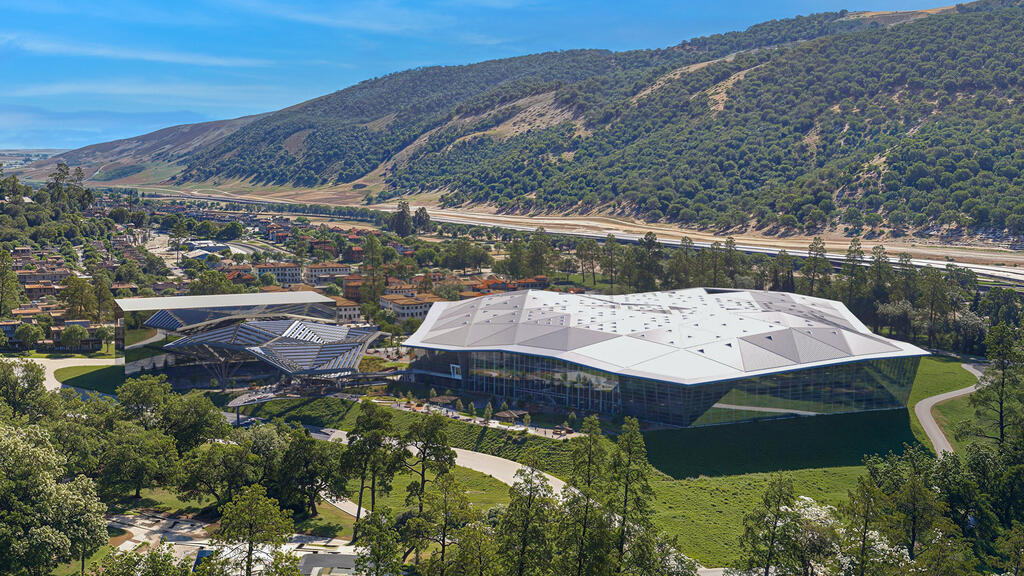
The new campus to be built in Tivon
(Photo: Nvidia)
“We stood by Avinatan’s family from the very beginning. When they wanted to stand at Begin Gate every day, we made sure employees were there alongside them.
“Throughout that period, we spoke about Avinatan everywhere. We distributed shirts and signs with his picture — in the offices, at every recruitment fair, at every race. We made sure awareness remained high, and of course we are still in close contact with the family and with Avinatan.
“Jensen Huang was updated from day one. He knew what I was doing, and he saw it as well. I emailed him all the details. And when an article appeared in the United States with my picture, I sent him that too. I wrote, ‘Just so you know, that really is me.’
“I’m sure there were people in the company who weren’t pleased with that activity. Criticism is perfectly legitimate. But I never received any request or demand to stop.”
Jensen never told you, ‘Be careful’?
“No. Fortunately.”
Is Avinatan still employed by the company?
“Of course. He hasn’t returned to regular work yet, but he is part of the workforce.
“It’s important to remember: He was in captivity for more than 700 days. Less than a year has passed since his release. He needs to be given time.
“He’s a wonderful guy. It’s a pleasure to sit and talk with him. He’s funny and focused. He has a very clear inner center, a strong sense of who he is.
“He visited headquarters in the United States and met with Jensen. I think he’ll return to work, but that’s his decision.”
The hostages are home now, Gideon. Do you have time left for hobbies?
“The truth is that when I’m not working and not with my family — and I hope this doesn’t sound pretentious — I spend my time on social causes.
“I give talks at high schools and pre-military academies, support bereaved families and families of hostages. We have friends whose son was killed in Gaza and another family whose friend died by suicide, so I spend a lot of time with them.
“Recently, I’ve been trying to advance the public conversation around treatment for post-traumatic stress.
“In short, I keep busy. For me, that’s the hobby.”